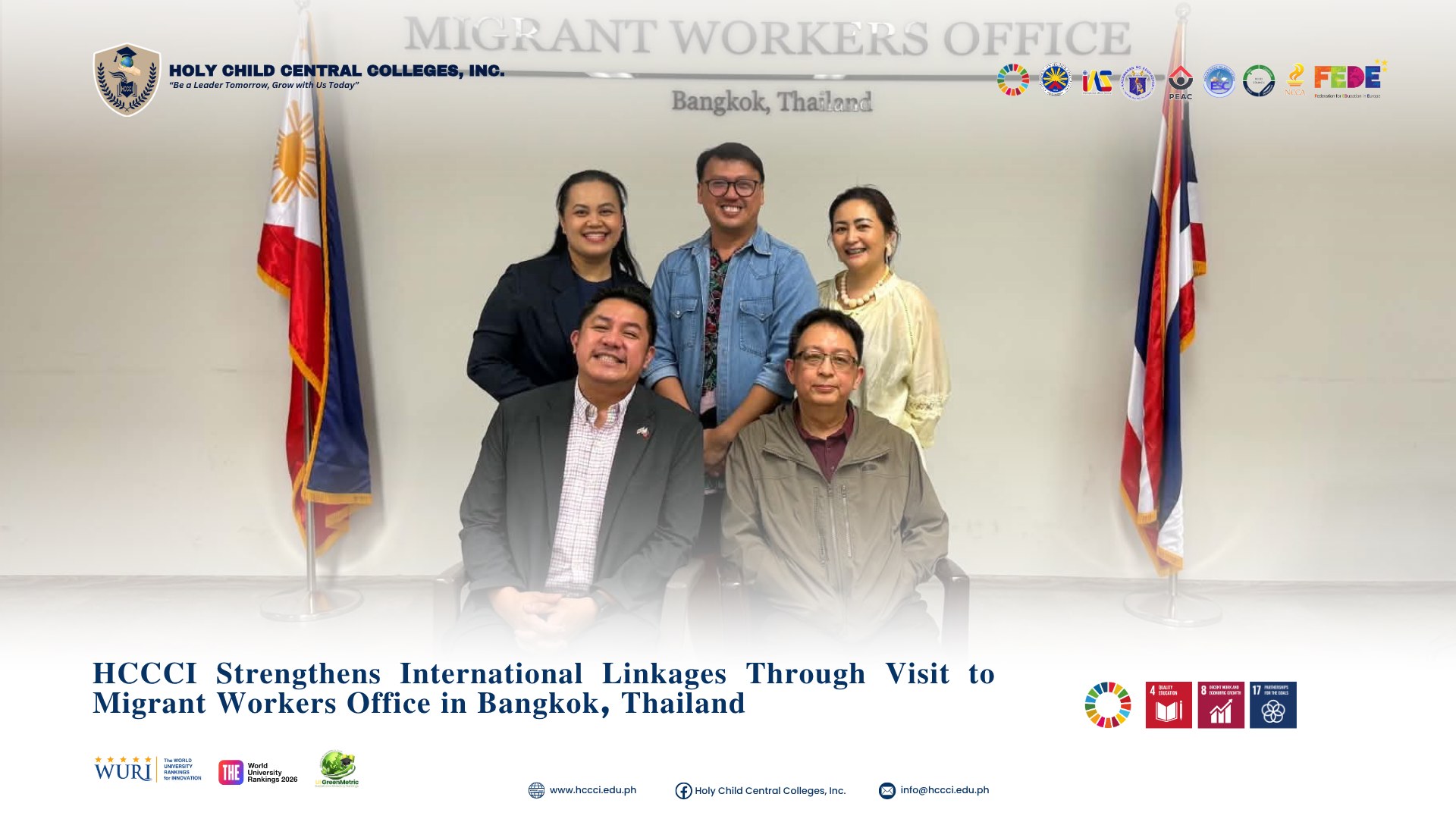
𝐇𝐂𝐂𝐂𝐈 𝐒𝐭𝐫𝐞𝐧𝐠𝐭𝐡𝐞𝐧𝐬 𝐈𝐧𝐭𝐞𝐫𝐧𝐚𝐭𝐢𝐨𝐧𝐚𝐥 𝐋𝐢𝐧𝐤𝐚𝐠𝐞𝐬 𝐓𝐡𝐫𝐨𝐮𝐠𝐡 𝐕𝐢𝐬𝐢𝐭 𝐭𝐨 𝐌𝐢𝐠𝐫𝐚𝐧𝐭 𝐖𝐨𝐫𝐤𝐞𝐫𝐬 𝐎𝐟𝐟𝐢𝐜𝐞 𝐢𝐧 𝐁𝐚𝐧𝐠𝐤𝐨𝐤, 𝐓𝐡𝐚𝐢𝐥𝐚𝐧𝐝
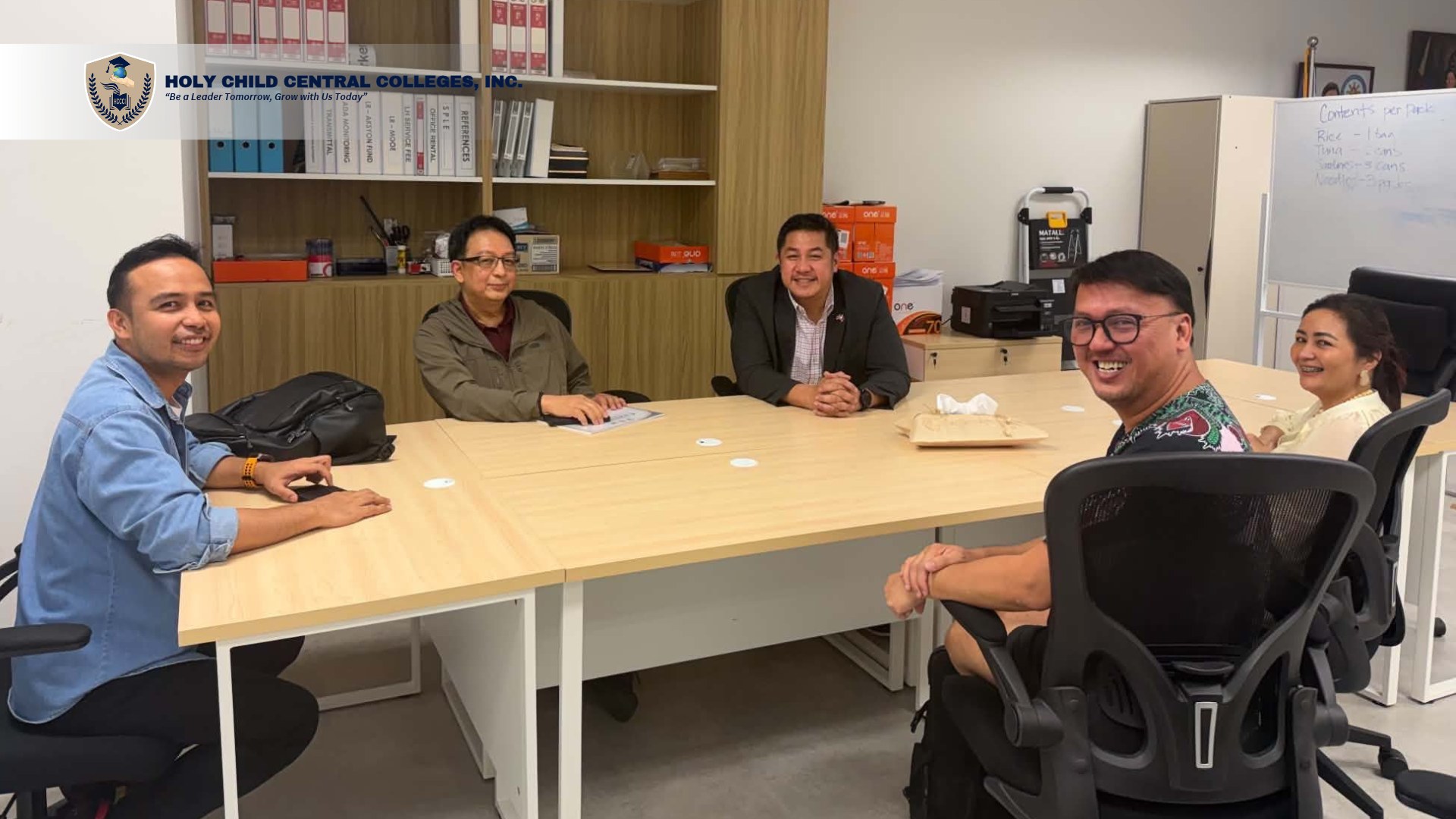
Holy Child Central Colleges, Inc. (HCCCI), represented by Executive Vice President Vanessa Marie L. Antiquin, MMEM, and Academic Director Dr. Erwin M. Faller, paid a courtesy visit to the Migrant Workers Office (MWO) in Bangkok, Thailand, under the Embassy of the Republic of the Philippines. The engagement forms part of HCCCI's continuing efforts to strengthen its international linkages and explore opportunities to extend educational services and development pathways to Filipinos working overseas. It also provided an opportunity to establish connections with Philippine government representatives serving abroad and explore how educational institutions can contribute to the continuing development of overseas Filipino workers (OFWs).
The HCCCI delegation was warmly welcomed by Atty. Don Philip Pangcog, Labor Attaché, and Mr. Ronald Mina, Welfare Officer. The courtesy visit provided an opportunity to recognize the important work of the MWO in assisting and protecting Filipinos living and working in Thailand. It also highlighted the value of connecting Philippine educational institutions with government offices that serve overseas Filipinos, particularly in exploring ways to make education, training, and professional development more accessible to them.
The engagement also brought together Ms. Inggrid Lottuss Rojo and Mr. Jibb Jiji B. Otida, both trainers and partners, whose participation further enriched the gathering. Their presence underscored the potential for collaboration among educational institutions, government representatives, and training partners in identifying initiatives that respond to the learning and professional development needs of Filipinos overseas.
The visit is also aligned with HCCCI's ongoing discussions with the Department of Migrant Workers Region XII (DMW XII) concerning a proposed institutional partnership to expand educational opportunities for OFWs and their families. Among the areas being explored is the development of a dual-degree pathway that could provide overseas Filipino workers with opportunities to pursue further education while establishing more systematic mechanisms for tracking and supporting their educational progress. This direction reflects HCCCI's interest in making its academic offerings more responsive to the circumstances of Filipinos whose employment takes them beyond the country and in developing accessible and flexible pathways to higher education.
In this context, the courtesy visit to the MWO in Bangkok provides an important international dimension to HCCCI's ongoing movement through its ORBIT (Opportunities for Reskilling, Bridging, Internationalization, and Training) program. While the proposed partnership provides a basis for exploring educational initiatives at the regional level, engagement with the MWO offers an opportunity to broaden the institution's connections with Philippine government offices serving Filipinos in other countries. These linkages can help HCCCI better understand the coordination mechanisms and institutional arrangements through which educational opportunities may reach overseas communities. They also reinforce the importance of working with appropriate government offices and stakeholders to ensure that future initiatives respond to the circumstances of OFWs in their respective host countries.
HCCCI's aspiration extends beyond a single overseas destination. While the Bangkok engagement establishes an important point of connection in Thailand, the institution hopes to explore similar opportunities in other countries with Filipino migrant communities. Through sustained coordination with DMW, Philippine diplomatic and migrant worker offices, educational institutions, and other relevant partners, HCCCI aims to explore ways of extending its academic programs, training capabilities, and educational services to Filipinos wherever they may be working. This broader direction recognizes that overseas Filipinos have diverse educational backgrounds, employment circumstances, and development needs. Building partnerships across different destinations may help create more inclusive opportunities for lifelong learning, professional advancement, and preparation for eventual reintegration into the Philippines.
The engagement also reflects HCCCI's broader commitment to internationalization as an avenue for extending the institution's reach and social contribution. International partnerships are not limited to academic exchanges and research collaborations; they can also create pathways through which institutional resources and educational services respond to the needs of communities beyond national borders. By connecting with government offices and stakeholders who work directly with overseas Filipinos, HCCCI hopes to develop partnerships that translate its educational capabilities into accessible and meaningful opportunities for learning and development.
The courtesy visit contributes to the broader objectives of Sustainable Development Goal 17: Partnerships for the Goals, particularly UN SDG Target 17.16, which promotes multi-stakeholder partnerships that mobilize and share knowledge, expertise, technology, and resources in support of sustainable development. The engagement highlights the importance of cooperation among educational institutions, government offices, and other stakeholders in exploring initiatives for overseas Filipino communities. It also supports the potential contribution of Sustainable Development Goal 4: Quality Education, particularly UN SDG Target 4.3, which promotes equal access to affordable and quality technical, vocational, and tertiary education, and UN SDG Target 4.4, which emphasizes relevant skills for employment, decent work, and entrepreneurship. HCCCI's ongoing discussions on educational pathways for OFWs reflect how institutional cooperation can help explore ways of extending learning and skills-development opportunities to Filipinos across different stages of their working lives.
Through this courtesy visit, HCCCI reaffirms its commitment to strengthening international linkages that extend beyond conventional academic partnerships and contribute to the educational development of Filipinos abroad. By building on its ongoing discussions with DMW XII and establishing connections with the MWO in Bangkok, the institution hopes to contribute to a broader network of cooperation that can bring educational opportunities closer to overseas Filipinos. Moving forward, HCCCI seeks to sustain these engagements and explore partnerships in other countries, advancing its aspiration to make education and professional development more accessible to Filipinos wherever their work and life journeys may take them.