𝐇𝐂𝐂𝐂𝐈 𝐒𝐮𝐩𝐩𝐨𝐫𝐭𝐬 𝐀𝐠𝐫𝐢𝐜𝐮𝐥𝐭𝐮𝐫𝐚𝐥 𝐊𝐧𝐨𝐰𝐥𝐞𝐝𝐠𝐞 𝐏𝐫𝐞𝐬𝐞𝐫𝐯𝐚𝐭𝐢𝐨𝐧 𝐓𝐡𝐫𝐨𝐮𝐠𝐡 𝐃𝐨𝐧𝐚𝐭𝐢𝐨𝐧 𝐭𝐨 𝐋𝐚𝐤𝐞 𝐒𝐞𝐛𝐮 𝐆𝐞𝐧𝐞𝐛𝐚𝐧𝐤 𝐚𝐧𝐝 𝐑𝐢𝐜𝐞 𝐌𝐮𝐬𝐞𝐮𝐦 𝐏𝐫𝐨𝐣𝐞𝐜𝐭
Holy Child Central Colleges, Inc. (HCCCI) continues to promote agricultural knowledge exchange and sustainable practices through collaborative initiatives that connect local farmers, food producers, researchers, and community stakeholders.
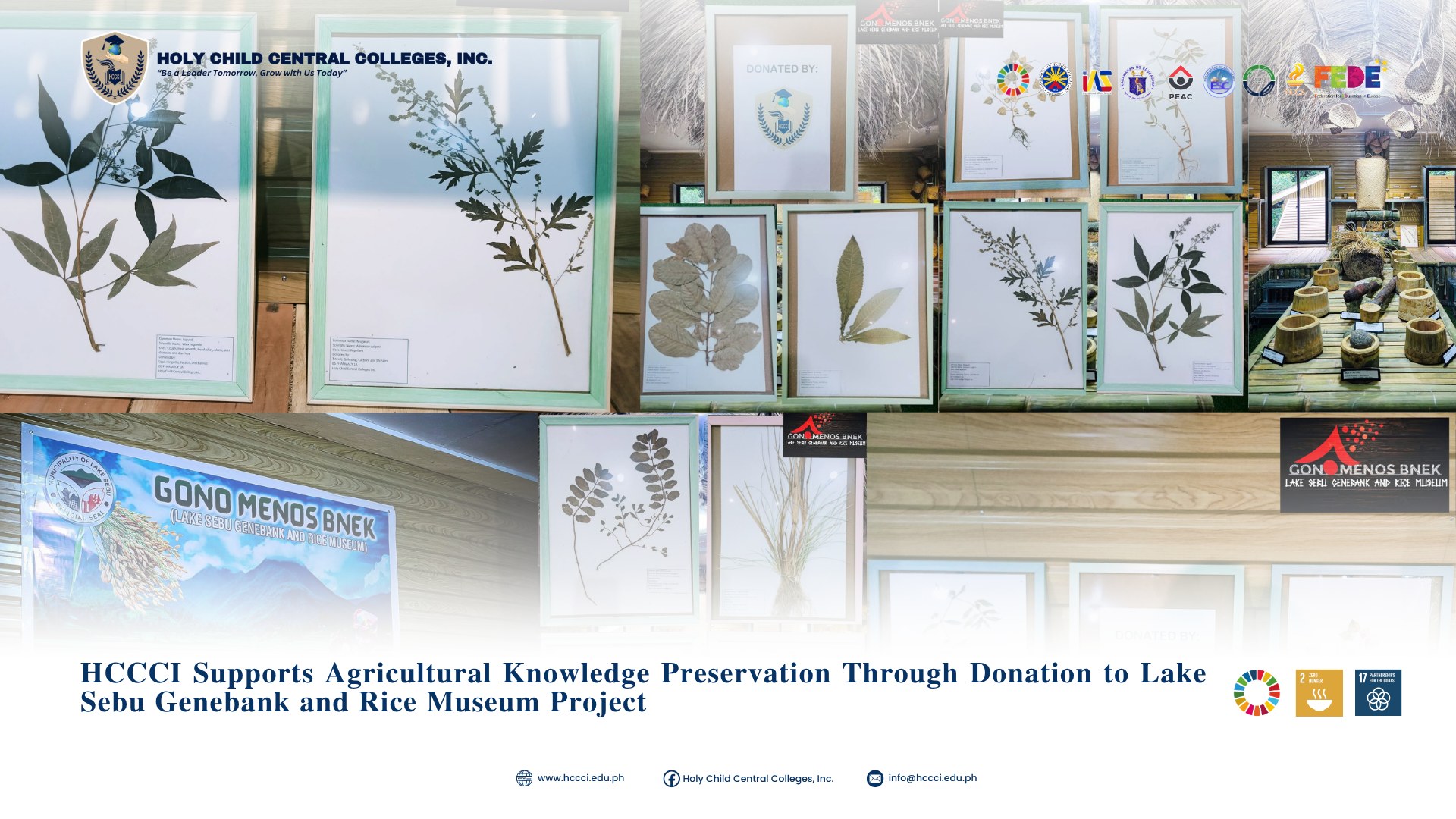
On May 30, 2025, in connection with the 29th Helobung Festival, HCCCI partnered with the Municipal Tourism and Agriculture Offices of Lake Sebu, the University of the Philippines Los Baños (UPLB), the Provincial Government of South Cotabato, and the Food and Agriculture Organization (FAO) in the launch of the Lake Sebu Genebank and Rice Museum Project. As part of its commitment to supporting the initiative, HCCCI made a donation to the project, contributing to efforts to preserve agricultural heritage and promote knowledge sharing among local communities.
The project served as a platform for exchanging scientific knowledge and traditional agricultural practices, bringing together researchers, local knowledge holders, and community members to promote native plant conservation, traditional ecological knowledge, and the sustainable use of agricultural resources.
Through herbarium documentation, gene banking, and educational activities, the initiative facilitated knowledge transfer and strengthened connections among farmers, researchers, and other agricultural stakeholders. It also emphasized the importance of integrating scientific research with traditional practices to advance agricultural sustainability and biodiversity conservation.
Through its donation and participation in collaborative initiatives, HCCCI reinforces its commitment to community development, agricultural sustainability, and the preservation of local knowledge. The project reflects the importance of partnerships among academic institutions, government agencies, and international organizations in promoting resilient communities and sustainable agricultural practices.
The initiative contributes to Sustainable Development Goal (SDG) 2: Zero Hunger, by supporting sustainable agriculture and food resource conservation, and SDG 17: Partnerships for the Goals, through collaborative efforts that foster knowledge sharing and community development.