Caring for Water Across Campus
A tumbler refill between classes, a quick handwash before lunch, and clean restrooms all depend on water being available throughout the school day. Holy Child Central Colleges, Inc. (HCCCI) advances Sustainable Development Goal 6 (Clean Water and Sanitation) by keeping records of campus water use, maintaining its drainage systems, and equipping restrooms with dual-flush toilets so users can choose a lower-volume flush. HCCCI is also developing a dedicated water supply to help keep sanitation facilities running during interruptions in the municipal supply.
Tracking Campus Water Use
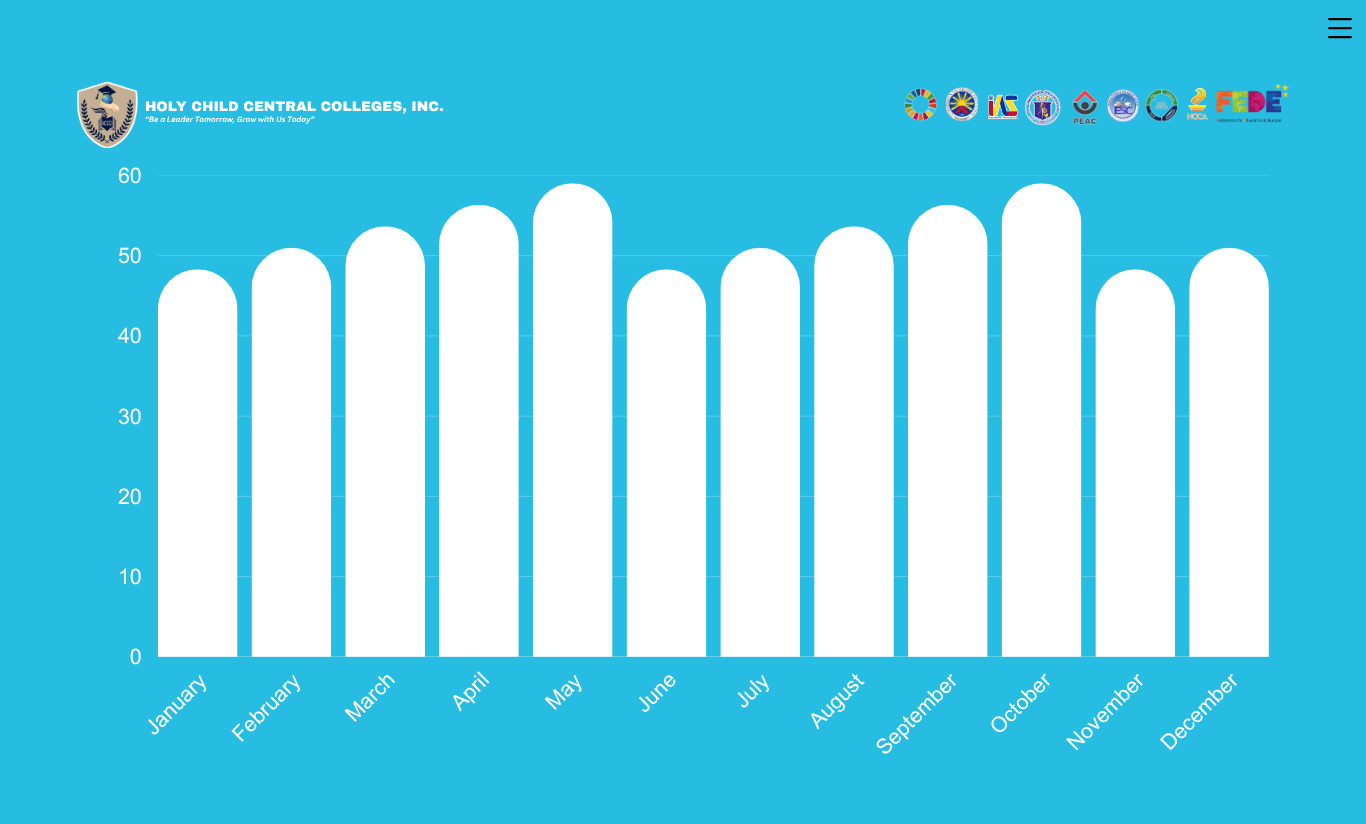
In 2025, Holy Child Central Colleges, Inc. (HCCCI) began tracking the total volume of treated water used on campus. Its monthly records cover classrooms, offices, laboratories, restrooms, student service areas, and cafeterias in the three-storey building served by the campus water distribution system. From January through December, the calculated total was 635.92 m³.
For 2025, HCCCI reports 636 m³ of inbound treated water, rounded to the nearest cubic metre, and a campus population of 2,591. Tracking both figures gives the institution a baseline for comparing water use as the campus population changes and for planning future conservation measures.
Treating Wastewater on Campus
Holy Child Central Colleges, Inc. (HCCCI) treats toilet wastewater on site in its three-storey building. When a toilet is flushed, sewage travels through dedicated plumbing lines, called soil pipes, to the campus' septic tanks.
Inside the tanks, heavier solids settle to the bottom, separating from the liquid. Bacteria also break down some of the organic matter over time. Together, these processes provide initial treatment for the sewage collected from the restrooms.
The plumbing and drainage plans trace the connections from the toilets on the ground, second, and third floors to the septic tanks. It also show how other wastewater follows separate waste pipes through the building’s drainage system.
Preventing Water Pollution at the Source
Holy Child Central Colleges, Inc. (HCCCI) has procedures to help keep pollutants out of its campus water system, including when a chemical spill occurs. The HCCCI General Laboratory Manual addresses two points where laboratory chemicals could reach the drains: during routine waste disposal and after an accidental spill.
For everyday laboratory work, Section 9.1 requires users to separate hazardous waste by type and store it in labelled, leak-proof containers. The manual also directs the college to arrange collection and disposal through licensed facilities. These steps keep hazardous waste contained from the time it is collected in the laboratory until it is handed over for disposal.
If a chemical spills, Section 6.2 calls for appropriate spill kits and absorbent materials to contain it and for safe disposal of the contaminated cleanup materials. The manual also requires anyone who spots a safety hazard to report it immediately to the Laboratory In-Charge or laboratory instructor. Containing the spill where it happens reduces the chance that chemicals will spread into drains and enter the campus water system.
Free Drinking Water on Campus
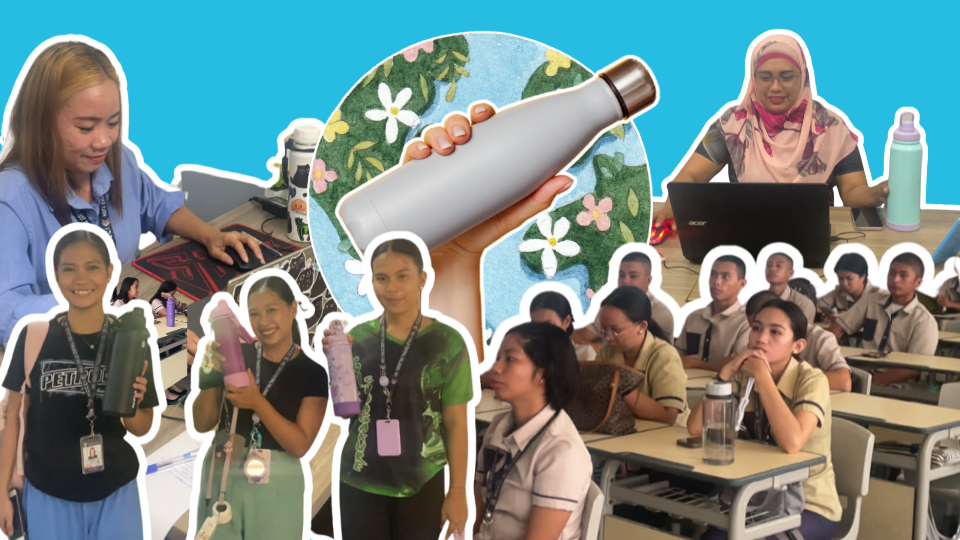
In 2025, Holy Child Central Colleges, Inc. (HCCCI) provided free drinking water for students and staff through its campus water dispensers. Between classes or during a work break, students and employees could stop for a drink or refill their containers at no cost.
That access also supports HCCCI’s Bring Your Own Tumbler initiative, which encourages students and staff to carry reusable drinking containers. A tumbler filled in the morning can be topped up throughout the day, making it easier to cut back on single-use plastic bottles.
Saving Water with Dual-Flush Toilets
The LA FONZA toilet pictured in HCCCI restroom has two flush buttons. It shows how Holy Child Central Colleges, Inc. (HCCCI) applies its Institutional Standard on Water-Saving Toilet Fixtures, which requires dual-flush toilets in every restroom of its three-storey campus building.
The two buttons let users choose between a 3-litre reduced flush for liquid waste and a 6-litre full flush for solid waste. Using the reduced setting saves three litres each time compared with a full flush. By requiring both settings in every restroom, HCCCI builds water conservation into the facilities students and staff use every day.
Landscaping with Drought-Tolerant Plants
At Holy Child Central Colleges, Inc. (HCCCI), snake plants grow in pots along the campus frontage and exterior walkway. Their upright leaves stand among other ornamentals in the container gardens and planted areas.
Also known as mother-in-law’s tongue, snake plants tolerate dry conditions and need little supplemental watering. By including drought-tolerant plants in these spaces, HCCCI keeps its frontage and walkways green while limiting the amount of water needed for landscaping.
Maximising Water Reuse Across Campus
Water from an approved handwashing sink can serve another purpose on campus. Holy Child Central Colleges, Inc. (HCCCI) sets out how in its Policy on Maximising Water Reuse, which covers all campuses and facilities the campus operates. Under Sections 5.2–5.6, greywater can be collected and treated for approved uses such as flushing toilets and urinals, watering ornamental plants under controlled conditions, and cleaning suitable outdoor areas.
The policy assigns facilities personnel responsibility for collecting, treating, storing, and distributing greywater, as well as maintaining the systems that handle it. Under the supervision of the Facilities Lead and Executive Vice President, staff check water quality and record how much water is actually reused.
Under Sections 6.5–6.6, the Executive Vice President and Facilities Lead review the policy annually with support from the Quality Assurance Department. The policy also requires HCCCI to keep signed approvals and review records so that decisions about water reuse can be traced to the records.
Learning to Care for Coastal Waters
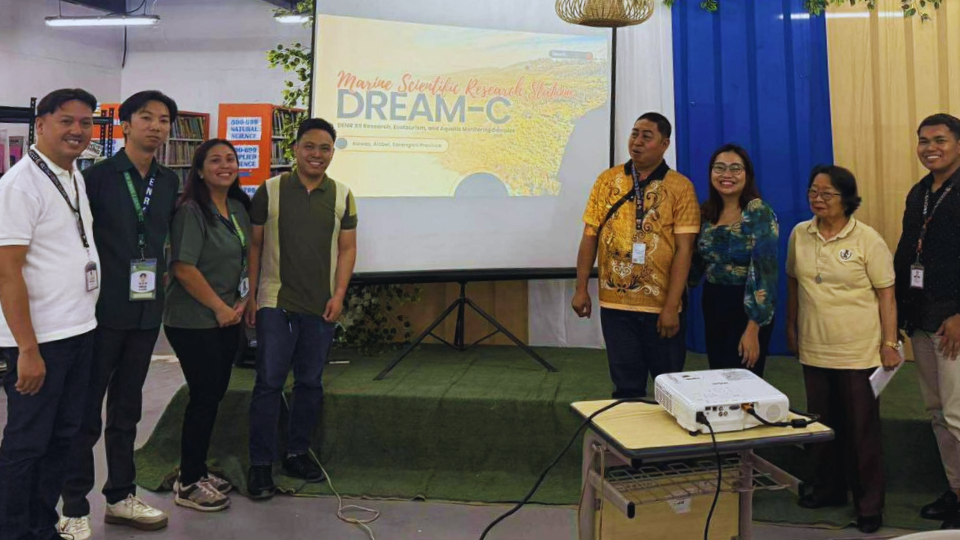
Holy Child Central Colleges, Inc. (HCCCI) is working with the Department of Environment and Natural Resources Region XII (DENR-XII) on a proposed Marine Scientific Research Station. The station would give local communities more opportunities to learn about good water management and how to care for the coastal waters and marine resources they depend on.
The proposal brings together Indigenous knowledge and scientific research. Through planned training and outreach, residents could share what they know about local waters while learning how coastal habitats support marine life and how everyday practices affect those habitats.
HCCCI envisions these activities as a way for residents to take part in conservation. By exchanging knowledge with researchers, community members could help identify practical ways to protect their coastal waters and pass those practices on to others.
Supporting Water Conservation Beyond Campus
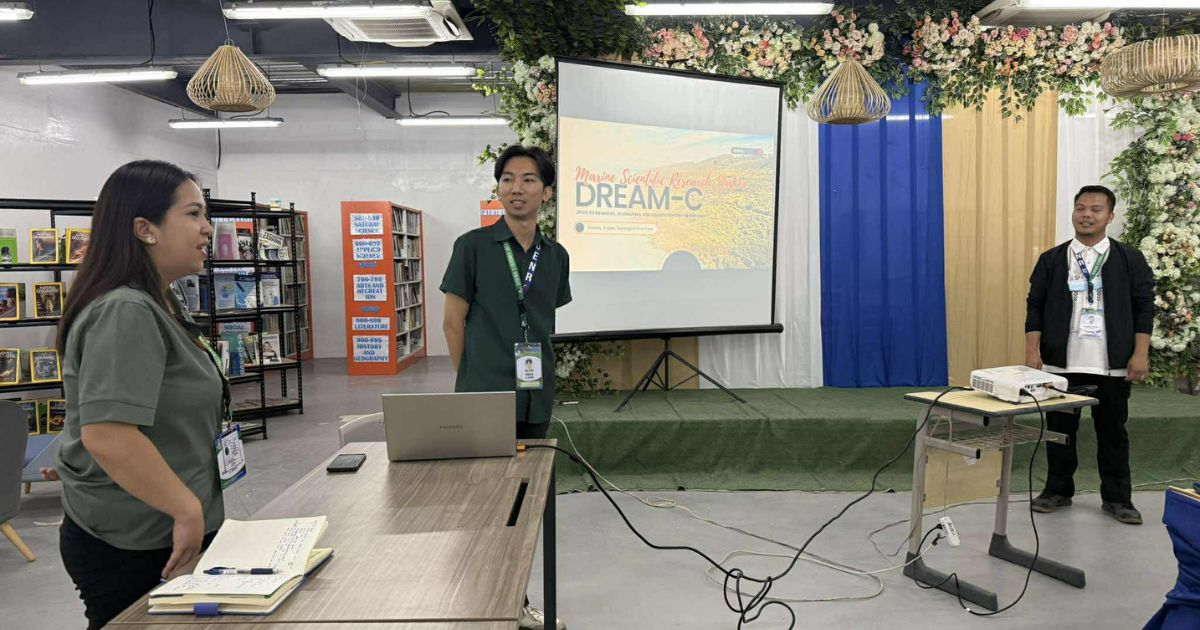
Holy Child Central Colleges, Inc. (HCCCI) is working with the Department of Environment and Natural Resources Region XII (DENR-XII) to support water conservation beyond campus. Their proposed Marine Scientific Research Station would provide a base for research that helps coastal communities identify ways to protect the waters they depend on.
The proposal calls for Indigenous communities to take part in scientific research and share their knowledge of local waters. Their observations, alongside scientific findings, could help guide future conservation efforts that protect marine habitats and sustain livelihoods tied to coastal waters.
Developing a Dedicated Water Supply for Campus
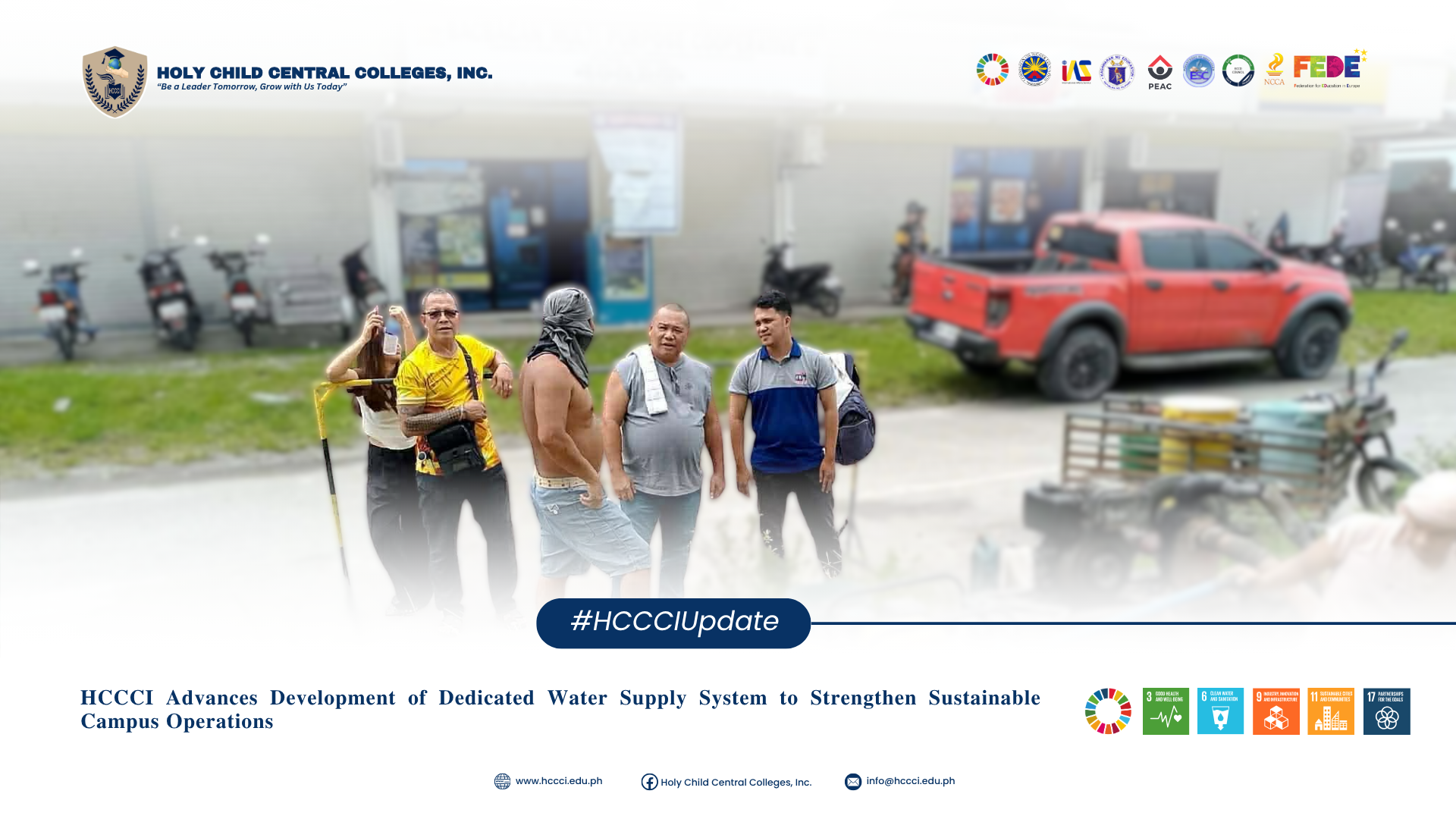
Recurring interruptions in Surallah’s municipal water supply prompted Holy Child Central Colleges, Inc. (HCCCI) to begin developing a dedicated water-supply system at Campus 1. The Physical Plants and Facilities Office and Engineering Office coordinate the project, which aims to provide a more dependable supply for restrooms, cleaning, and other daily campus operations.
As the project moves forward, HCCCI can assess sustainable water extraction technologies and identify safeguards for the water source. That assessment can help the college determine how to meet daily campus demand while managing water withdrawals responsibly over time.
Studying Coastal Waters in Sarangani Bay
Holy Child Central Colleges, Inc. (HCCCI) supports marine biology research by one of its employees. The May 2025 study at Mindanao State University–General Santos examined how coastal water conditions in the Sarangani Bay Protected Seascape changed across seasons and years, and how those changes related to marine mammal sightings.
The researchers compared sightings from 2021 to 2023 with data on chlorophyll-a, an indicator of microscopic algae, as well as sea surface temperature and salinity. The relationships varied across the bay. Those local patterns can help guide future monitoring of coastal waters and conservation of the habitats that marine mammals use.
Encouraging Responsible Water Use on Campus
Holy Child Central Colleges, Inc. (HCCCI) promotes responsible water use on campus through its Policy on Maximising Water Reuse. The policy directs campus units to avoid unnecessary water use and, when a safe supply is available, to give priority to approved recovered water for tasks such as flushing toilets and watering ornamental plants.
The policy calls on the Human Resource Management Office (HRMO), the Department of Student Affairs and Services (DSAS), and unit heads to support orientation on safe water reuse and incident reporting. It also calls for an annual summary of verified results to be made public so students and staff can follow the progress.
Bring Your Own Tumbler Day
On Bring Your Own Tumbler Day, the campus canteen at Holy Child Central Colleges, Inc. (HCCCI) paused sales of bottled beverages. The annual April 23 observance encourages students, faculty, and staff to bring reusable tumblers to campus and cut back on single-use plastics.
Free drinking water at campus dispensers makes the habit easier to keep throughout the school year. Students can refill between classes, and employees can top up during a break without buying another bottle.
Looking Ahead for Clean Water and Sanitation
Between classes, a student stops to refill a tumbler. A few minutes later, others wash their hands before lunch. Behind those ordinary moments is work most students rarely see. At Holy Child Central Colleges, Inc. (HCCCI), keeping water available, maintaining sanitation facilities, and tracking how much water the campus uses are part of putting SDG 6 (Clean Water and Sanitation) into practice.
HCCCI is developing a dedicated water supply to keep essential facilities running during interruptions in the municipal supply. The water reuse policy also gives facilities staff a way to assess where recovered water could be used, check its quality, and measure how much goes towards tasks such as flushing toilets and watering ornamental plants.
Beyond campus, HCCCI and DENR-XII are working on a proposed Marine Scientific Research Station where Indigenous communities could share their knowledge of coastal waters and help guide research on how to protect them.
Back on campus, the next class will let out, and another student will stop at the dispenser. There should be water to fill that tumbler, too.