𝐒𝐭𝐫𝐞𝐧𝐠𝐭𝐡𝐞𝐧𝐢𝐧𝐠 𝐒𝐮𝐬𝐭𝐚𝐢𝐧𝐚𝐛𝐥𝐞 𝐂𝐚𝐦𝐩𝐮𝐬 𝐖𝐚𝐭𝐞𝐫 𝐌𝐚𝐧𝐚𝐠𝐞𝐦𝐞𝐧𝐭 𝐓𝐡𝐫𝐨𝐮𝐠𝐡 𝐂𝐢𝐬𝐭𝐞𝐫𝐧 𝐓𝐚𝐧𝐤 𝐈𝐧𝐟𝐫𝐚𝐬𝐭𝐫𝐮𝐜𝐭𝐮𝐫𝐞 𝐚𝐧𝐝 𝐖𝐚𝐭𝐞𝐫 𝐂𝐨𝐧𝐬𝐞𝐫𝐯𝐚𝐭𝐢𝐨𝐧
Holy Child Central Colleges, Inc. (HCCCI) promotes sustainable water resource management through the installation and utilization of a campus cistern tank, which serves as a water storage facility to ensure a reliable supply for essential institutional operations. The cistern tank provides a reserve water supply during periods of high water demand or temporary interruptions in the municipal water supply, supporting restroom facilities, cleaning and maintenance activities, landscape irrigation, and other applicable non-potable water needs.
This infrastructure contributes to responsible water management by providing stored water for future use, helping the institution manage its water requirements and reduce unnecessary dependence on continuous municipal water withdrawals. It also strengthens campus preparedness during water supply fluctuations and supports the efficient utilization of available water resources.
Through this initiative, HCCCI demonstrates its commitment to sustainable campus operations and responsible water resource management. The cistern tank represents a practical institutional measure that supports water conservation, improves water supply resilience, and promotes the sustainable use of water within the campus community.
𝐏𝐫𝐨𝐦𝐨𝐭𝐢𝐧𝐠 𝐑𝐞𝐬𝐩𝐨𝐧𝐬𝐢𝐛𝐥𝐞 𝐚𝐧𝐝 𝐒𝐮𝐬𝐭𝐚𝐢𝐧𝐚𝐛𝐥𝐞 𝐒𝐞𝐚𝐟𝐨𝐨𝐝 𝐏𝐫𝐨𝐝𝐮𝐜𝐭𝐢𝐨𝐧 𝐓𝐡𝐫𝐨𝐮𝐠𝐡 𝐇𝐚𝐥𝐚𝐥 𝐂𝐞𝐫𝐭𝐢𝐟𝐢𝐜𝐚𝐭𝐢𝐨𝐧 𝐓𝐫𝐚𝐢𝐧𝐢𝐧𝐠 𝐚𝐧𝐝 𝐈𝐧𝐝𝐮𝐬𝐭𝐫𝐲 𝐂𝐨𝐥𝐥𝐚𝐛𝐨𝐫𝐚𝐭𝐢𝐨𝐧
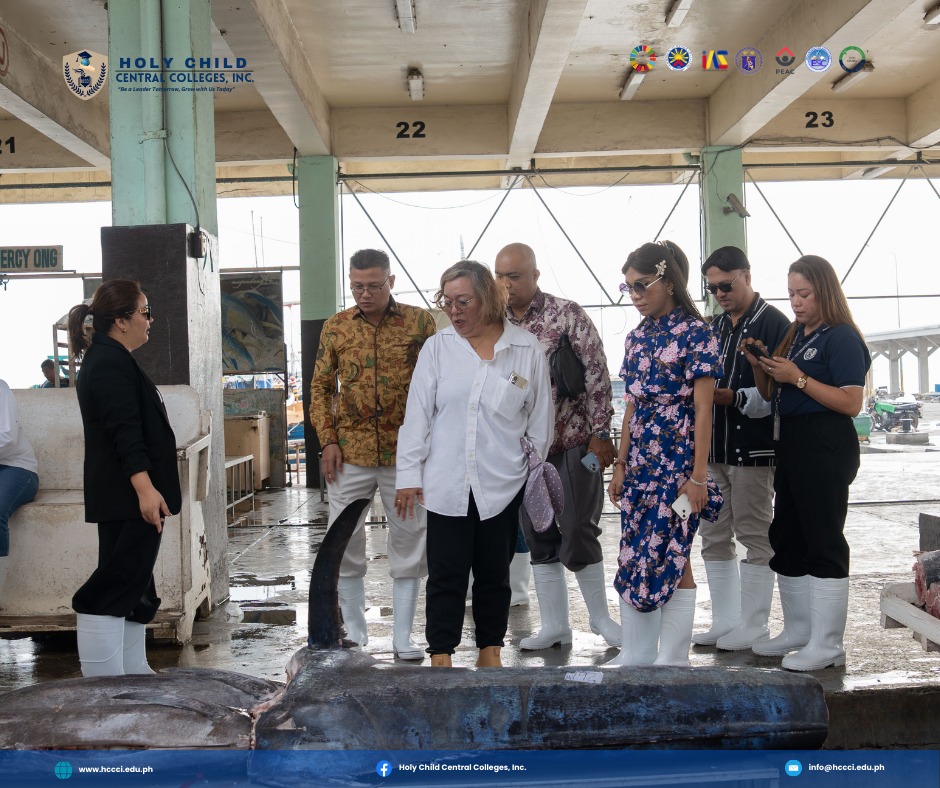
Through its Adult Learning Institute (HALI), Holy Child Central Colleges, Inc. (HCCCI) conducted a two-day Halal Certification Training in collaboration with industry partners, including Rell and Renn Fishing Corporation (RRFC), Rell and Renn Seafood Sphere Inc., iFresh, and Prime Katsoubushi Philippines Inc. The training brought together stakeholders from the seafood industry to strengthen their knowledge and understanding of Halal certification, seafood processing and handling, product traceability, quality assurance, and supply-chain standards. Through industry-led discussions and practical case studies, the program provided opportunities for knowledge-sharing and professional development among individuals involved in seafood production, processing, and distribution.
Beyond certification and product quality, the initiative promotes awareness of responsible seafood production and sustainable fisheries practices. Through its engagement with seafood-sector partners, HCCCI encourages responsible seafood sourcing, compliance with fisheries regulations, sustainable fishing practices, and awareness of measures to prevent illegal, unreported, and unregulated (IUU) fishing. The training also provides a platform for incorporating discussions on overfishing, destructive fishing methods, responsible aquaculture, and marine pollution prevention into future capacity-building activities.
Through this industry-academe collaboration, HCCCI supports the development of a more responsible seafood supply chain while strengthening stakeholder awareness of marine resource conservation and sustainable livelihoods. Training materials, attendance records, presentations, and documented discussions serve as institutional evidence of HCCCI's educational and outreach initiatives in promoting responsible seafood production and the sustainable use of marine resources.
𝐀𝐝𝐯𝐚𝐧𝐜𝐢𝐧𝐠 𝐌𝐚𝐫𝐢𝐧𝐞 𝐏𝐨𝐥𝐥𝐮𝐭𝐢𝐨𝐧 𝐏𝐫𝐞𝐯𝐞𝐧𝐭𝐢𝐨𝐧 𝐚𝐧𝐝 𝐂𝐨𝐚𝐬𝐭𝐚𝐥 𝐂𝐨𝐧𝐬𝐞𝐫𝐯𝐚𝐭𝐢𝐨𝐧 𝐓𝐡𝐫𝐨𝐮𝐠𝐡 𝐭𝐡𝐞 𝐈𝐧𝐭𝐞𝐫𝐧𝐚𝐭𝐢𝐨𝐧𝐚𝐥 𝐂𝐨𝐚𝐬𝐭𝐚𝐥 𝐂𝐥𝐞𝐚𝐧𝐮𝐩 𝐃𝐫𝐢𝐯𝐞
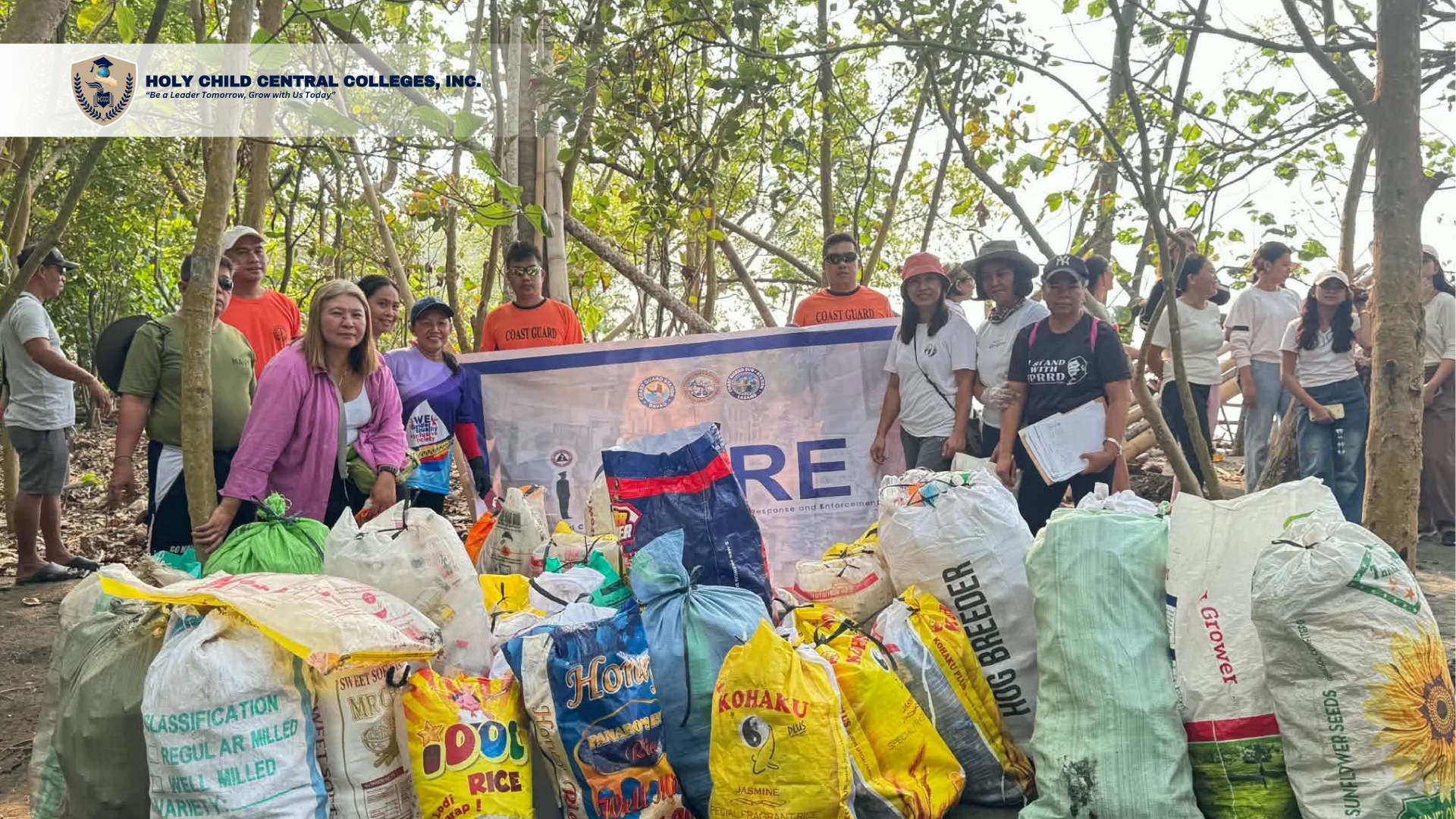
Holy Child Central Colleges, Inc. (HCCCI) participated in the International Coastal Cleanup Drive 2026 held at the Torres Coastal Area, Purok Pisces, Bucana, Barangay Lasang, Bunawan District, Davao City, under the theme “Clean Seas for Resilient Communities.” The initiative brought together student volunteers and academic leaders in a collective effort to address coastal pollution through the collection, segregation, and documentation of shoreline waste, including single-use plastics and other non-biodegradable materials. Through this organized cleanup activity, HCCCI contributed to reducing land-based waste that may enter coastal waters and threaten marine habitats and biodiversity.
The activity also provided an opportunity to strengthen environmental awareness, encourage responsible waste management, and promote active student participation in marine conservation. In coordination with local community representatives, HCCCI supported collaborative environmental action that highlights the importance of keeping coastal areas clean and preventing waste from reaching aquatic ecosystems.
Through its participation, HCCCI reinforces its commitment to marine environmental protection and community-based conservation initiatives. The International Coastal Cleanup Drive 2026 demonstrates the institution's support for organized coastal cleanup activities, pollution prevention, and collective responsibility in protecting marine and shoreline ecosystems, contributing to the objectives of Sustainable Development Goal 14: Life Below Water.
𝐔𝐩𝐡𝐨𝐥𝐝𝐢𝐧𝐠 𝐅𝐢𝐬𝐡𝐞𝐫𝐢𝐞𝐬 𝐒𝐮𝐬𝐭𝐚𝐢𝐧𝐚𝐛𝐢𝐥𝐢𝐭𝐲 𝐓𝐡𝐫𝐨𝐮𝐠𝐡 𝐑𝐞𝐬𝐩𝐨𝐧𝐬𝐢𝐛𝐥𝐞 𝐒𝐞𝐚𝐟𝐨𝐨𝐝 𝐏𝐫𝐨𝐜𝐮𝐫𝐞𝐦𝐞𝐧𝐭 𝐚𝐧𝐝 𝐒𝐮𝐩𝐩𝐥𝐲 𝐂𝐡𝐚𝐢𝐧 𝐀𝐜𝐜𝐨𝐮𝐧𝐭𝐚𝐛𝐢𝐥𝐢𝐭𝐲
Holy Child Central Colleges, Inc. (HCCCI), through its proposed partnership with Rell and Renn Fishing Corporation (RRFC), seeks to establish responsible and sustainable seafood procurement practices for fish and other aquatic food products served in the school cafeteria. The proposed Memorandum of Agreement (MOA) establishes standards for legal seafood sourcing, product traceability, responsible harvesting, and compliance with applicable fisheries and environmental regulations. It also provides for supplier documentation identifying fish species and product origins, maintenance of procurement records, and measures to prevent the acceptance of seafood products associated with illegal, unreported, and unregulated (IUU) fishing, destructive harvesting practices, or prohibited species.
The proposed partnership provides an institutional framework for integrating sustainable seafood sourcing into HCCCI's procurement operations while strengthening accountability throughout the seafood supply chain. Through supplier verification, regular monitoring, recordkeeping, and corrective measures, HCCCI aims to ensure that seafood procurement considers the responsible use and long-term sustainability of aquatic resources. The collaboration also encourages responsible consumption and supports fisheries practices that contribute to the protection of marine and freshwater ecosystems.
Through this initiative, HCCCI demonstrates its commitment to promoting sustainable seafood procurement and responsible supply-chain practices. Once formally approved, signed, and implemented, the agreement, together with supplier declarations, delivery receipts, seafood sourcing records, and monitoring reports, will provide documented evidence of the institution's efforts to support responsible fisheries management and the conservation of aquatic resources in alignment with Sustainable Development Goal 14: Life Below Water.
𝐒𝐚𝐟𝐞𝐠𝐮𝐚𝐫𝐝𝐢𝐧𝐠 𝐌𝐚𝐫𝐢𝐧𝐞 𝐁𝐢𝐨𝐝𝐢𝐯𝐞𝐫𝐬𝐢𝐭𝐲 𝐓𝐡𝐫𝐨𝐮𝐠𝐡 𝐭𝐡𝐞 𝐄𝐬𝐭𝐚𝐛𝐥𝐢𝐬𝐡𝐦𝐞𝐧𝐭 𝐨𝐟 𝐚 𝐂𝐨𝐥𝐥𝐚𝐛𝐨𝐫𝐚𝐭𝐢𝐯𝐞 𝐌𝐚𝐫𝐢𝐧𝐞 𝐒𝐜𝐢𝐞𝐧𝐭𝐢𝐟𝐢𝐜 𝐑𝐞𝐬𝐞𝐚𝐫𝐜𝐡 𝐒𝐭𝐚𝐭𝐢𝐨𝐧
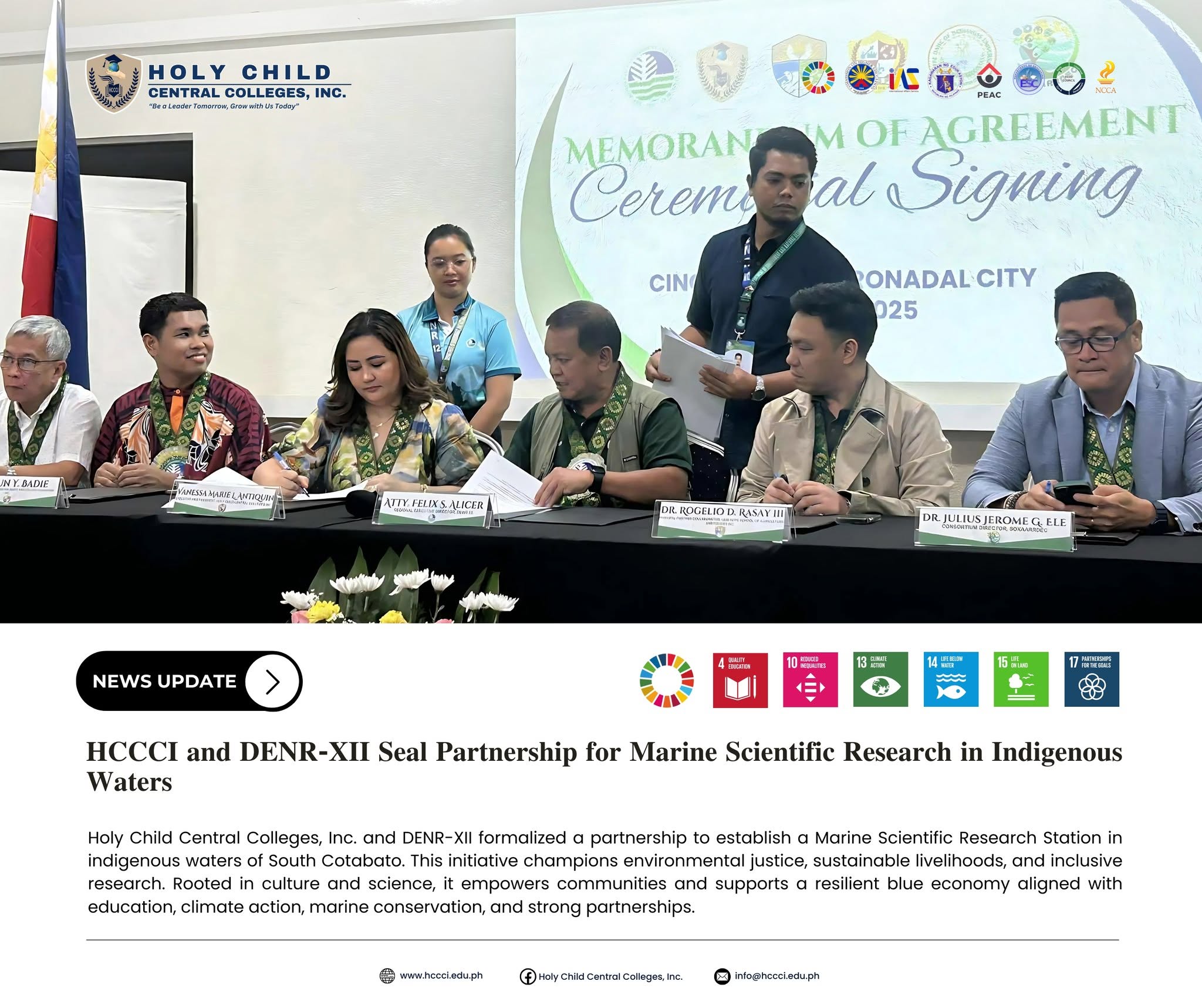
Holy Child Central Colleges, Inc. (HCCCI), in partnership with the Department of Environment and Natural Resources–Region XII (DENR-XII), established a Marine Scientific Research Station (MSRS) through a Memorandum of Agreement signed on June 25, 2025. The initiative provides an institutional platform for collaborative marine scientific research and direct conservation efforts aimed at maintaining aquatic ecosystems and protecting marine biodiversity, particularly in environmentally vulnerable coastal areas.
Through the MSRS, HCCCI and DENR-XII strengthen cooperation among academic researchers, government experts, and local communities in conducting marine environmental studies and developing science-based conservation approaches. The partnership creates opportunities for faculty and student participation in research, biodiversity documentation, ecosystem assessment, and community-based conservation initiatives. It also recognizes the value of indigenous and local knowledge in understanding environmental conditions and identifying appropriate responses to marine ecosystem challenges.
By supporting collaborative research and conservation engagement, the MSRS contributes to institutional efforts to understand, protect, and sustain coastal and marine ecosystems. Research activities, field documentation, collaborative programs, and resulting outputs provide a basis for assessing the station’s contributions to biodiversity conservation and the sustainable management of aquatic resources. Through this partnership, HCCCI reinforces its commitment to applying scientific knowledge and institutional collaboration in protecting marine life and maintaining healthy aquatic ecosystems.
𝐈𝐧𝐭𝐞𝐠𝐫𝐚𝐭𝐢𝐧𝐠 𝐎𝐜𝐞𝐚𝐧𝐨𝐠𝐫𝐚𝐩𝐡𝐢𝐜 𝐈𝐧𝐭𝐞𝐥𝐥𝐢𝐠𝐞𝐧𝐜𝐞 𝐢𝐧𝐭𝐨 𝐅𝐢𝐬𝐡𝐢𝐧𝐠 𝐎𝐩𝐞𝐫𝐚𝐭𝐢𝐨𝐧𝐬 𝐓𝐡𝐫𝐨𝐮𝐠𝐡 𝐃𝐢𝐠𝐢𝐭𝐚𝐥 𝐌𝐨𝐧𝐢𝐭𝐨𝐫𝐢𝐧𝐠 𝐓𝐞𝐜𝐡𝐧𝐨𝐥𝐨𝐠𝐲
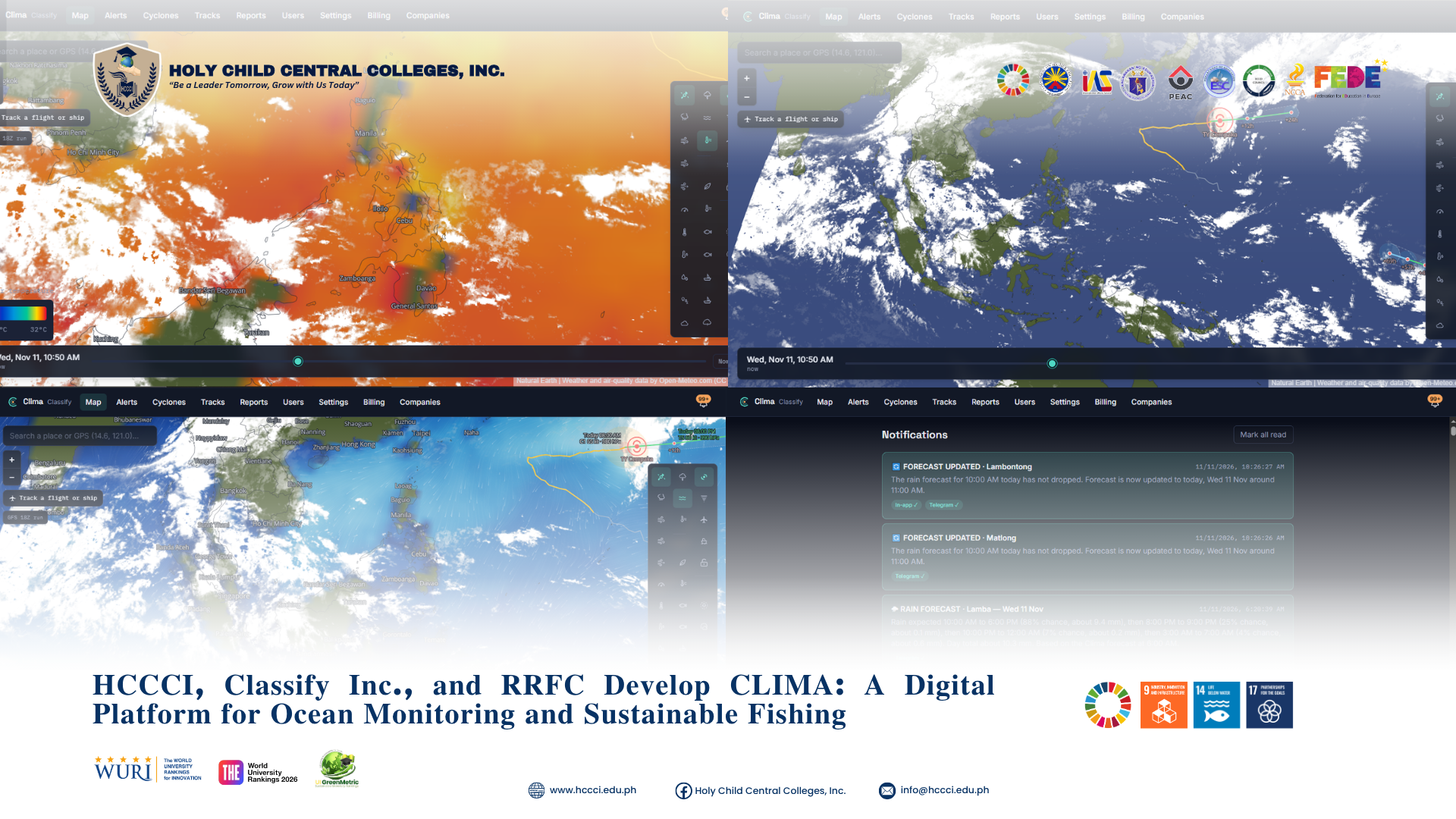
Holy Child Central Colleges, Inc. (HCCCI), in partnership with Classify Inc. and Rell and Renn Fishing Corporation (RRFC), developed a technology-based ocean monitoring software designed to support environmentally responsible fishing operations and the sustainable management of marine resources. The platform integrates weather forecasting, temperature readings, and other physical oceanographic parameters to provide fishing vessel operators with relevant environmental information for monitoring vessel operations and assessing changing ocean conditions.
Through this technology, vessel operators gain access to environmental data that can guide operational decisions and encourage greater consideration of marine conditions during fishing activities. By providing timely information on weather patterns and oceanographic changes, the system supports improved operational awareness and helps the fishing industry make more informed decisions that may reduce risks to marine environments.
The collaboration combines HCCCI's academic and research capabilities, Classify Inc.'s technological expertise, and RRFC's fishing industry experience to develop practical, technology-driven solutions for sustainable fisheries management. It demonstrates how partnerships among educational institutions, technology developers, and industry stakeholders can advance the application of digital tools in marine resource management.
By integrating oceanographic information into fishing operations, the initiative contributes to efforts to minimize potential environmental impacts and promote responsible practices within the marine industry. It also highlights the role of technological innovation and industry collaboration in supporting the protection of aquatic ecosystems and the long-term sustainability of marine resources.
𝐒𝐚𝐟𝐞𝐠𝐮𝐚𝐫𝐝𝐢𝐧𝐠 𝐀𝐪𝐮𝐚𝐭𝐢𝐜 𝐄𝐜𝐨𝐬𝐲𝐬𝐭𝐞𝐦𝐬 𝐓𝐡𝐫𝐨𝐮𝐠𝐡 𝐑𝐞𝐬𝐩𝐨𝐧𝐬𝐢𝐛𝐥𝐞 𝐖𝐚𝐬𝐭𝐞𝐰𝐚𝐭𝐞𝐫 𝐂𝐨𝐥𝐥𝐞𝐜𝐭𝐢𝐨𝐧 𝐚𝐧𝐝 𝐃𝐫𝐚𝐢𝐧𝐚𝐠𝐞 𝐌𝐚𝐧𝐚𝐠𝐞𝐦𝐞𝐧𝐭
Holy Child Central Colleges, Inc. (HCCCI) maintains campus drainage infrastructure and wastewater conveyance practices designed to support proper sanitation and minimize the potential release of pollutants from its campus operations. Although the institution does not currently operate a dedicated wastewater treatment plant or maintain a formal water pollution control program, its buildings incorporate drainage and plumbing systems designed to collect and convey wastewater from restrooms, wash areas, laboratories where applicable, and other water-utilizing facilities. These systems are integrated into the architectural design of the campus, as reflected in the institution’s approved blueprints and floor plans.
Based on existing infrastructure documentation, wastewater is conveyed through underground drainage pipelines connected to the municipal sewage system. This arrangement facilitates the systematic movement of wastewater while helping prevent accumulation, drainage obstruction, and improper disposal within campus premises. HCCCI also conducts routine inspections and maintenance of its drainage facilities to help ensure that pipelines, drainage channels, and sewer connections remain functional and properly maintained.
These infrastructure and maintenance practices form part of the institution’s efforts to manage wastewater responsibly and minimize potential water pollution arising from campus activities. The use of the municipal sewage network, together with the maintenance of campus drainage facilities, supports proper wastewater conveyance and helps reduce the risk of untreated wastewater being discharged improperly into the surrounding environment. Approved campus blueprints, floor plans, and available maintenance records serve as supporting documentation of the institution’s wastewater collection and drainage infrastructure.
Recognizing the importance of continuously improving its environmental management practices, HCCCI also acknowledges the need to strengthen its existing wastewater management arrangements through a formal water pollution prevention and control policy. The proposed policy would establish clearer institutional responsibilities, wastewater handling procedures, pollution prevention measures, and monitoring mechanisms to guide future improvements in campus wastewater management and contribute to the protection of aquatic ecosystems.
𝐈𝐧𝐬𝐭𝐢𝐭𝐮𝐭𝐢𝐨𝐧𝐚𝐥𝐢𝐳𝐢𝐧𝐠 𝐏𝐥𝐚𝐬𝐭𝐢𝐜 𝐖𝐚𝐬𝐭𝐞 𝐑𝐞𝐝𝐮𝐜𝐭𝐢𝐨𝐧 𝐚𝐧𝐝 𝐏𝐨𝐥𝐥𝐮𝐭𝐢𝐨𝐧 𝐏𝐫𝐞𝐯𝐞𝐧𝐭𝐢𝐨𝐧 𝐟𝐨𝐫 𝐭𝐡𝐞 𝐏𝐫𝐨𝐭𝐞𝐜𝐭𝐢𝐨𝐧 𝐨𝐟 𝐀𝐪𝐮𝐚𝐭𝐢𝐜 𝐄𝐜𝐨𝐬𝐲𝐬𝐭𝐞𝐦𝐬
Holy Child Central Colleges, Inc. (HCCCI) has developed a proposed institutional action plan to strengthen plastic waste reduction and promote responsible waste management across its campus. The plan outlines measures to minimize the use of single-use plastics, encourage reusable and refillable alternatives, promote environmentally responsible procurement and event practices, and improve the segregation, collection, and recycling of plastic waste. It also highlights the importance of preventing plastic litter from entering campus drainage systems and nearby waterways through proper waste disposal, regular maintenance, and pollution prevention measures.
The proposed action plan encourages the active participation of students, faculty members, administrators, employees, food concessionaires, and other campus stakeholders in reducing plastic consumption and adopting responsible waste disposal practices. It also identifies environmental awareness campaigns, plastic waste audits, monitoring of waste collection and recycling activities, and periodic assessments as mechanisms for evaluating the institution’s progress. Through these measures, HCCCI aims to establish a systematic and measurable approach to minimizing campus-generated plastic waste and preventing plastic pollution. Upon formal approval and implementation, supporting documents such as waste audit results, recycling records, campaign reports, monitoring data, and progress assessments can demonstrate the institution’s efforts toward plastic waste reduction.
𝐌𝐢𝐭𝐢𝐠𝐚𝐭𝐢𝐧𝐠 𝐋𝐚𝐧𝐝-𝐁𝐚𝐬𝐞𝐝 𝐏𝐨𝐥𝐥𝐮𝐭𝐢𝐨𝐧 𝐚𝐧𝐝 𝐏𝐫𝐞𝐬𝐞𝐫𝐯𝐢𝐧𝐠 𝐀𝐪𝐮𝐚𝐭𝐢𝐜 𝐄𝐜𝐨𝐬𝐲𝐬𝐭𝐞𝐦 𝐈𝐧𝐭𝐞𝐠𝐫𝐢𝐭𝐲 𝐓𝐡𝐫𝐨𝐮𝐠𝐡 𝐈𝐧𝐬𝐭𝐢𝐭𝐮𝐭𝐢𝐨𝐧𝐚𝐥 𝐄𝐧𝐯𝐢𝐫𝐨𝐧𝐦𝐞𝐧𝐭𝐚𝐥 𝐆𝐨𝐯𝐞𝐫𝐧𝐚𝐧𝐜𝐞
Holy Child Central Colleges, Inc. (HCCCI) proposes an institutional policy that establishes guidelines for preventing and reducing pollution arising from campus operations and other land-based activities. The policy focuses on responsible waste management, pollution prevention, and the proper handling and disposal of materials that may contaminate aquatic environments. It identifies potential sources of pollution, including plastic litter, improperly disposed solid waste, wastewater, chemicals, and other potentially harmful materials that may enter campus drainage systems and eventually reach rivers, coastal waters, and marine ecosystems. To address these concerns, the policy outlines measures for waste segregation, recycling, proper disposal, responsible chemical handling, and the regular inspection and maintenance of campus drainage infrastructure.
The proposed policy also promotes shared environmental responsibility among students, faculty members, administrators, employees, and campus service providers by encouraging their participation in pollution prevention practices. It provides for environmental awareness activities, monitoring of waste management procedures, proper documentation, and periodic evaluation of pollution prevention measures to strengthen institutional accountability. Through these guidelines, HCCCI aims to minimize the environmental impacts of its land-based activities and prevent pollutants from reaching surrounding aquatic ecosystems. Upon formal approval and implementation, supporting evidence such as waste disposal records, drainage inspection reports, environmental awareness documentation, monitoring results, and policy review records can demonstrate the institution’s efforts to prevent and reduce pollution.
𝐄𝐬𝐭𝐚𝐛𝐥𝐢𝐬𝐡𝐢𝐧𝐠 𝐒𝐮𝐬𝐭𝐚𝐢𝐧𝐚𝐛𝐥𝐞 𝐖𝐚𝐬𝐭𝐞 𝐏𝐫𝐚𝐜𝐭𝐢𝐜𝐞𝐬 𝐭𝐨 𝐌𝐢𝐭𝐢𝐠𝐚𝐭𝐞 𝐏𝐨𝐥𝐥𝐮𝐭𝐢𝐨𝐧 𝐑𝐢𝐬𝐤𝐬 𝐭𝐨 𝐀𝐪𝐮𝐚𝐭𝐢𝐜 𝐄𝐧𝐯𝐢𝐫𝐨𝐧𝐦𝐞𝐧𝐭𝐬
Responsible waste management and pollution prevention are central to Holy Child Central Colleges, Inc.’s (HCCCI) proposed measures to minimize physical, chemical, and biological alterations of aquatic ecosystems. Through its proposed environmental policy, the institution seeks to establish procedures for waste segregation, recycling, proper disposal of residual and hazardous waste, and the prevention of improper discharges into drainage systems and waterways. The policy also outlines measures for the inspection and maintenance of campus drainage infrastructure, appropriate wastewater management, and the safe handling of chemicals and potentially contaminated materials to minimize the risk of pollutants reaching aquatic environments.
The proposed policy covers biodegradable, recyclable, residual, hazardous, and liquid waste generated by various campus operations, including classrooms, laboratories, offices, and the cafeteria. It also emphasizes environmental awareness among students, faculty, administrators, employees, and campus service providers, alongside regular monitoring, documentation of waste management practices, and corrective action when potential pollution risks are identified. Through these measures, HCCCI aims to strengthen institutional accountability, minimize waste leakage into waterways, and promote responsible environmental stewardship. Upon formal approval and implementation, supporting evidence such as waste collection records, drainage inspection reports, disposal documentation, environmental awareness reports, and monitoring results can demonstrate the institution’s efforts to prevent activities that may adversely alter aquatic ecosystems.