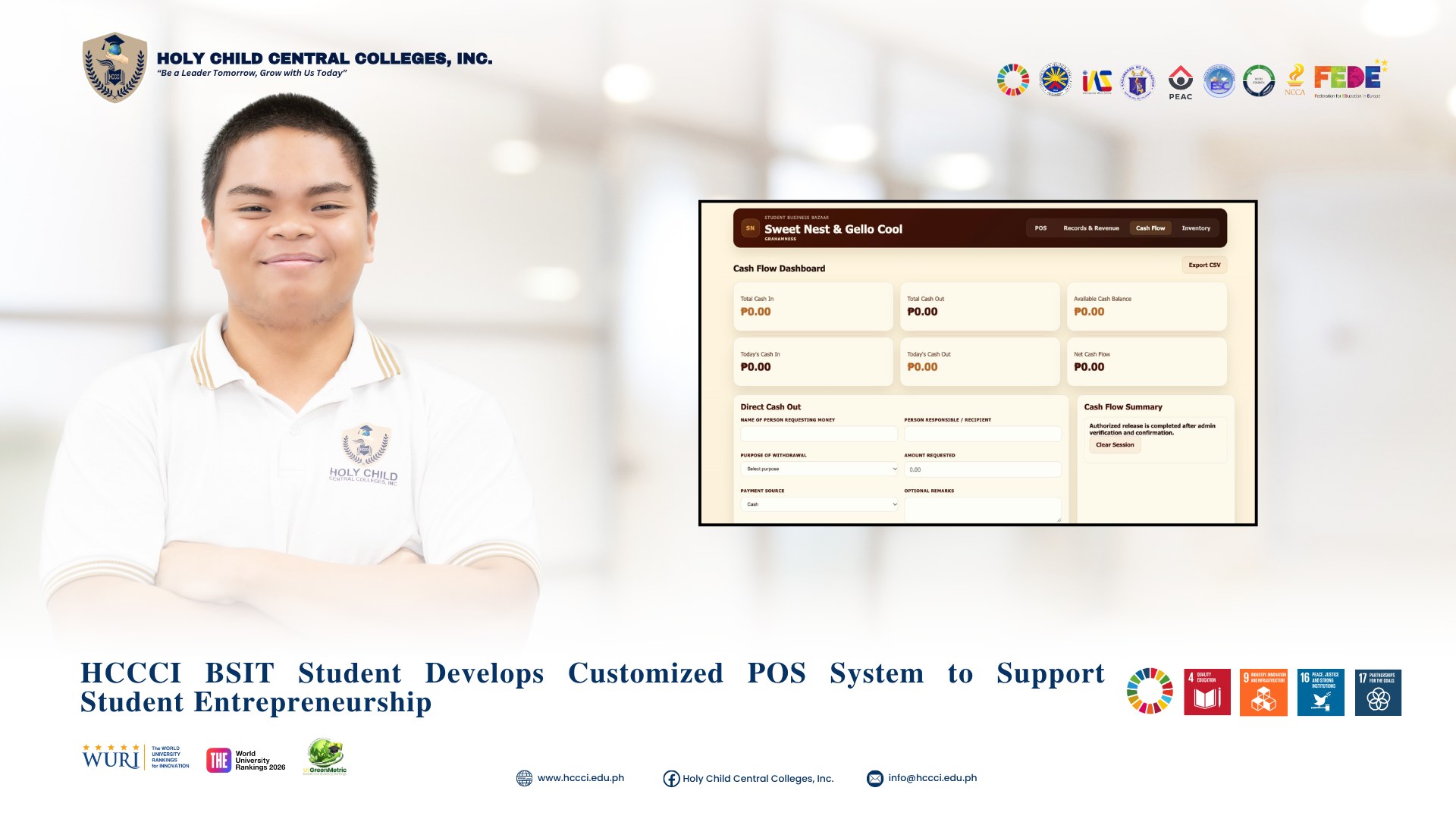
𝐇𝐂𝐂𝐂𝐈 𝐁𝐒𝐈𝐓 𝐒𝐭𝐮𝐝𝐞𝐧𝐭 𝐃𝐞𝐯𝐞𝐥𝐨𝐩𝐬 𝐂𝐮𝐬𝐭𝐨𝐦𝐢𝐳𝐞𝐝 𝐏𝐎𝐒 𝐒𝐲𝐬𝐭𝐞𝐦 𝐭𝐨 𝐒𝐮𝐩𝐩𝐨𝐫𝐭 𝐒𝐭𝐮𝐝𝐞𝐧𝐭 𝐄𝐧𝐭𝐫𝐞𝐩𝐫𝐞𝐧𝐞𝐮𝐫𝐬𝐡𝐢𝐩
A second-year Bachelor of Science in Information Technology (BSIT) student of Holy Child Central Colleges, Inc. (HCCCI) has developed a customized Point-of-Sale (POS) system for the institution’s Student Food Bazaar, applying software development skills to improve how student-led businesses process payments, record sales, and manage transactions.
Clanther John C. Rios designed the system around the bazaar’s operational needs, bringing sales transactions and monitoring into a single platform. The project demonstrates how student-developed technology can address practical challenges within an institutional setting while supporting the entrepreneurial activities of students from different academic programs.
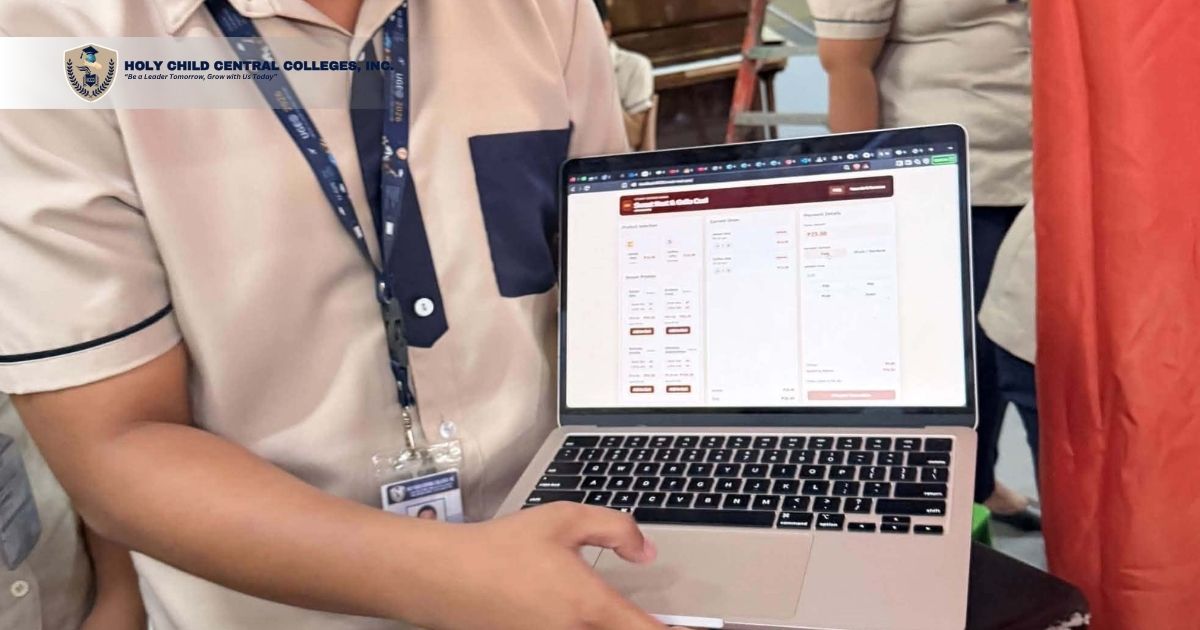
The system streamlines customer orders and payments while automatically recording sales, reducing reliance on manual documentation. It also supports promotional bundles, helping student vendors manage combined product offers, and accommodates both cash and electronic payments to suit different transaction arrangements.
Another feature allows admin-authorized cash withdrawals with digital signatures. By incorporating authorization procedures into cash handling, the system supports more structured transaction management and reinforces the importance of accountability in a business setting.
The project demonstrates the value of developing technology around an actual user need. Rather than simply studying existing applications, Rios applied his skills to create a solution tailored to the Student Food Bazaar. This approach connects software development with practical problem-solving, showing how a student’s technical competencies can be used to address the operational challenges of an institutional activity.
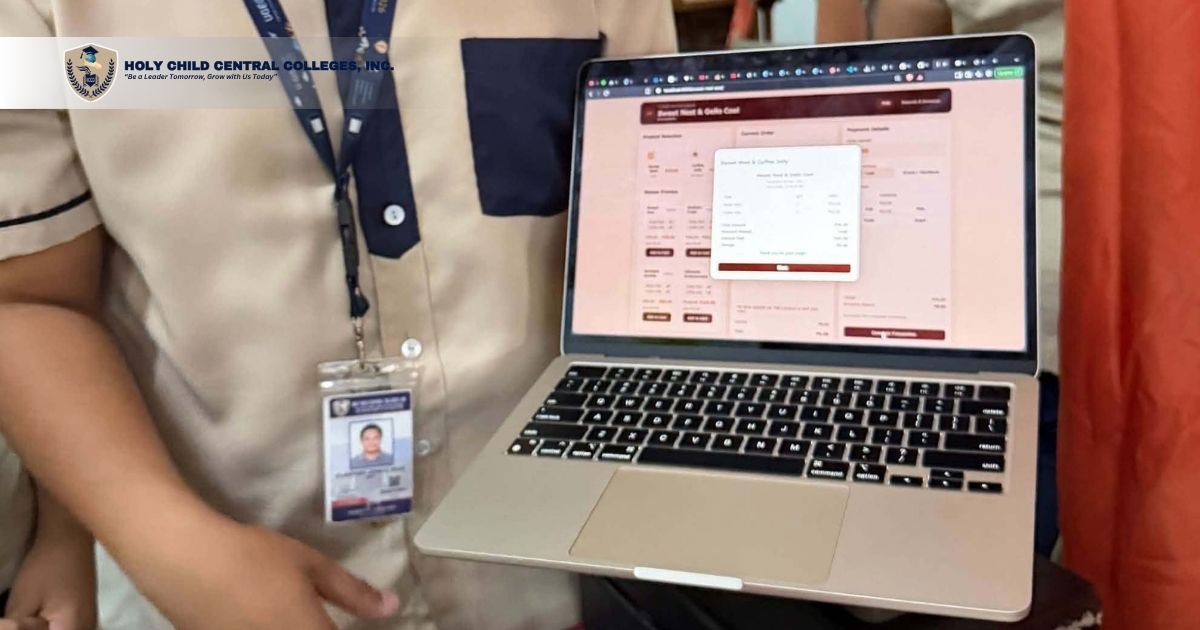
The system also illustrates the connection between information technology and entrepreneurship. While student vendors focus on their products, pricing, promotion, and customer relationships, a purpose-built digital tool can help organize the processes behind their transactions. This intersection of technical development and business activity highlights how different skills can complement one another in creating more effective ways of working.
For Rios, the project provides an opportunity to apply and refine his knowledge through system development with a defined purpose. For HCCCI’s Student Food Bazaar, it offers a technology-based approach to transaction processing and sales monitoring, with potential for further testing and improvement as operational needs evolve.
The initiative aligns with Sustainable Development Goal (SDG) 4: Quality Education, by translating classroom learning into practical application; SDG 9: Industry, Innovation and Infrastructure, through the development of a digital solution for business operations; and SDG 16: Peace, Justice and Strong Institutions, through features that support transaction documentation and authorized cash handling. It also reflects the collaborative potential of SDG 17: Partnerships for the Goals, as technical expertise is applied to support the needs of the bazaar and its stakeholders.
Rios’ work reflects HCCCI’s commitment to learning that connects knowledge with action. His customized POS system demonstrates that innovation does not always require a large-scale platform or a complex technological breakthrough. It can begin with identifying a practical problem, understanding the people who experience it, and developing a focused solution that helps them work more effectively.
Through this project, HCCCI highlights the potential of student-developed technology to contribute to everyday operations and support initiatives beyond the classroom. It is an example of how technical education can nurture problem-solvers who use their skills not only to build systems, but also to create practical value for the people and communities around them.