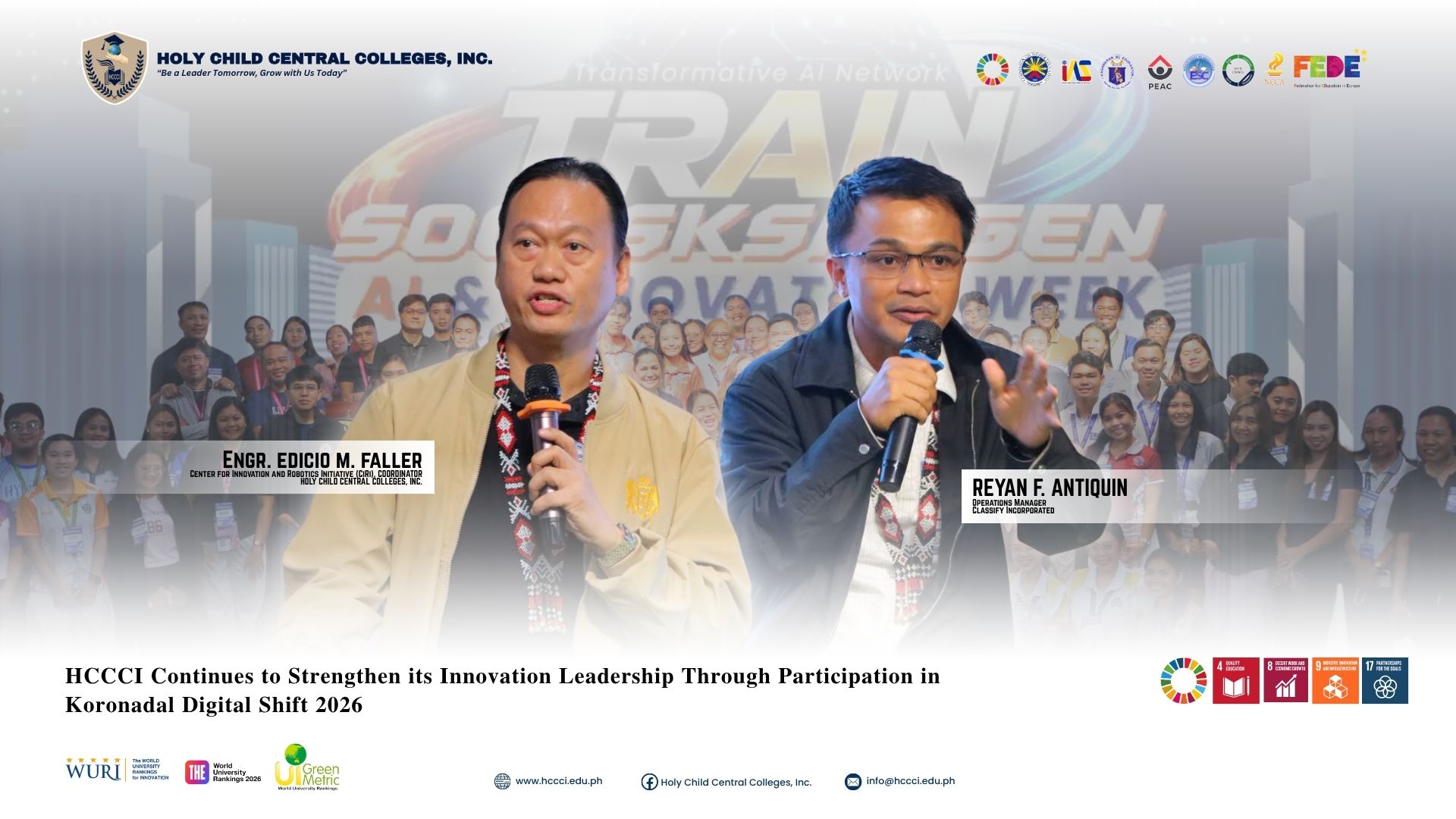
𝐇𝐂𝐂𝐂𝐈 𝐂𝐨𝐧𝐭𝐢𝐧𝐮𝐞𝐬 𝐭𝐨 𝐒𝐭𝐫𝐞𝐧𝐠𝐭𝐡𝐞𝐧 𝐢𝐭𝐬 𝐈𝐧𝐧𝐨𝐯𝐚𝐭𝐢𝐨𝐧 𝐋𝐞𝐚𝐝𝐞𝐫𝐬𝐡𝐢𝐩 𝐓𝐡𝐫𝐨𝐮𝐠𝐡 𝐏𝐚𝐫𝐭𝐢𝐜𝐢𝐩𝐚𝐭𝐢𝐨𝐧 𝐢𝐧 𝐊𝐨𝐫𝐨𝐧𝐚𝐝𝐚𝐥 𝐃𝐢𝐠𝐢𝐭𝐚𝐥 𝐒𝐡𝐢𝐟𝐭 𝟐𝟎𝟐𝟔
Holy Child Central Colleges, Inc. (HCCCI) strengthened its engagement in regional innovation and digital transformation initiatives through its participation in Koronadal Digital Shift 2026: eGovernment, AI Skills and Creative Economy, held on October 28, 2026, at CHEQ Seafoods, Barangay Sto. Niño, Koronadal City. The institution's participation highlighted the growing role of higher education in advancing technological innovation, developing digital competencies, and preparing learners for the opportunities and challenges of an increasingly technology-driven society. Through its engagement in discussions on robotics, artificial intelligence, and workforce development, HCCCI contributed an academic perspective to regional conversations on building a more innovative, digitally capable, and future-ready community.
Conducted under the Transformative AI Network (TRAIN) SOCCSKSARGEN AI and Innovation Week, the event gathered representatives from government agencies, educational institutions, technology organizations, and private industries to discuss emerging developments in artificial intelligence, digital governance, entrepreneurship, cybersecurity, and innovation-driven economic growth. The convergence provided a platform for examining how technological advancements can improve public services, strengthen institutional operations, create new economic opportunities, and respond to changing industry requirements. It also emphasized the importance of cooperation among different sectors in ensuring that digital transformation translates into practical solutions, improved capabilities, and inclusive opportunities for communities across the region.
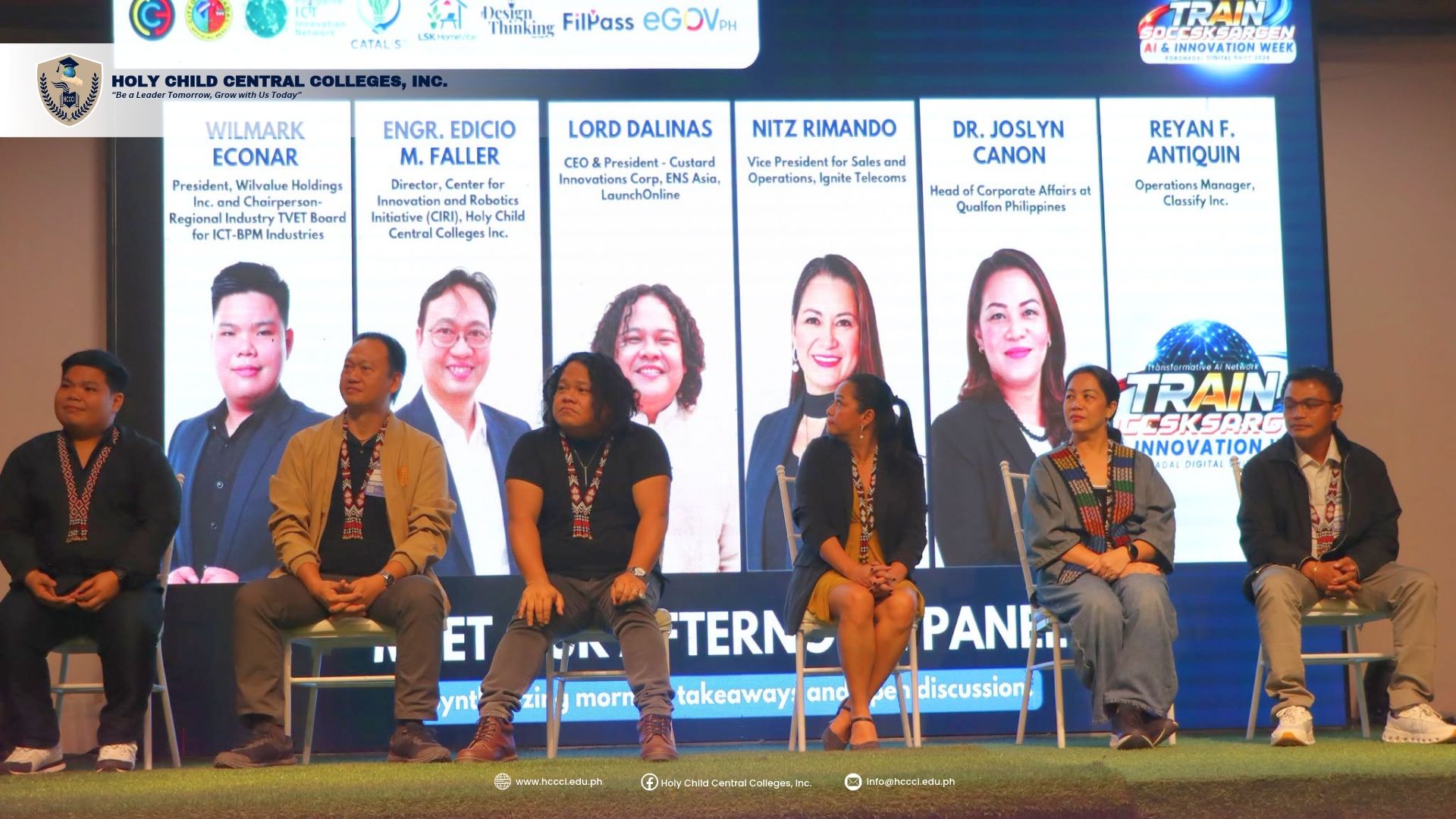
Representing HCCCI was Engr. Edicio M. Faller, Coordinator of the institution's Center for Innovation and Robotics Initiative (CiRi), who served as a resource speaker and panelist during the session on Talent Innovation and Robotics. The session explored the growing significance of robotics, automation, and emerging technologies in education, industry, and community development. It provided an avenue for discussing how technology-related competencies can be integrated into learning environments and how educational institutions can contribute to developing a workforce equipped to respond to technological advancements. Engr. Faller's participation brought HCCCI's academic and institutional perspective into the discussion, particularly on the role of innovation initiatives in preparing learners for emerging technological applications.
During the discussion, Engr. Faller highlighted the increasing influence of robotics, automation, and artificial intelligence in transforming industries and reshaping the nature of work. He emphasized the need for educational institutions to move beyond conventional approaches to instruction by providing opportunities for learners to develop technological awareness, problem-solving abilities, creativity, and practical innovation skills. As industries continue to adopt automated systems and intelligent technologies, students must be equipped not only with foundational knowledge but also with the adaptability and competencies required to work with emerging tools and systems. His participation reinforced HCCCI's commitment to cultivating an institutional culture that values experimentation, technological exploration, and innovation as essential components of future-ready education.
The discussion also highlighted the role of HCCCI's Center for Innovation and Robotics Initiative (CiRi) in supporting the institution's direction toward technology-oriented learning and innovation. Through its focus on robotics and related technological initiatives, CiRi provides an institutional platform for exploring how emerging technologies can be integrated into educational experiences and innovation activities. Such initiatives are particularly relevant as higher education institutions respond to the growing demand for graduates who can apply knowledge, adapt to technological changes, and contribute to solutions addressing contemporary industry and community needs. This direction supports SDG 4: Quality Education, particularly the development of relevant technical and vocational skills for employment and entrepreneurship, while reinforcing the importance of lifelong learning and continuous skills development.
Also participating in the event was Reyan F. Antiquin, Operations Manager of Classify Inc., an HCCCI industry partner and provider of the institution's Learning Management System (LMS). His participation in the afternoon panel discussions and open forum brought an industry perspective to conversations on digital transformation, innovation management, and the evolving relationship between technology and education. As HCCCI's LMS provider, Classify Inc. plays a role in supporting the institution's technology-enabled learning environment. Its involvement in the event also highlighted the value of connecting educational institutions with technology providers and industry practitioners who can contribute practical perspectives on digital systems, innovation, and the changing requirements of the workplace.
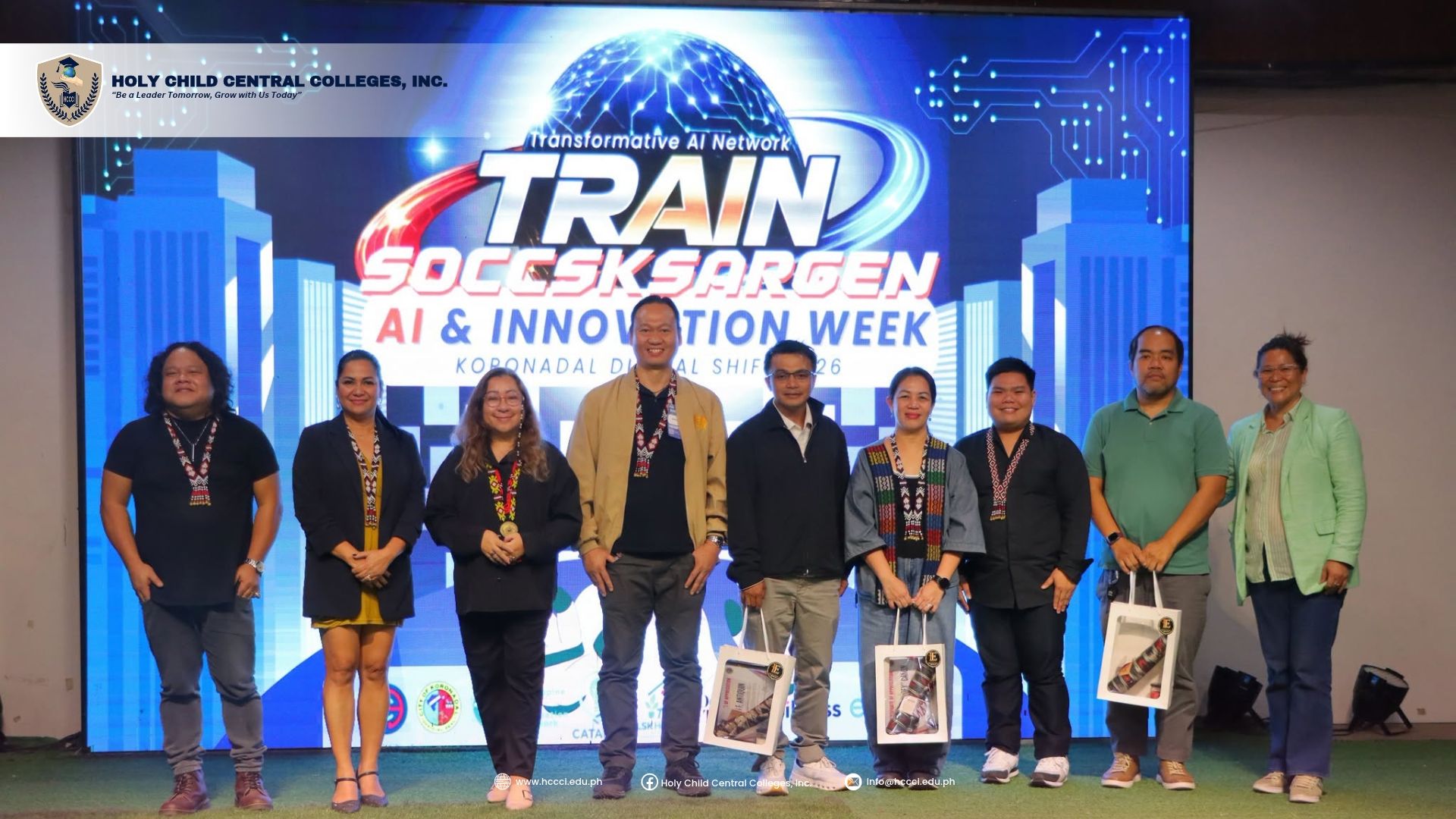
The participation of Engr. Faller and Antiquin underscored the importance of academe-industry collaboration in developing educational approaches that remain responsive to technological advancements and workforce demands. Higher education institutions provide the academic foundation for developing knowledge and competencies, while industry partners contribute practical insights into the technologies, systems, and skills being adopted in professional environments. Through these complementary perspectives, collaboration can help identify emerging skills requirements, strengthen digital learning initiatives, and explore opportunities for applying technology in education and institutional development. Their joint participation also demonstrated how existing institutional partnerships can serve as avenues for continued engagement, knowledge exchange, and shared innovation.
A key highlight of the event was the collaborative exchange of ideas among stakeholders from government, education, and the private sector. Discussions centered on digital skills mapping, innovation pathways, artificial intelligence applications, robotics, and strategies for fostering inclusive and sustainable technological growth across SOCCSKSARGEN. These conversations emphasized that successful digital transformation requires more than access to technological tools. It also depends on developing human capabilities, strengthening institutional readiness, encouraging entrepreneurship, and ensuring that communities can participate in the opportunities created by emerging technologies. The convergence of different sectors provided a broader perspective on how regional stakeholders can work together to build an innovation ecosystem that supports sustainable development and economic competitiveness.
The discussions on technological competencies and innovative approaches to learning connect with SDG 4: Quality Education, particularly Target 4.4, which calls for increasing the number of young people and adults with relevant skills, including technical and vocational skills, for employment, decent jobs, and entrepreneurship. The emphasis on robotics, artificial intelligence, and digital literacy reflects the importance of preparing learners for an evolving employment landscape. By strengthening technology-oriented learning initiatives and engaging with industry perspectives, HCCCI recognizes the need to develop graduates who can apply their knowledge, adapt to technological change, and participate productively in the digital economy.
The event also supports the broader objectives of SDG 8: Decent Work and Economic Growth, particularly Target 8.3, which promotes productive activities, entrepreneurship, creativity, and innovation, and Target 8.6, which addresses the reduction of young people not in employment, education, or training. Discussions on talent innovation, emerging careers, and workforce development highlighted the importance of aligning education with changing labor market requirements. Developing digital and technology-related competencies can help prepare young people for new employment pathways and entrepreneurial opportunities. Through its participation, HCCCI contributed an educational perspective to conversations on preparing learners for meaningful participation in a technology-driven economy.
Furthermore, the focus on artificial intelligence, robotics, and technological advancement aligns with SDG 9: Industry, Innovation and Infrastructure, particularly Target 9.5, which promotes scientific research, technological capabilities, and innovation. The session on Talent Innovation and Robotics highlighted the growing importance of strengthening technological knowledge and encouraging innovation across educational and industry settings. HCCCI's engagement through CiRi reflects its interest in advancing technology-oriented initiatives and exploring how innovation can be incorporated into institutional learning and development. These efforts contribute to the broader recognition that educational institutions have an important role in cultivating the knowledge, skills, and innovative thinking necessary to support technological progress.
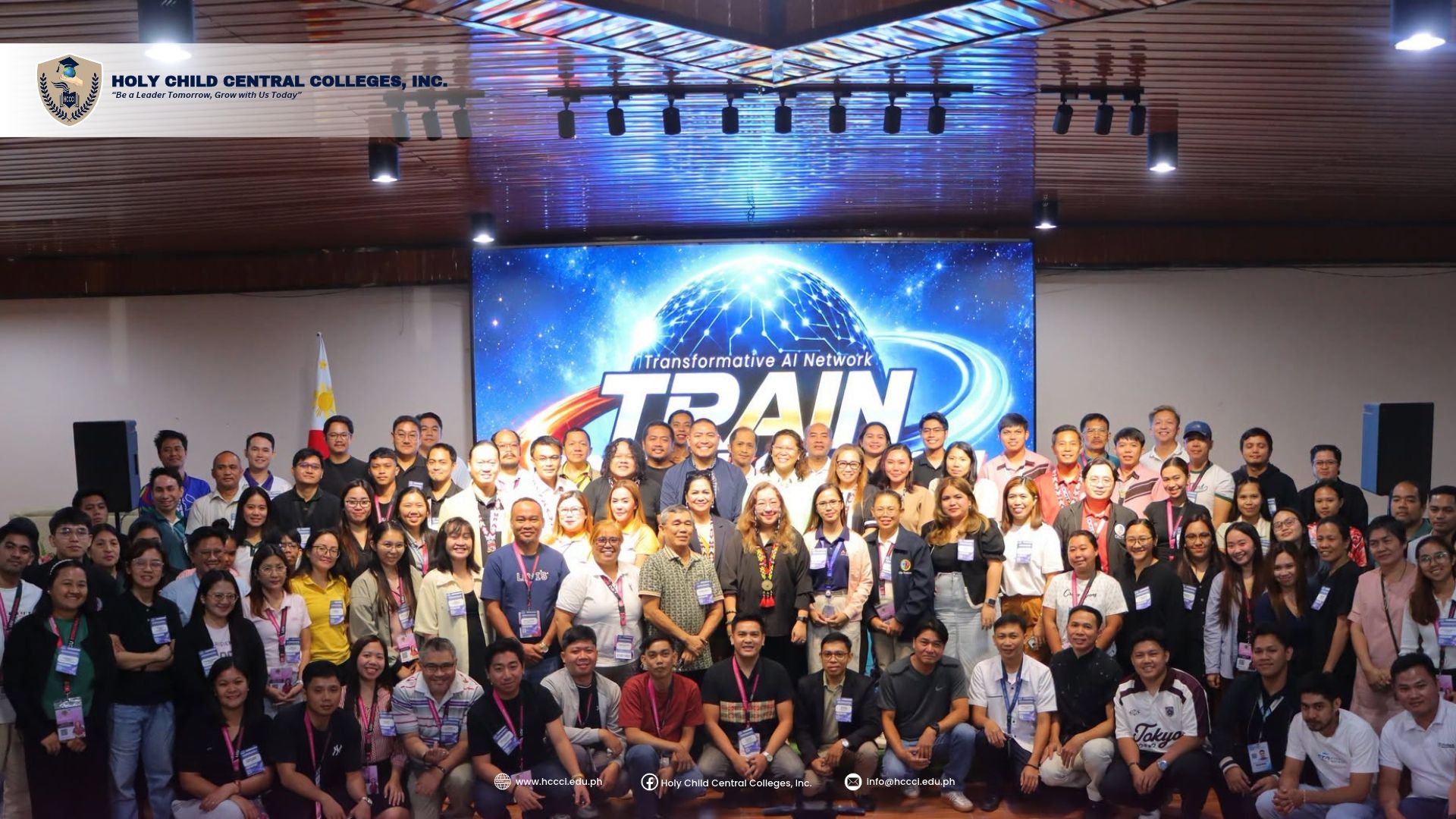
The collaboration among government agencies, educational institutions, industry leaders, and technology advocates also reflects the objectives of SDG 17: Partnerships for the Goals, particularly Target 17.17, which encourages effective partnerships among public, private, and civil society sectors. The participation of HCCCI and Classify Inc. demonstrated the importance of maintaining relationships between academe and industry in advancing technology-enabled education and responding to shared development priorities. Through continued engagement with external stakeholders, higher education institutions can exchange expertise, explore collaborative initiatives, and strengthen their capacity to address emerging challenges in education, innovation, and workforce development.
Through the active participation of Engr. Edicio M. Faller and Reyan F. Antiquin, HCCCI reaffirmed its commitment to innovation, technology education, and meaningful industry engagement. Their involvement in Koronadal Digital Shift 2026 strengthened the institution's participation in regional discussions on artificial intelligence, robotics, digital transformation, and the creative economy. As HCCCI continues to develop its innovation initiatives and strengthen its external partnerships, it remains committed to preparing competent, adaptable, and innovative graduates who can contribute to technological advancement, economic development, and sustainable progress in their communities and beyond.