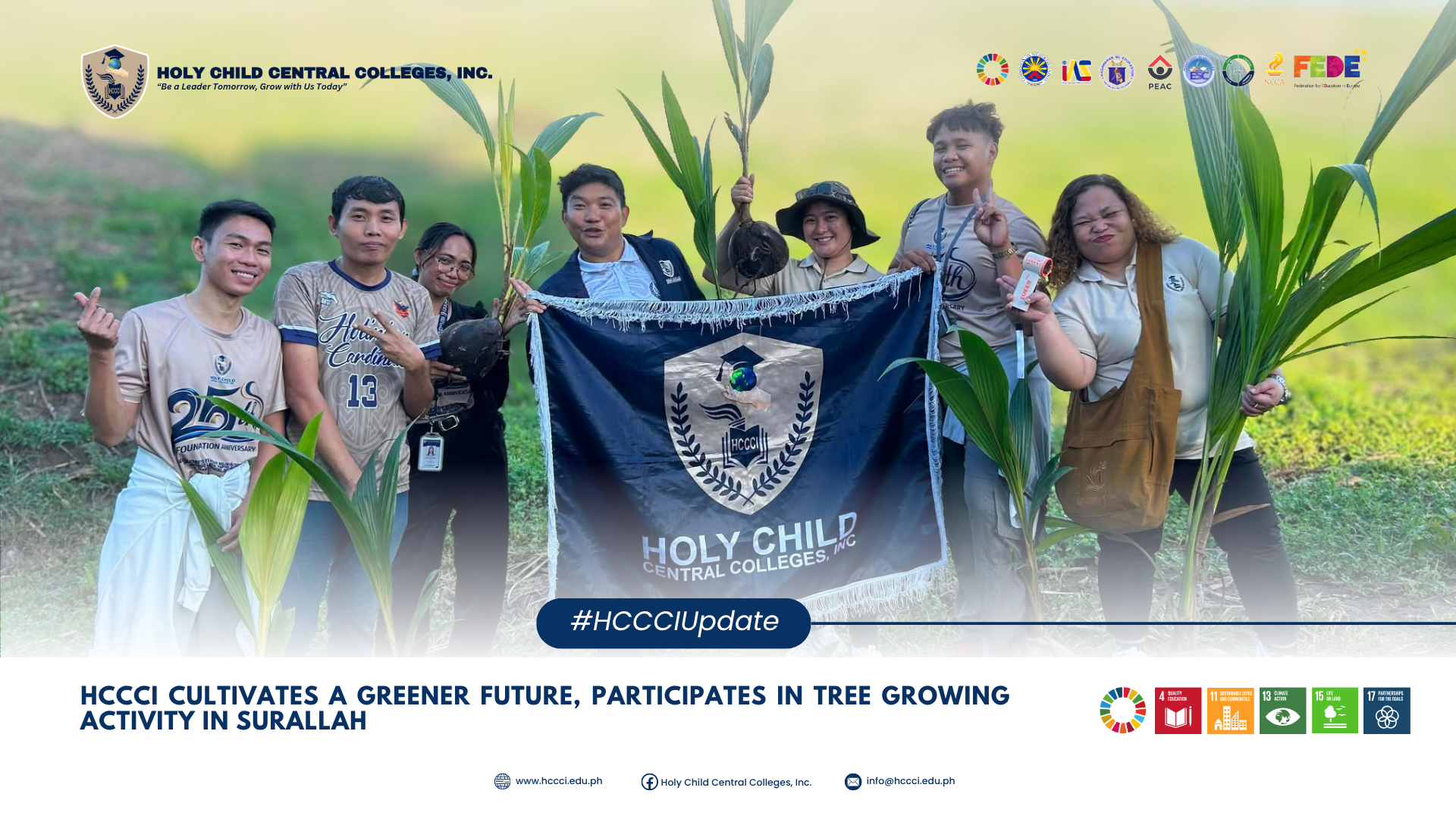
𝐇𝐂𝐂𝐂𝐈 𝐀𝐝𝐯𝐚𝐧𝐜𝐞𝐬 𝐑𝐞𝐟𝐨𝐫𝐞𝐬𝐭𝐚𝐭𝐢𝐨𝐧 𝐚𝐧𝐝 𝐄𝐧𝐯𝐢𝐫𝐨𝐧𝐦𝐞𝐧𝐭𝐚𝐥 𝐂𝐨𝐧𝐬𝐞𝐫𝐯𝐚𝐭𝐢𝐨𝐧 𝐓𝐡𝐫𝐨𝐮𝐠𝐡 𝐓𝐫𝐞𝐞 𝐆𝐫𝐨𝐰𝐢𝐧𝐠 𝐈𝐧𝐢𝐭𝐢𝐚𝐭𝐢𝐯𝐞
Demonstrating its commitment to environmental stewardship and community engagement, Holy Child Central Colleges, Inc. (HCCCI), through its Community Extension Services Office, participated in the Puno sang Kabuhi: 9th Tree Growing Festival on June 22, 2025, at Sitio Lambusong, Barangay Colongulo, Surallah, South Cotabato. The tree-growing activity was one of the highlights of the Surbetube Festival, celebrated under the theme "Together We Grow, Together We Thrive." The event brought together representatives from educational institutions, government agencies, and various organizations to support collective efforts toward forest restoration and the sustainable management of natural resources.
Organized by the Local Government Unit (LGU) of Surallah, in partnership with the Municipal Environment and Natural Resources Office (MENRO), the annual festival promotes environmental conservation through community participation in tree growing and reforestation activities. It provides an opportunity for different sectors to contribute to the restoration of vegetation, the improvement of natural surroundings, and the protection of the environment. Beyond the planting activity, the initiative reinforces the importance of responsible land stewardship and the shared responsibility of maintaining healthy ecosystems for present and future generations.
Representing HCCCI in the activity were Ms. Grasya T. Lumba, Community Extension Services Coordinator; Mr. Jhon Lucas Frac, Corporate Activity Director; Mr. Bon Bon Mallare of the Socio Cultural Arts Club; Mr. Francis Lyod Galanida, General Education Coordinator; Ms. Kaye Escober, ROTC Coordinator; Mr. Jastine Gatdula, Faculty Member; and Ms. Stephany Domingo, Faculty Member. Their participation reflected the institution's support for community-based environmental initiatives and its collaboration with local government partners in promoting sustainable practices.
Working alongside fellow volunteers, the HCCCI delegates planted tree seedlings in designated areas of Sitio Lambusong, contributing to the municipality's ongoing reforestation efforts. Tree growing supports the restoration of vegetation and helps maintain the ecological functions of land areas, including soil protection and the provision of habitats for wildlife. Through participation in this initiative, HCCCI supported practical efforts to promote the conservation and sustainable utilisation of land, particularly through activities that encourage the restoration and responsible care of tree-covered areas.
The activity also provided an opportunity for HCCCI representatives to engage with community volunteers and partner organizations in advancing environmental awareness and collective responsibility. By taking part in a locally organized conservation initiative, the institution reinforced the role of educational institutions in supporting environmental programmes beyond their campuses and encouraging meaningful community participation in natural resource protection.
HCCCI's participation in the Puno sang Kabuhi: 9th Tree Growing Festival contributes to the United Nations Sustainable Development Goals (SDGs), particularly SDG 15: Life on Land, through support for tree growing, reforestation, and the restoration of terrestrial environments. It also supports SDG 13: Climate Action by contributing to local efforts that strengthen environmental resilience, and SDG 17: Partnerships for the Goals through collaboration with the LGU Surallah and MENRO. Furthermore, the activity provides experiential opportunities for environmental awareness and civic responsibility, contributing to SDG 4: Quality Education.
Guided by the festival's theme, "Together We Grow, Together We Thrive," the initiative highlights how institutional participation and community partnerships can support environmental conservation. Through its Community Extension Services Office, HCCCI continues to engage in collaborative environmental activities that encourage responsible stewardship of natural resources and contribute to sustainable community development.