Bringing Quality Education Within Reach
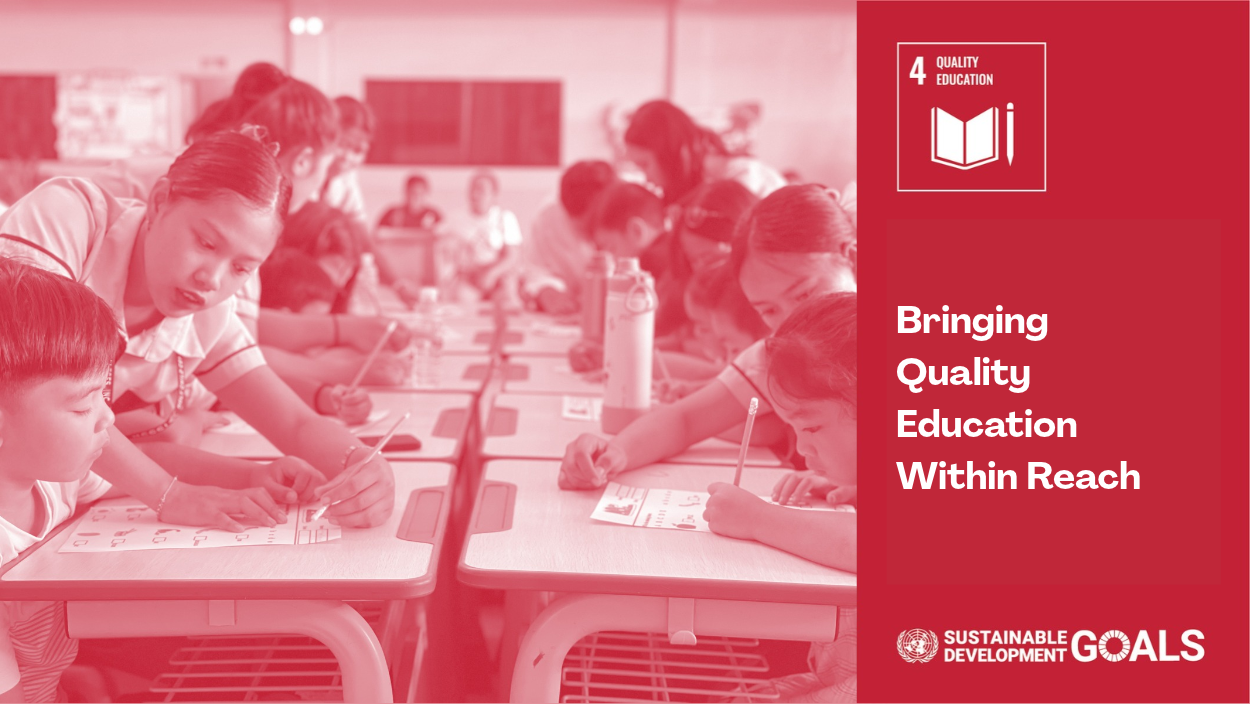
Holy Child Central Colleges, Inc. (HCCCI) advances Sustainable Development Goal 4 (Quality Education) by widening access to higher education, especially for students who are the first in their families to attend college. HCCCI pairs classroom instruction with academic guidance, hands-on training, and community engagement so students can build the skills and values they will carry into their professions. The institution also works with local partners in South Cotabato to bring reading resources closer to children and help adults develop practical skills for employment and entrepreneurship, extending opportunities for lifelong learning beyond campus.
Preparing the Next Generation of Holinian Teachers
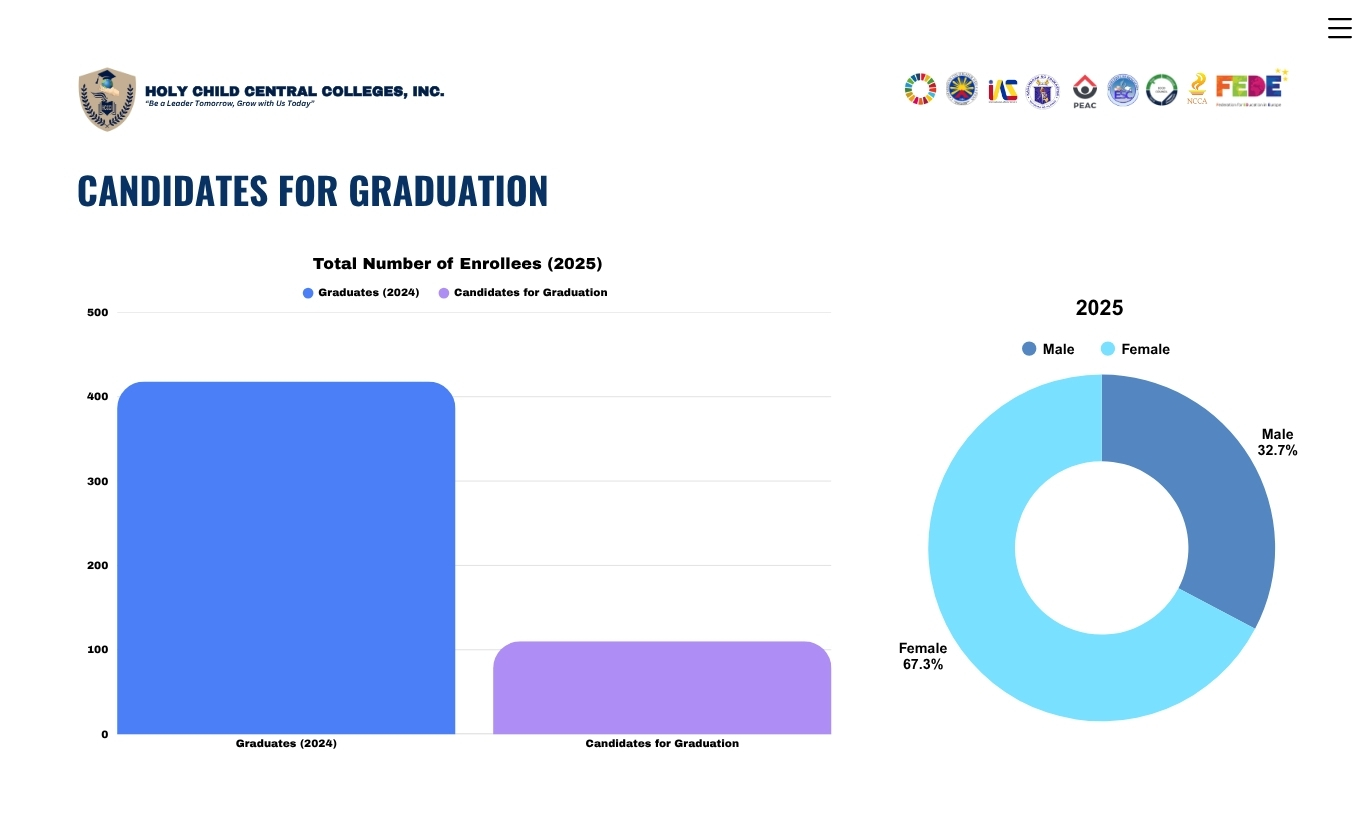
Holy Child Central Colleges, Inc. (HCCCI) celebrates the future educators preparing for graduation in 2027 from its Bachelor of Early Childhood Education (BECED) and Bachelor of Technical-Vocational Teacher Education (BTVTED) programs. BECED candidates learn to design activities that help young children build language and social skills, while BTVTED candidates learn to demonstrate practical skills and guide students through hands-on learning. In both programs, classroom observation and supervised teaching give candidates opportunities to put their coursework into practice with guidance from faculty and cooperating teachers.
HIMReJ Opens Research to the Public
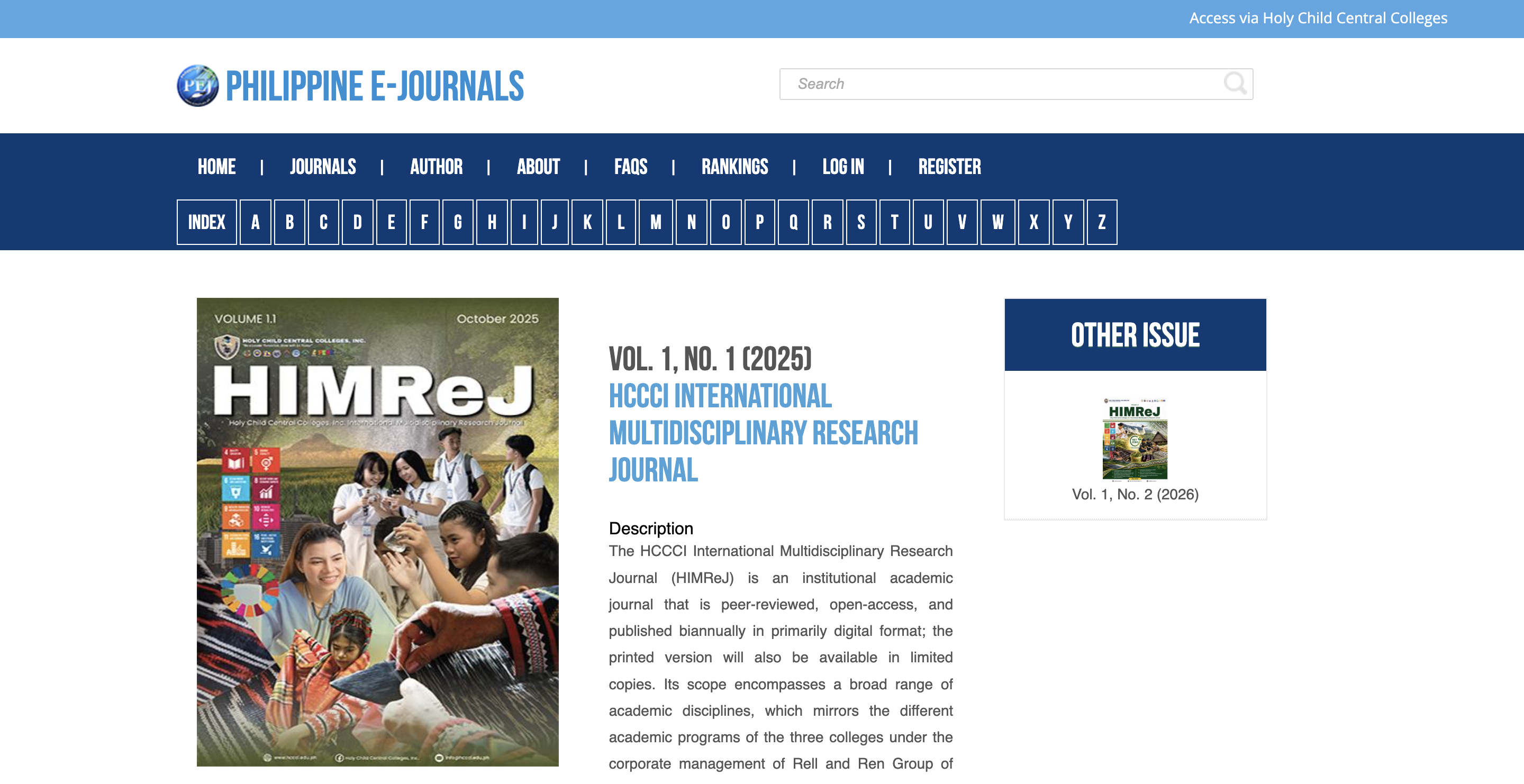
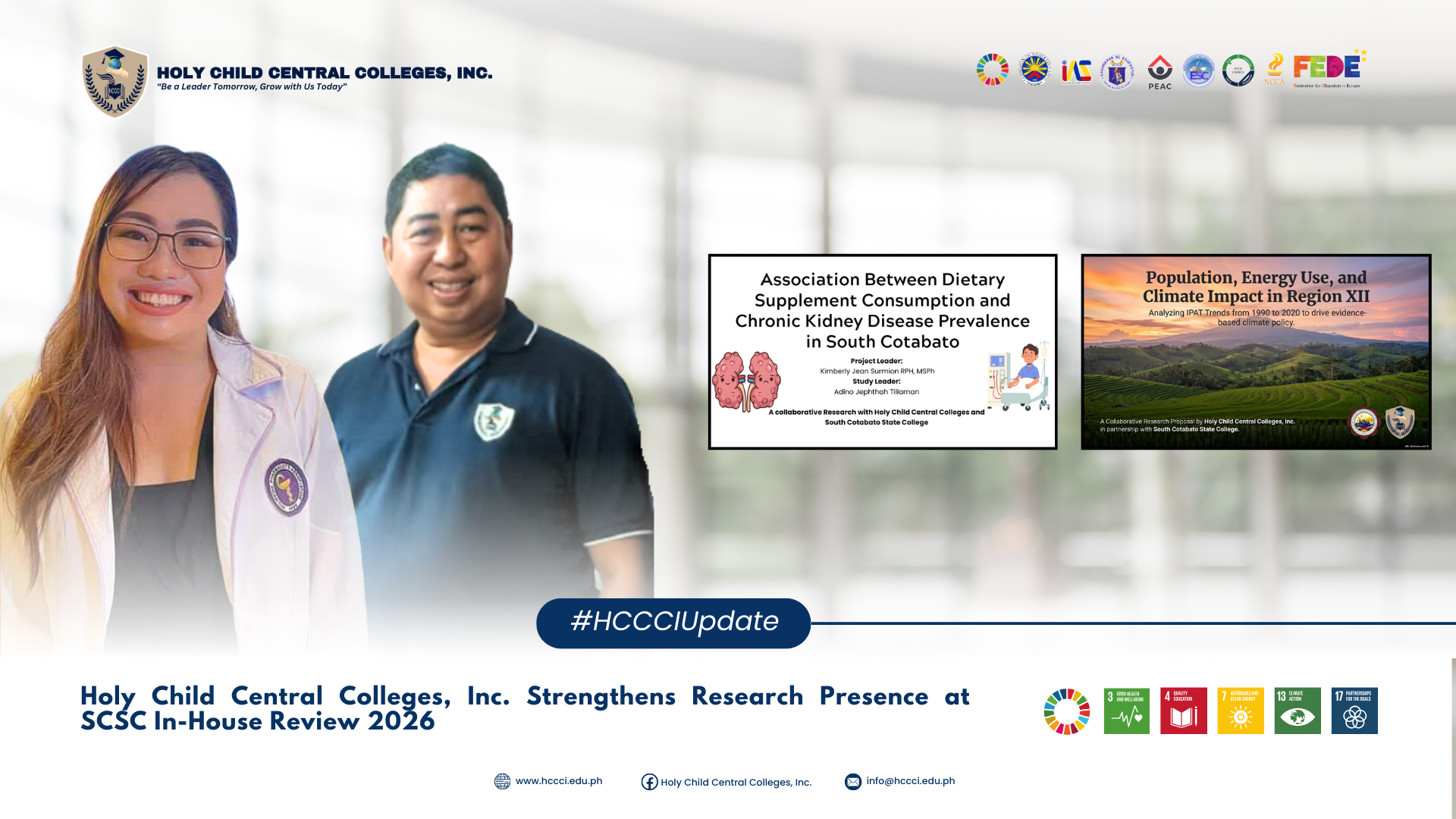
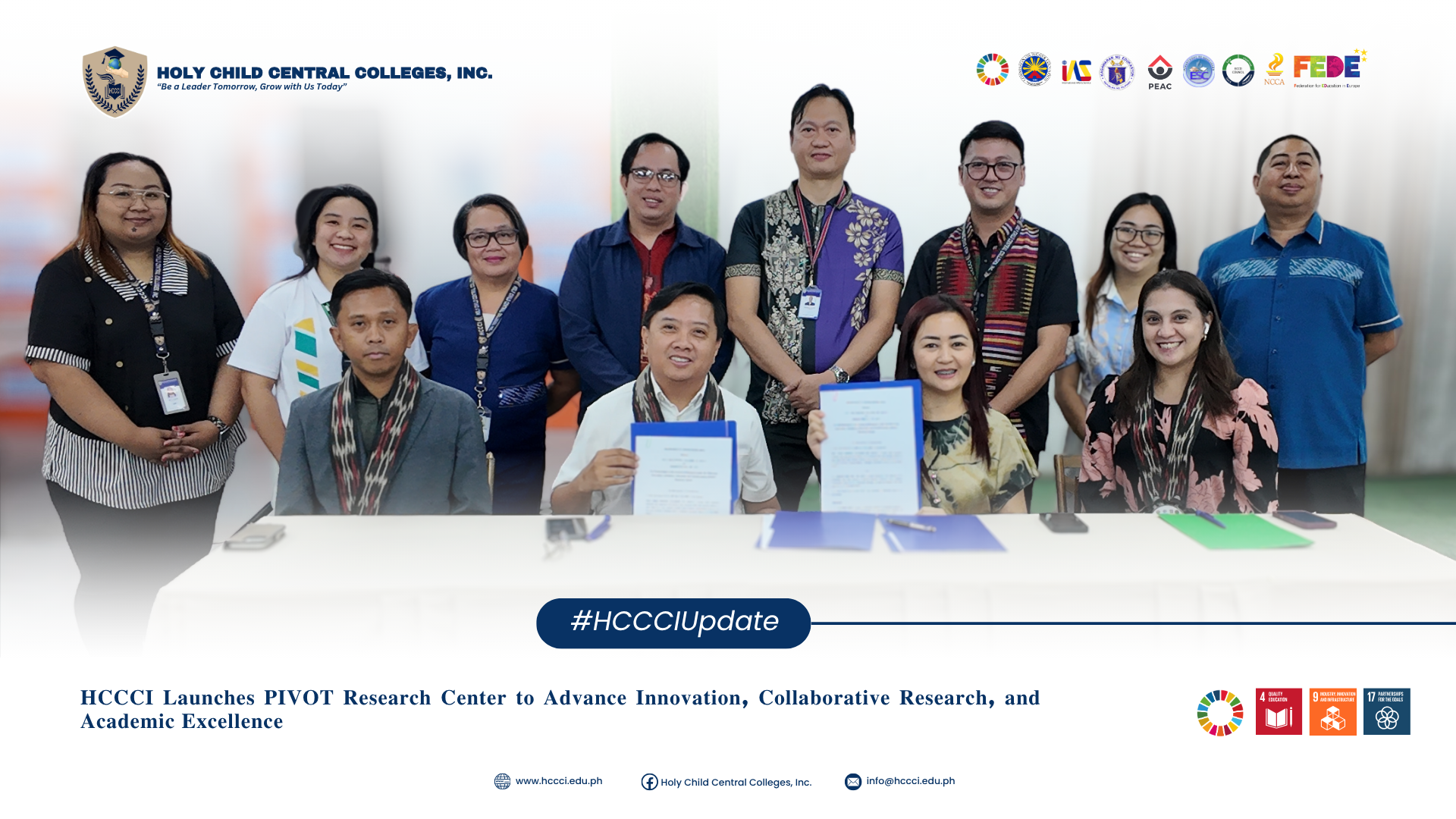
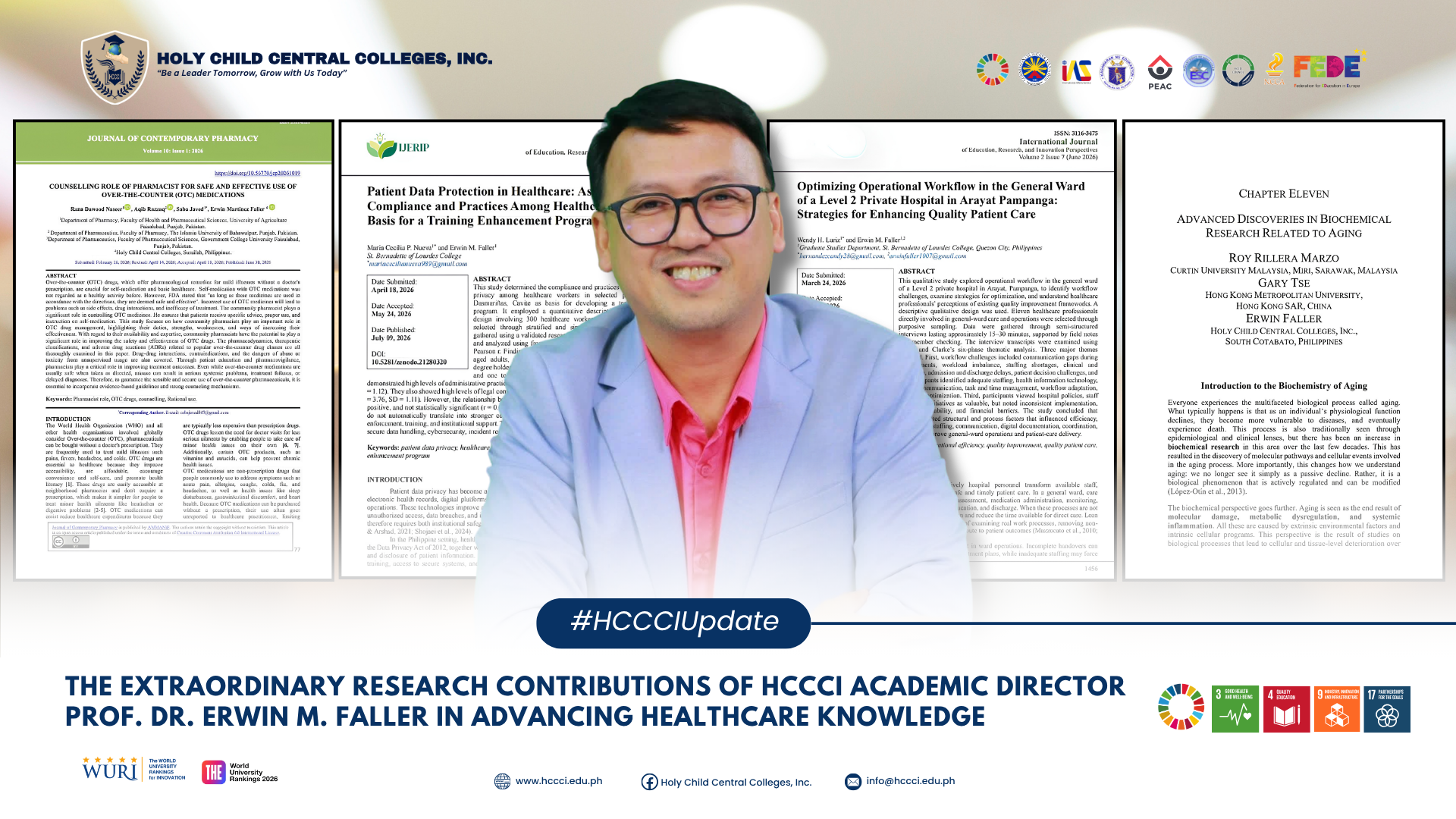
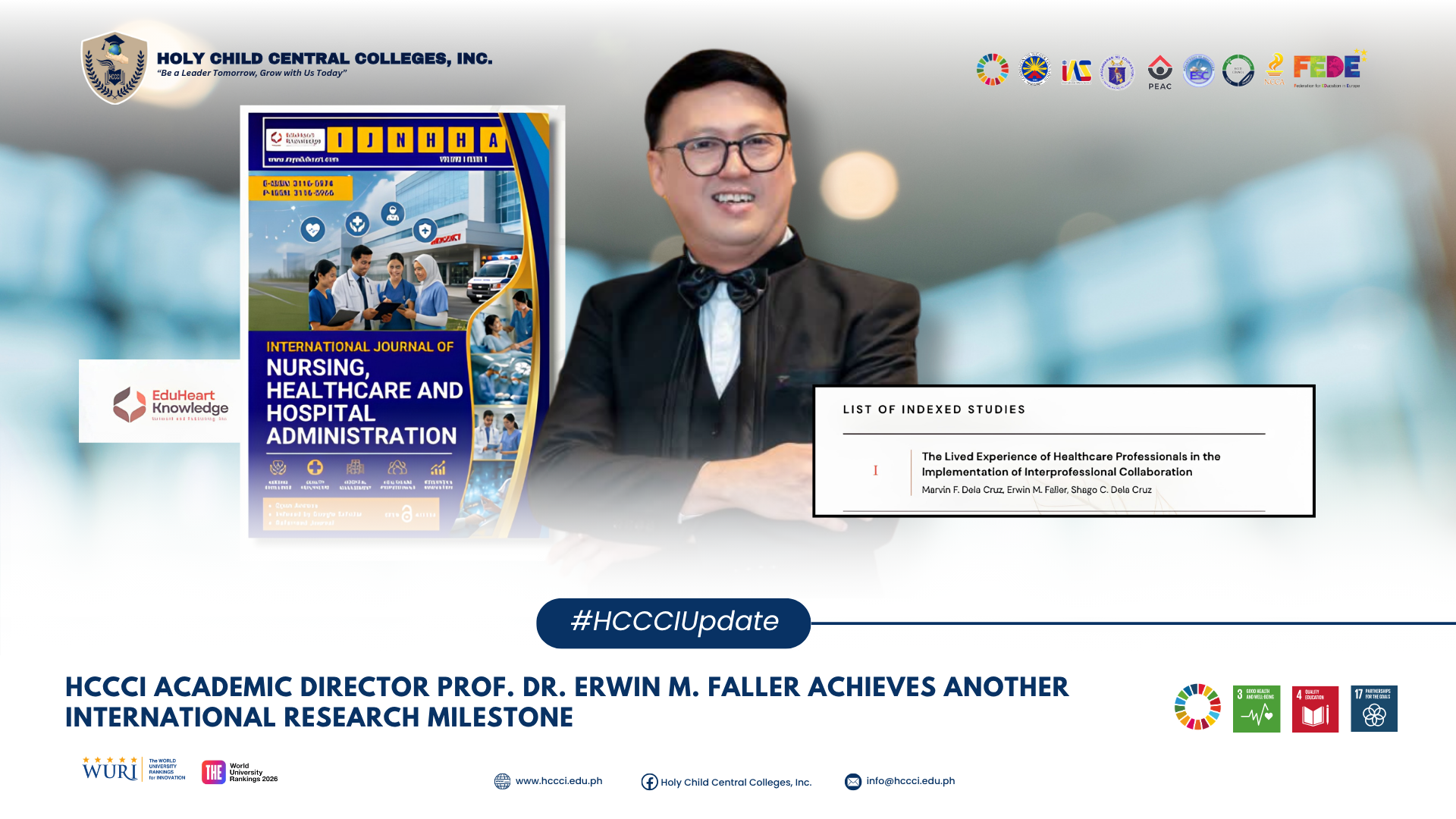
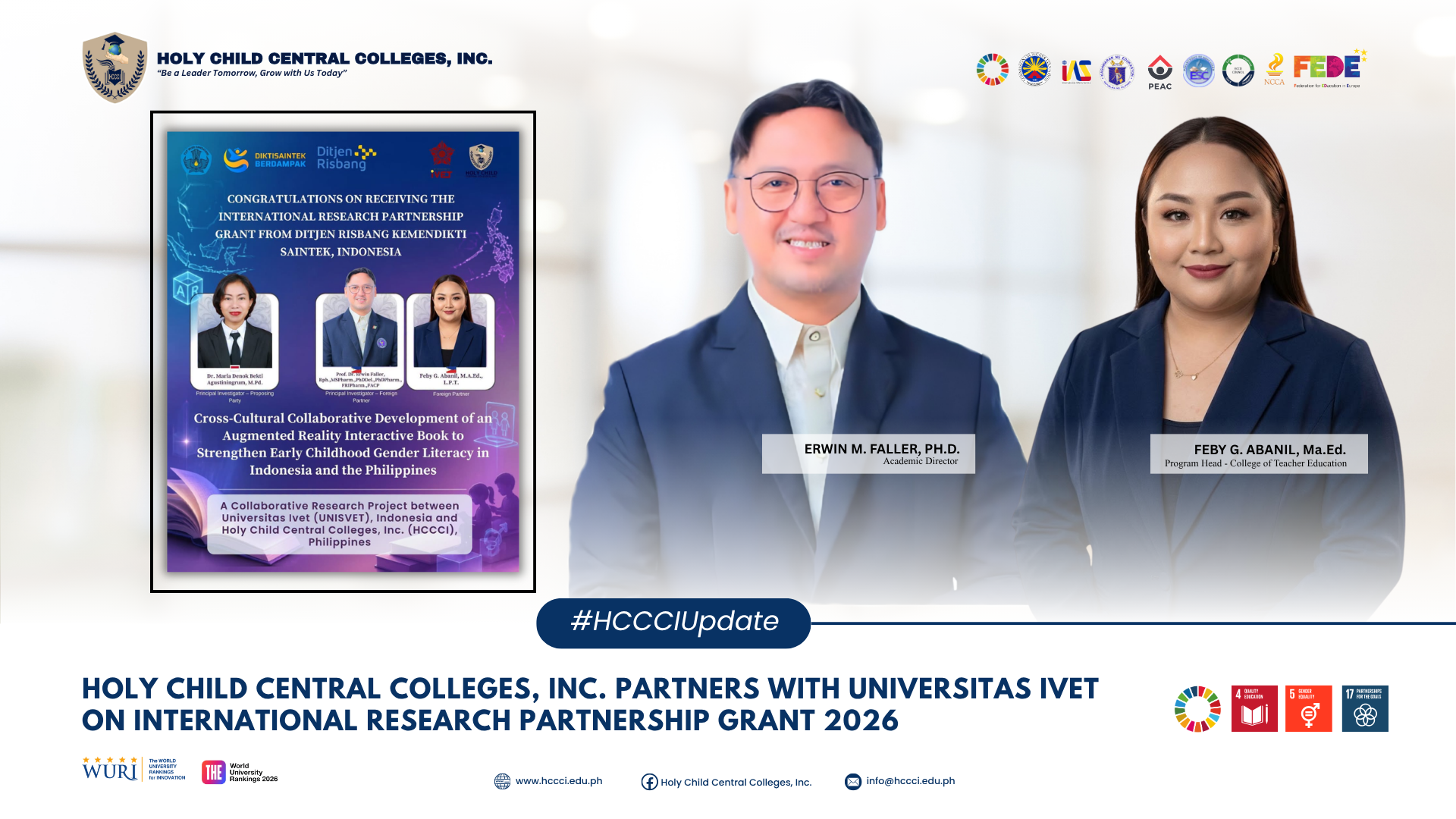
Through the HCCCI International Multidisciplinary Research Journal (HIMReJ), Holy Child Central Colleges, Inc. (HCCCI) provides free access to educational resources for people who are not enrolled at the college. Launched on October 18, 2025, the peer-reviewed journal makes its inaugural issue, Volume 1, Number 1 (2025), freely available online through Philippine E-Journals. Local educators, independent researchers, community practitioners, and other members of the public can read the studies at no cost.
In one study, researchers interviewed six teachers in Tboli, South Cotabato, to learn how they adapted technical-vocational instruction in a predominantly Lumad senior high school. The teachers described using projects and adjusting lessons to their students’ needs. Another study explored whether an Inaul fabric enterprise could be established in Surallah, bringing local questions about markets and livelihoods into the journal.
Educators can draw on the studies for professional learning and classroom discussion, while researchers and community practitioners can use them as starting points for work of their own. By making research rooted in South Cotabato accessible to the wider public, HCCCI supports lifelong learning under Sustainable Development Goal 4 (Quality Education).
Hibla Lokal 2025 Brings Filipino Stories to Life
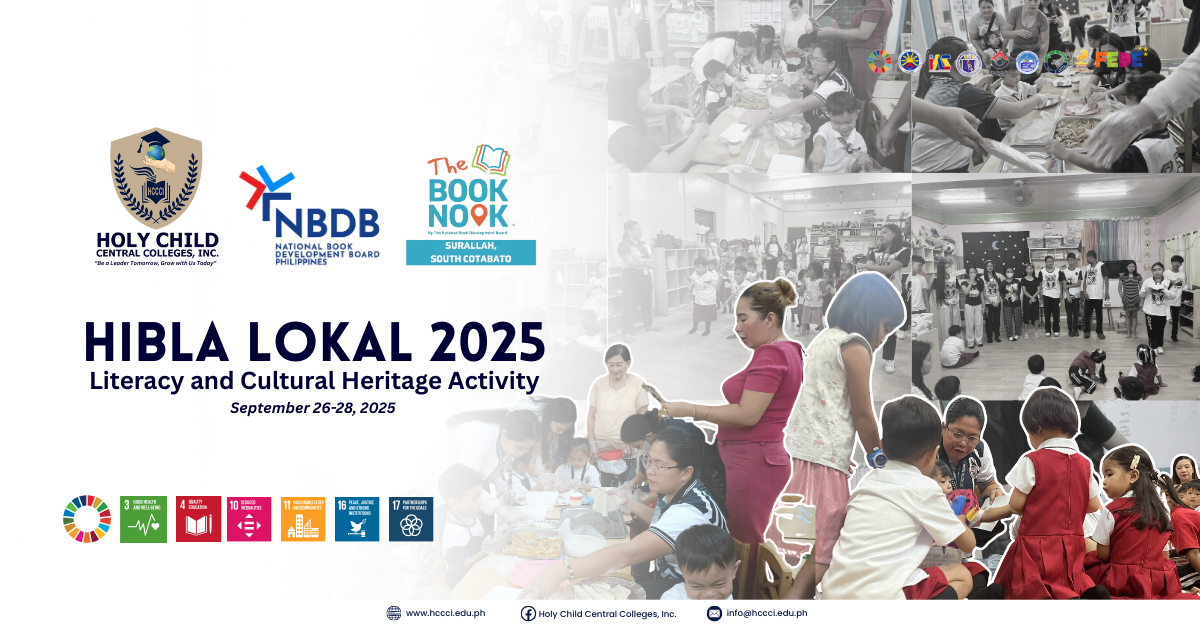
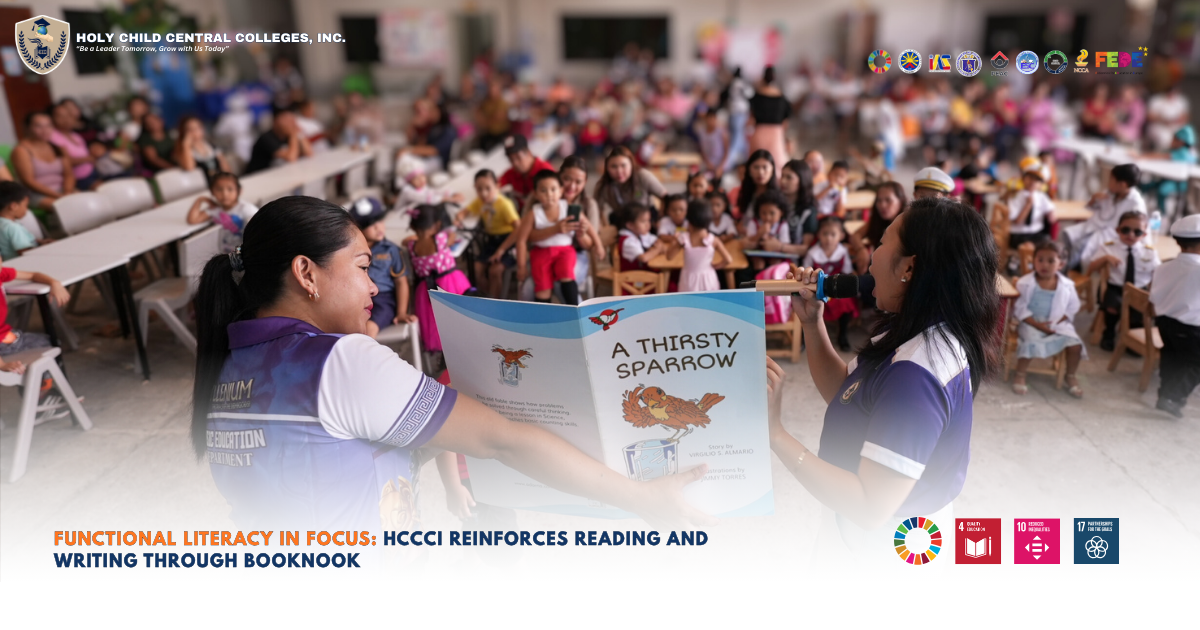
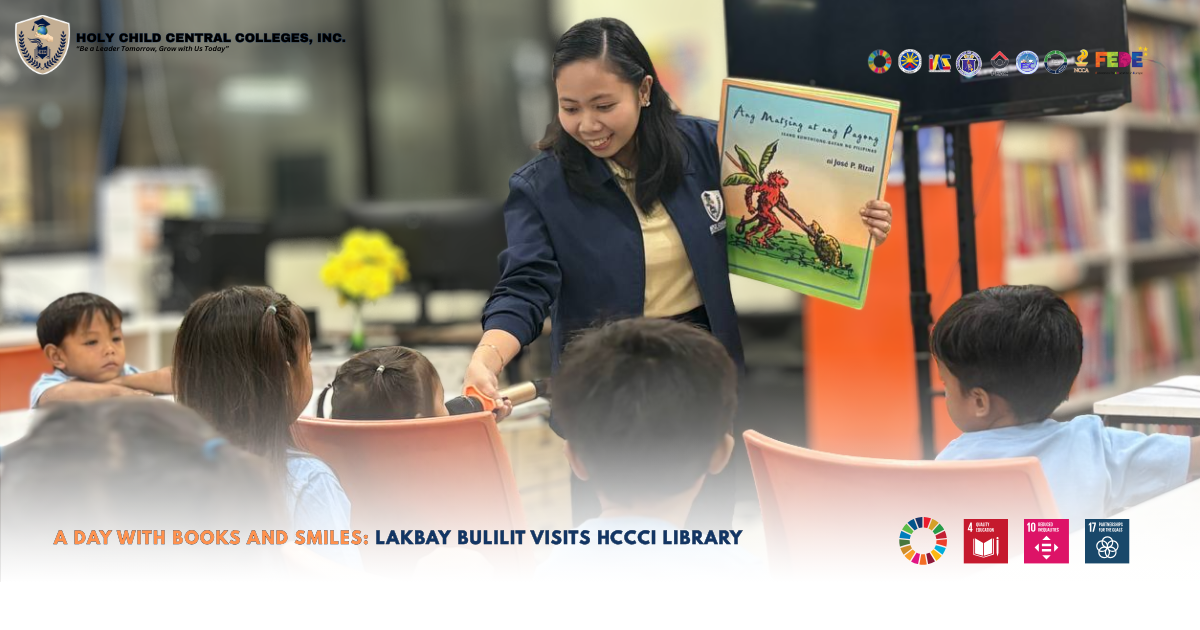
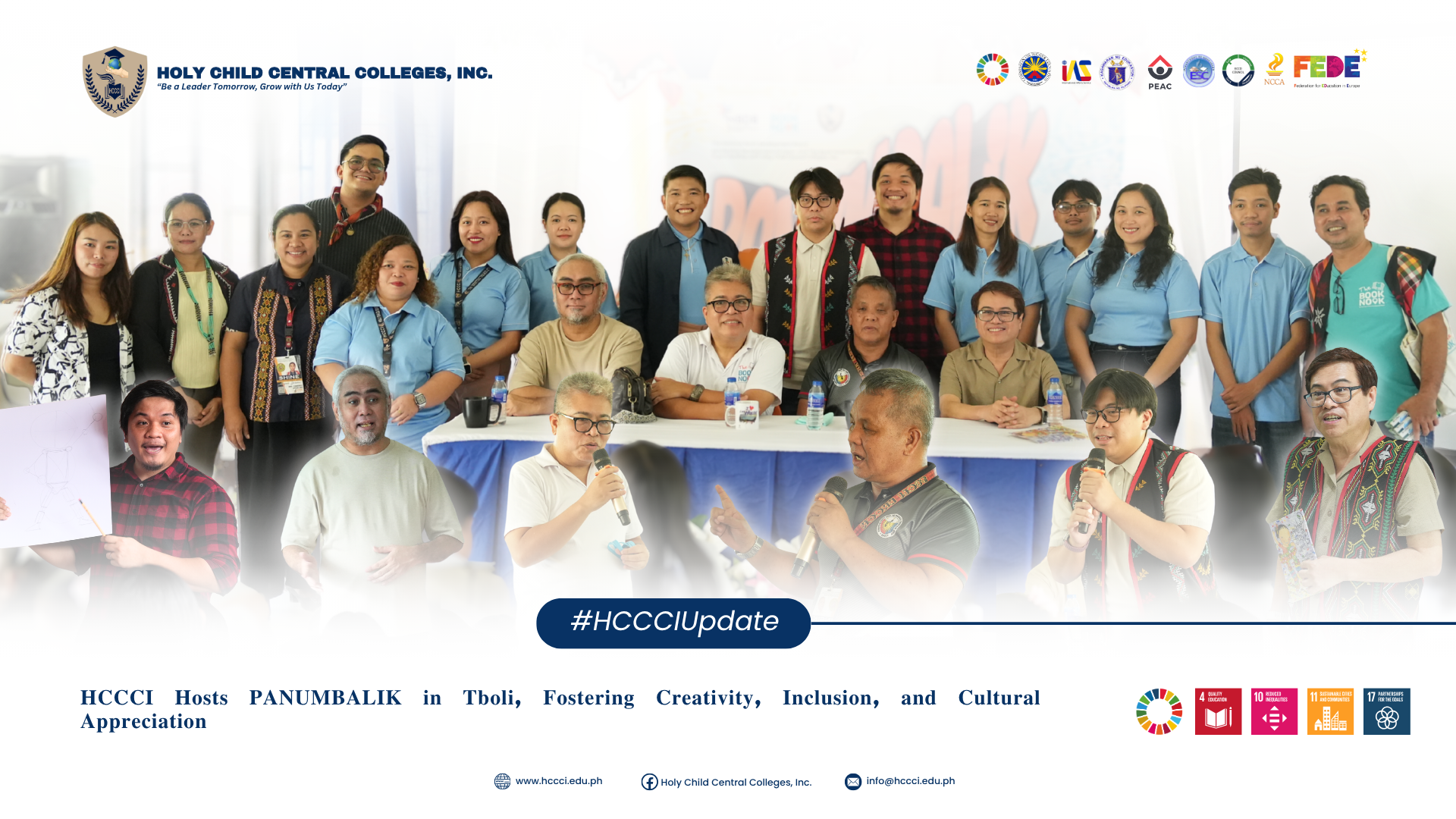
Holy Child Central Colleges, Inc. (HCCCI) opens its campus to the general public for educational events. Through Hibla Lokal 2025, HCCCI and Book Nook–Surallah welcomed children from two local schools on September 26 and 27 for storytelling, hands-on activities, and a peace-themed art workshop.
At the Basic Education Campus, 25 children from the National Child Development Center in Libertad listened to Lumpia Lane and watched Holinian students act out a Hiligaynon story about batchoy. The children then picked out ingredients and wrapped their own lumpia, learning new words through a familiar activity.
The following day, Grade 6 pupils from Surallah Central Elementary School explored the Book Nook collection at the HCCCI Campus 1 Library. After hearing War Makes Me Sad, they discussed how conflict affects children, then shared their ideas for peace through posters displayed on a Wall of Peace. With support from the National Book Development Board, Hibla Lokal advances SDG 4 (Quality Education) by giving children opportunities to engage with Filipino literature and express their own ideas.
Halal Certification Training Builds Workplace Skills
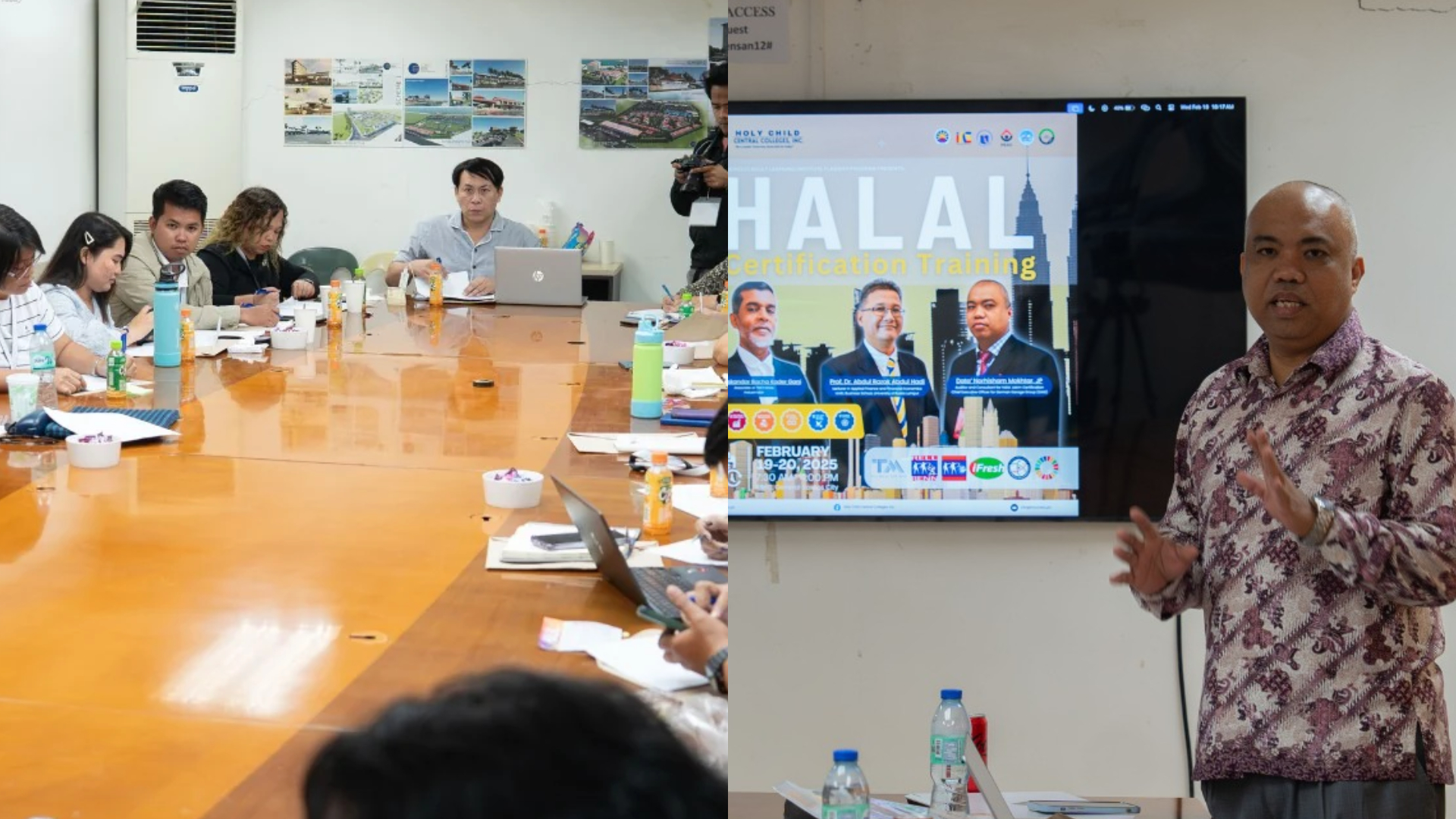
Holy Child Central Colleges, Inc. (HCCCI) opens its campus to the general public for short executive education programmes and vocational training. Through the HCCCI Adult Learning Institute (HALI), professionals, entrepreneurs, and other adult learners can develop workplace skills without enrolling in a degree programme. On February 19–20, 2025, HALI brought these learners together for a two-day Halal Certification Training.
On the first day, participants explored how Halal principles apply across the supply chain, from food handling and seafood processing to logistics and export operations. Industry participants, including Rell and Renn Fishing Corporation, shared examples from their own operations, giving learners a closer look at how businesses put Halal standards into practice.
The second day focused on the steps businesses take to prepare for Halal certification. Through workshops and case discussions, participants examined what records to prepare, how to get ready for an audit, and where Halal requirements fit into daily operations. By offering this training to learners outside its degree programmes, HCCCI supports professional development and lifelong learning under SDG 4 (Quality Education).
Learning Beyond Campus at Lake Sebu’s Indigenous Education Forum
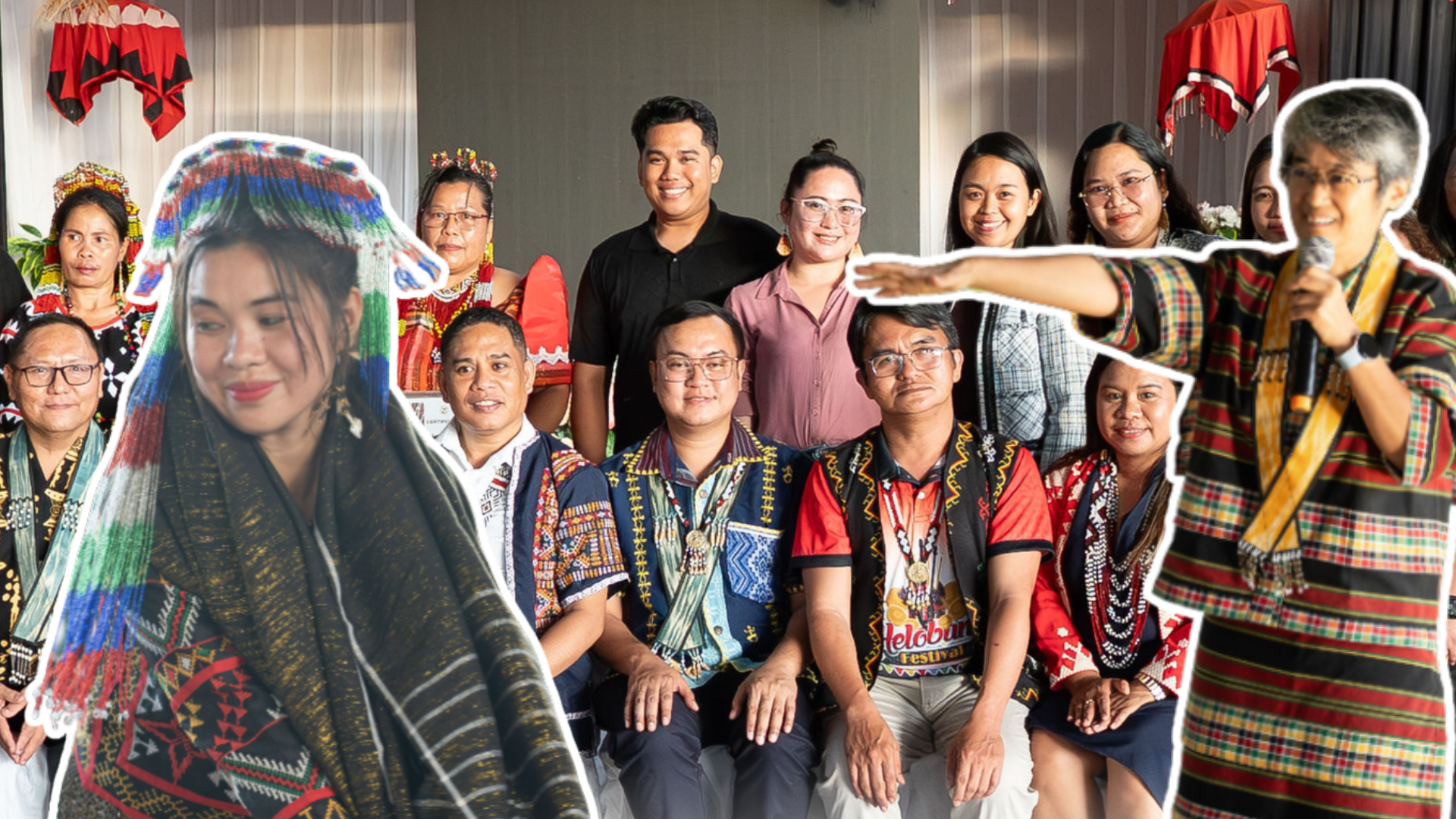
Holy Child Central Colleges, Inc. (HCCCI) conducts educational outreach beyond campus in partnership with local communities. On May 30, 2025, HCCCI and the Lake Sebu Tourism Office held the Indigenous Peoples’ Education (IP Ed) Forum at the Barangay Gymnasium in Poblacion, Lake Sebu, South Cotabato, as part of the Helubong Festival.
The forum brought together Indigenous leaders, educators, students, and cultural advocates to discuss how local stories, traditions, and knowledge can inform classroom teaching. Educators heard directly from community members about what it means for learners to see their own heritage and experiences reflected in their education.
By holding the forum in Lake Sebu, HCCCI created a space for community members and educators to learn from one another and discuss teaching practices that respect Indigenous cultural identity. The outreach advances SDG 4 (Quality Education) by supporting culturally responsive teaching and learning.
Equitable Access to Lifelong Learning
Holy Child Central Colleges, Inc. (HCCCI) has a policy that ensures equitable access to lifelong learning activities regardless of ethnicity, religion, disability, immigration status, or gender. The policy covers public learning resources, educational events on campus, short executive education programmes, vocational training, and educational outreach in local communities.
The HCCCI Student Handbook (p. 65) prohibits discrimination and harassment in admissions, employment, institutional services, and educational programmes. The committee retained these provisions during its 2025 handbook review. They continue to guide the fair and respectful treatment of students, employees, visitors, and participants from the wider community.
A Place for First-Generation Holinians
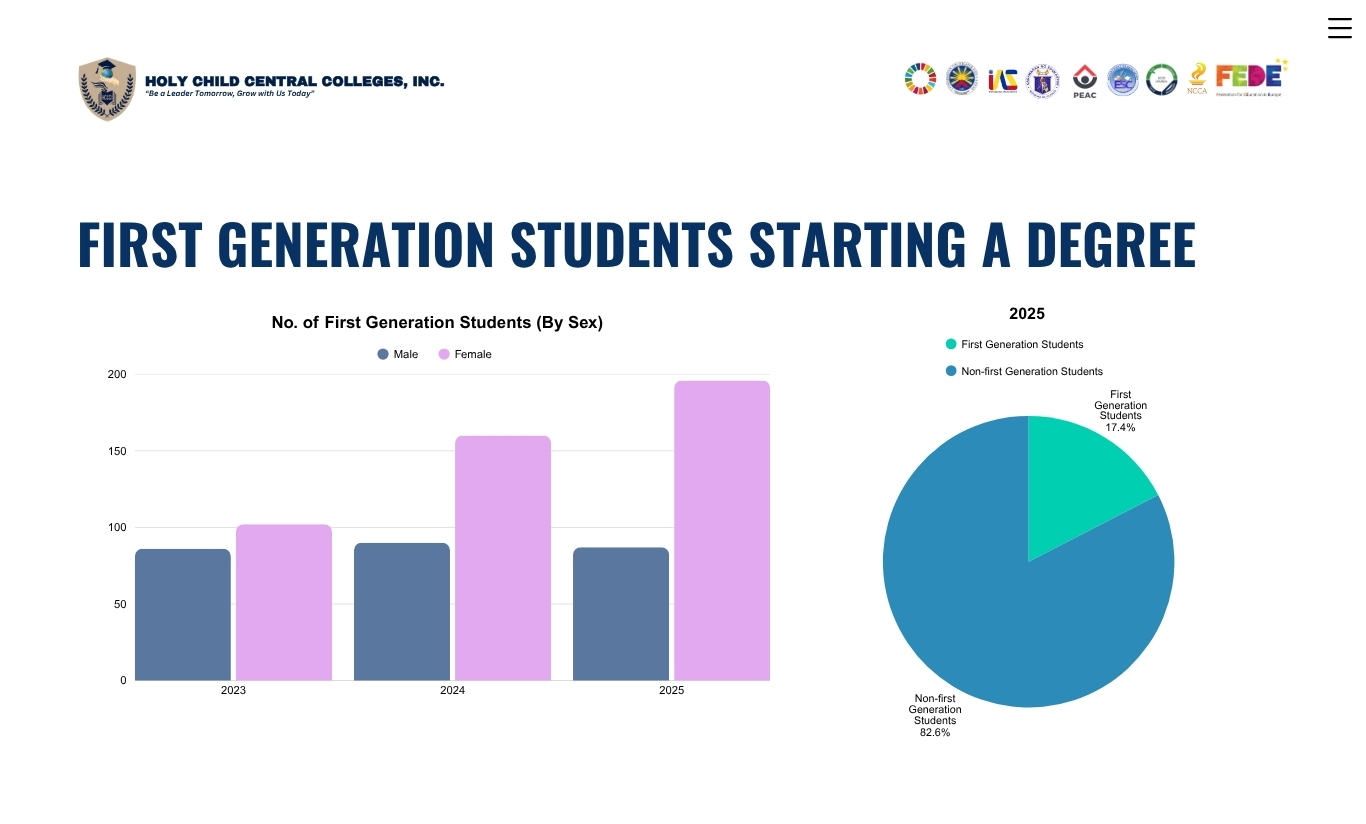
In 2025, Holy Child Central Colleges, Inc. (HCCCI) recorded 2,082 enrolled students. Of the 1,624 students who started a degree, 283 (17.4%) were the first in their families to pursue higher education. For these Holinians, starting college is a milestone they share with their families. As they take that first step, HCCCI’s work under SDG 4 (Quality Education) includes helping them navigate college, find academic support, and work toward a degree.
Looking Ahead
After listening to War Makes Me Sad at Hibla Lokal 2025, Grade 6 pupils from Surallah Central Elementary School talked about what peace might look like where they lived. They drew their answers, explained their pictures to one another, and put them up on the Wall of Peace at the HCCCI Campus 1 Library. The children had come to hear a story. By the end of the visit, they had something of their own to tell.
As part of its commitment to SDG 4 (Quality Education), HCCCI aims to give more guidance to Holinians who are the first in their families to attend college. Through its partnerships with local schools and communities, the college hopes to bring literacy and cultural activities to more children across South Cotabato. It also aims to offer more short courses through the HCCCI Adult Learning Institute (HALI) and keep research freely available through HIMReJ, so adults can continue learning for their work, their communities, or their own interests.
Years from now, one of those children might return to the library as a teacher with a class of their own. After reading a story aloud, they could hand out paper and ask the children what they would draw. This time, they would be the one making room on the wall for someone else’s picture.