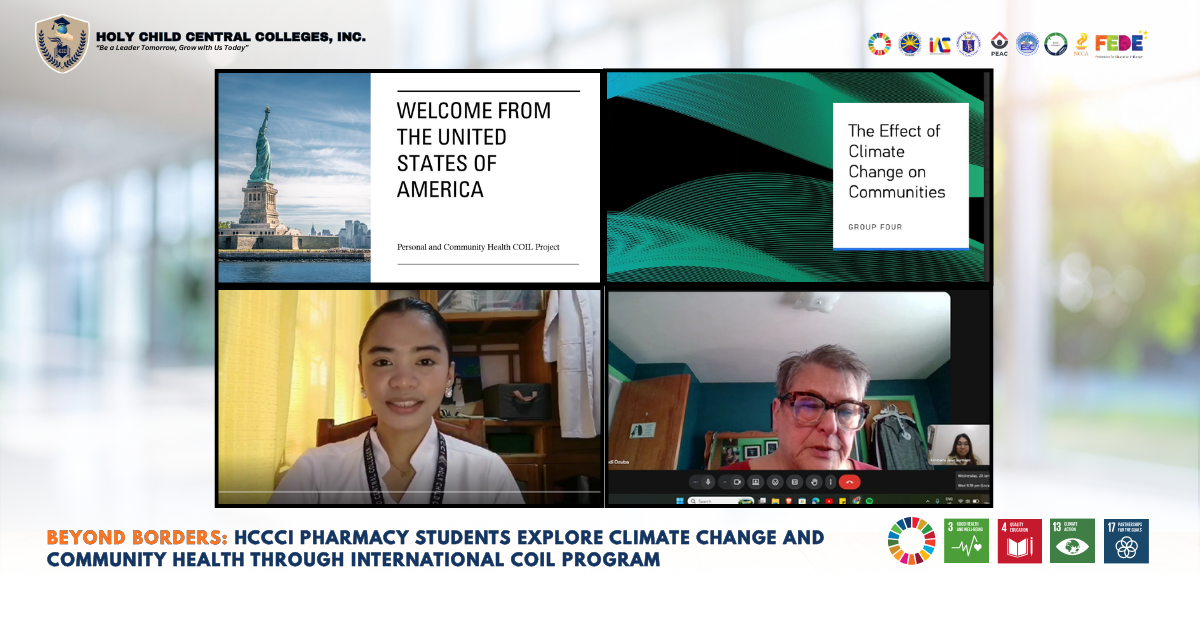
𝐁𝐞𝐲𝐨𝐧𝐝 𝐁𝐨𝐫𝐝𝐞𝐫𝐬: 𝐇𝐂𝐂𝐂𝐈 𝐏𝐡𝐚𝐫𝐦𝐚𝐜𝐲 𝐒𝐭𝐮𝐝𝐞𝐧𝐭𝐬 𝐄𝐱𝐩𝐥𝐨𝐫𝐞 𝐂𝐥𝐢𝐦𝐚𝐭𝐞 𝐂𝐡𝐚𝐧𝐠𝐞 𝐚𝐧𝐝 𝐂𝐨𝐦𝐦𝐮𝐧𝐢𝐭𝐲 𝐇𝐞𝐚𝐥𝐭𝐡 𝐓𝐡𝐫𝐨𝐮𝐠𝐡 𝐈𝐧𝐭𝐞𝐫𝐧𝐚𝐭𝐢𝐨𝐧𝐚𝐥 𝐂𝐎𝐈𝐋 𝐏𝐫𝐨𝐠𝐫𝐚𝐦
The College of Allied Health Sciences conducted a Collaborative Online Learning (COIL) program on March 14, 2026, via Zoom, bringing together 25 Bachelor of Science in Pharmacy students from Holy Child Central Colleges, Inc. and 24 Health Studies students from SUNY Broome Community College. The online academic exchange provided participants with an opportunity to collaborate, share ideas, and discuss pressing concerns related to climate change and its impact on health, industries, organizations, and communities.
The event centered on understanding the effects of climate change through research-based collaboration and intercultural learning. Students were divided into groups that focused on specific sectors affected by environmental changes, including farming, healthcare, community organizations, and communities as a whole. Through research, interviews, and collaborative discussions, participants explored how climate-related challenges continue to influence livelihoods, healthcare services, food production, public safety, and the quality of life of many people.
The activity featured Judi Dzuba from SUNY Broome Community College and Kimberly Jean Surmion, who guided the students throughout the learning exchange. Their expertise and leadership encouraged meaningful academic discussions and strengthened cooperation between the participating institutions. The facilitators also helped students develop research skills, communication abilities, and a deeper appreciation for collaborative learning experiences.
During the program, Group 1 focused on farming and researched how climate change has affected farms, wineries, orchards, and agricultural production. Students examined the effects of drought, extreme weather conditions, and the loss of livestock and crops on production, income, and community well-being. Group 2 explored the impact of climate change on the healthcare industry, including the increase in respiratory illnesses, heat-related conditions, insect-borne diseases, and injuries caused by floods and wildfires. Group 3 studied how community organizations face difficulties in assisting people due to food shortages, medication supply disruptions, homelessness, and the growing need for cooling and warming shelters during extreme weather events. Meanwhile, Group 4 examined how communities experience power outages, flooding, rising utility costs, erosion, and reduced access to fresh produce because of environmental changes. The students were tasked to gather insights from affected individuals and organizations, summarize their findings, and prepare collaborative video presentations for their COIL research project.
The program supports United Nations Sustainable Development Goal 3: Good Health and Well-Being by promoting awareness of climate-related health concerns and healthcare challenges. It also aligns with Sustainable Development Goal 4: Quality Education by encouraging collaborative and research-based learning experiences through international academic engagement. Furthermore, the activity contributes to Sustainable Development Goal 13: Climate Action by helping students understand environmental issues and the importance of sustainable solutions that address the growing effects of climate change. The initiative also reflects Sustainable Development Goal 17: Partnerships for the Goals by strengthening academic cooperation between institutions from different countries and fostering collaborative efforts in addressing shared environmental and societal concerns through education and research.
Beyond the classroom, the activity strengthened awareness regarding the shared environmental and health concerns experienced by many people today. By engaging with individuals, organizations, and communities affected by climate-related challenges, students developed empathy, social awareness, and a stronger sense of responsibility toward promoting sustainable practices and healthier living conditions. The exchange of ideas between participants from different countries also encouraged cooperation and mutual understanding in addressing concerns that continue to affect communities in many parts of the world.
Through initiatives such as the Collaborative Online Learning program, Holy Child Central Colleges, Inc. continues to serve as a leading institution in advancing innovative education, fostering international academic engagement, and developing future healthcare professionals who are equipped to address environmental, social, and health-related challenges with competence and compassion.