𝐇𝐂𝐂𝐂𝐈 𝐀𝐝𝐯𝐚𝐧𝐜𝐞𝐬 𝐄𝐝𝐮𝐜𝐚𝐭𝐢𝐨𝐧𝐚𝐥 𝐏𝐮𝐛𝐥𝐢𝐬𝐡𝐢𝐧𝐠 𝐈𝐧𝐢𝐭𝐢𝐚𝐭𝐢𝐯𝐞𝐬 𝐨𝐧 𝐃𝐞𝐧𝐠𝐮𝐞 𝐏𝐫𝐞𝐯𝐞𝐧𝐭𝐢𝐨𝐧 𝐚𝐧𝐝 𝐈𝐧𝐝𝐢𝐠𝐞𝐧𝐨𝐮𝐬 𝐂𝐡𝐢𝐥𝐝𝐫𝐞𝐧’𝐬 𝐒𝐭𝐨𝐫𝐢𝐞𝐬
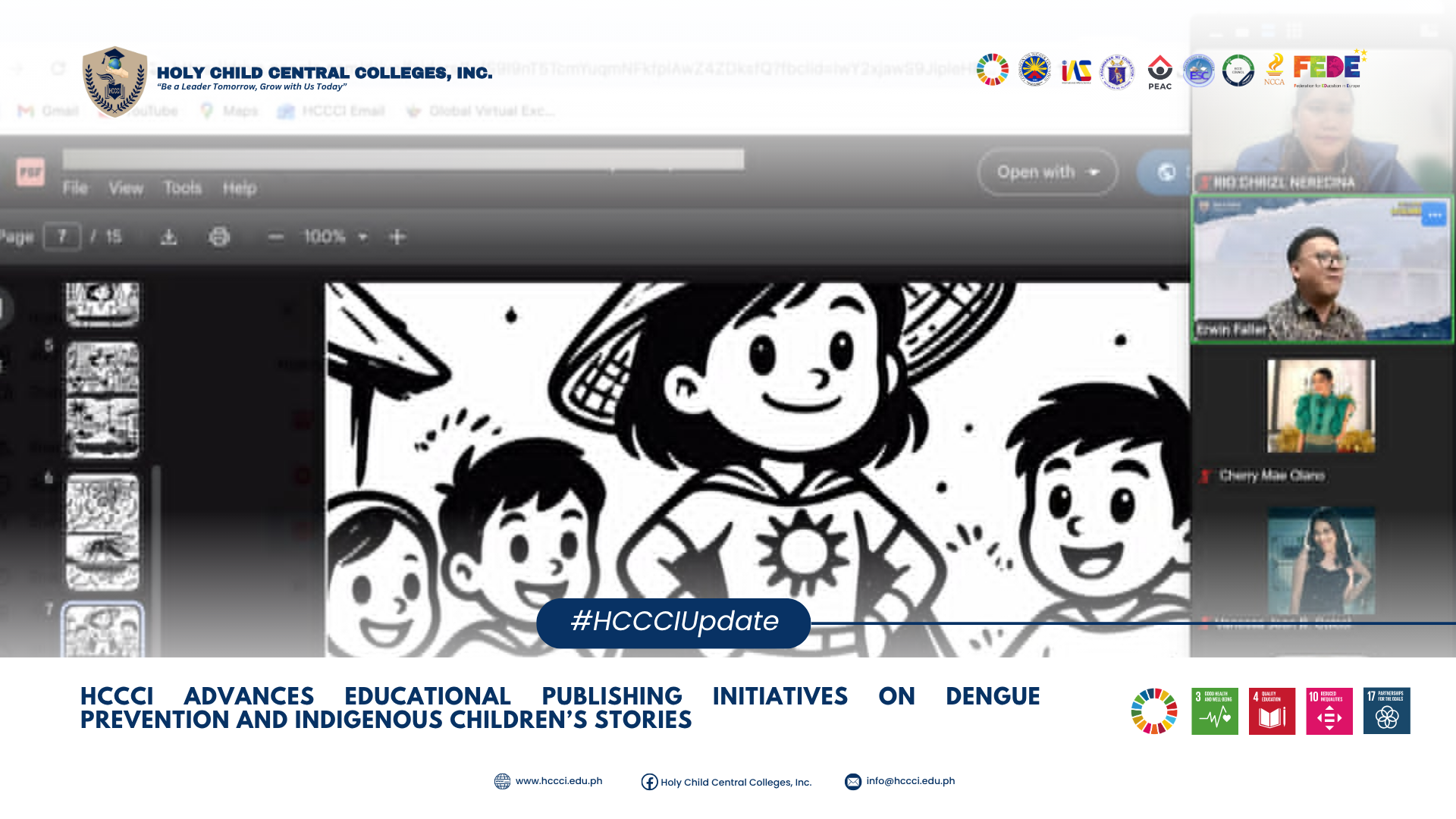
Holy Child Central Colleges, Inc. (HCCCI), in collaboration with C & E Publishing, recently discussed the publication of a children's book on dengue prevention and a proposal for a collection of indigenous children's stories. The meeting highlighted a shared commitment to creating educational materials that help children learn about disease prevention while appreciating the richness of indigenous traditions and storytelling.
The discussion centered on two complementary publishing initiatives. The first focused on developing a children's book on dengue prevention that presents health information through age-appropriate storytelling, while the second explored the publication of indigenous children's stories to preserve cultural narratives and introduce young readers to indigenous traditions and values. Once published, both books may serve as supplementary learning resources for HCCCI's Basic Education Department. The meeting also provided an opportunity to exchange ideas that could further strengthen the educational value of both publications.
The children’s book on dengue prevention was authored by Dr. Erwin M. Faller, Dr. Erica Tania Davillo, Dr. Elrey Navarro, Ms. Rio Chrizl M. Nerecina,LPT, Ms. Vanessa Jean B. Colcol,LPT, and Ms. Cherry Mae B. Olano, LPT. The project is scheduled for a formal signing on July 16, 2026, in Manila, in conjunction with the Philippine Medical Association Dengue Summit, marking an important step toward bringing the educational resource to publication.
Meanwhile, Noven N. Tuan presented a proposal for the publication of a collection of indigenous children's stories. The proposed initiative recognizes the value of children's literature in respectfully preserving and sharing stories that reflect the identities, traditions, knowledge, and lived experiences of Indigenous Peoples, while providing young readers with opportunities to appreciate the richness and diversity of indigenous cultures.
Once published, the dengue prevention children’s book was expected to provide young readers with practical and accessible knowledge about disease prevention through an engaging literary format. Similarly, the proposed collection of indigenous children’s stories aimed to foster greater appreciation for cultural diversity while helping preserve stories and knowledge that could be shared with future generations. Together, the initiatives demonstrated how research, education, health communication, and storytelling could converge to create learning resources with meaningful social and cultural value.
The publishing initiatives likewise supported the United Nations Sustainable Development Goals (SDGs). The dengue prevention children’s book contributed to SDG 3: Good Health and Well-being by promoting health awareness and disease prevention among young learners. Both initiatives supported SDG 4: Quality Education by developing accessible educational resources that encouraged learning beyond the classroom. The proposed collection of indigenous children’s stories also aligned with SDG 10: Reduced Inequalities by helping amplify indigenous narratives and promote cultural inclusion, while the collaboration with a publishing partner advanced SDG 17: Partnerships for the Goals through cooperation in developing educational and socially relevant initiatives.
Beyond the publications themselves, the engagement reflected HCCCI’s commitment to extending the value of research and cultural knowledge beyond academic spaces. By translating health information into child-friendly educational materials and creating opportunities for indigenous stories to reach younger audiences, the initiatives demonstrated the potential of publishing to support public awareness, cultural preservation, and community-based learning.
The meeting was marked by a constructive exchange of ideas among the authors, researchers, cultural advocates, and publishing partner. Their collaborative engagement reflected a shared commitment to developing publications that would not only inform and educate but also contribute to greater appreciation of public health, cultural identity, and the role of storytelling in shaping meaningful learning experiences.
Through initiatives such as these, HCCCI continued to strengthen the connection between research, education, and community engagement. By working with external partners and exploring opportunities to transform knowledge and cultural narratives into accessible educational resources, the institution reinforced its commitment to advancing public health awareness, promoting quality learning, and contributing to the preservation of indigenous stories for future generations.