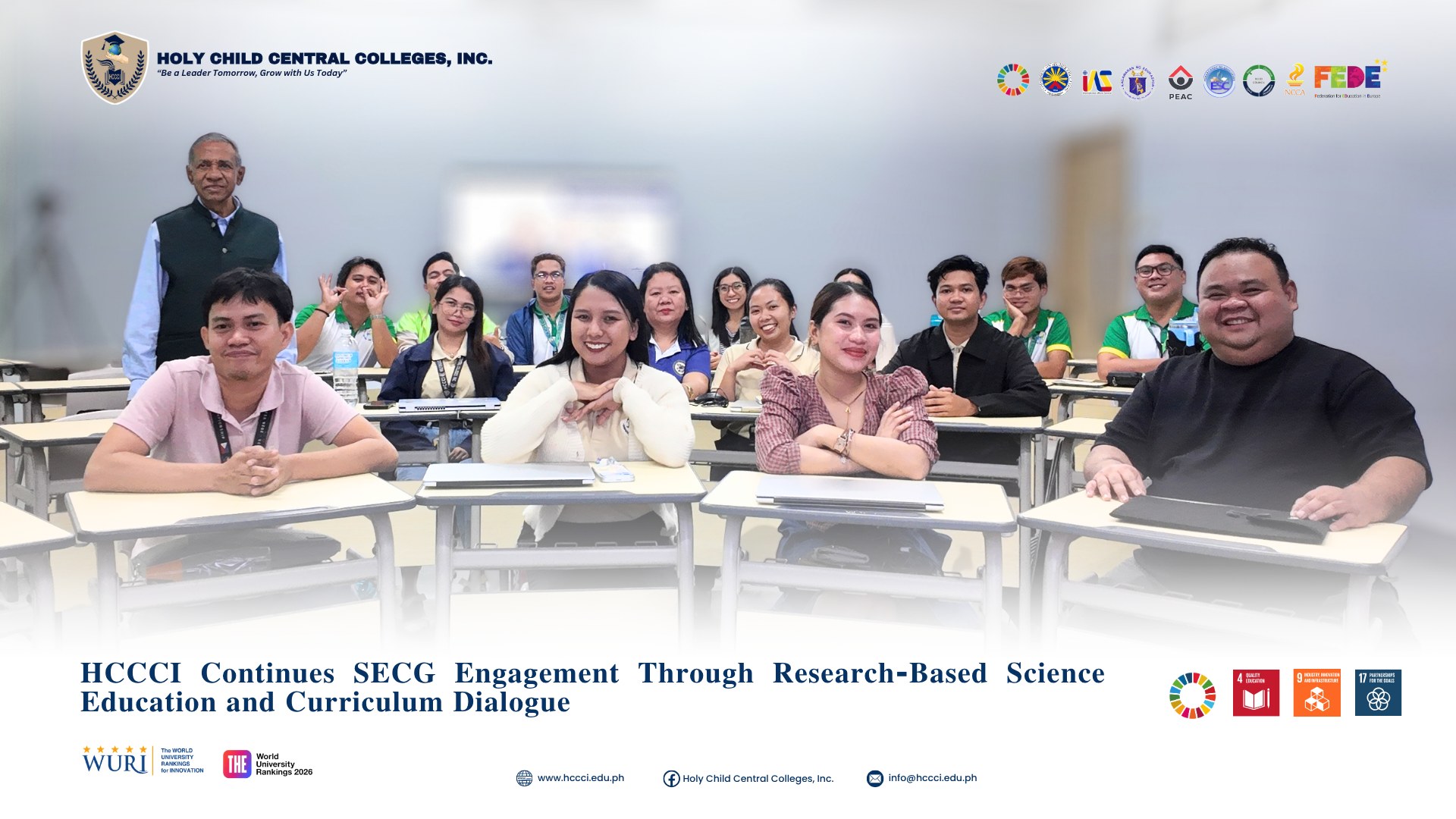
𝐇𝐂𝐂𝐂𝐈 𝐂𝐨𝐧𝐭𝐢𝐧𝐮𝐞𝐬 𝐒𝐄𝐂𝐆 𝐄𝐧𝐠𝐚𝐠𝐞𝐦𝐞𝐧𝐭 𝐓𝐡𝐫𝐨𝐮𝐠𝐡 𝐑𝐞𝐬𝐞𝐚𝐫𝐜𝐡-𝐁𝐚𝐬𝐞𝐝 𝐒𝐜𝐢𝐞𝐧𝐜𝐞 𝐄𝐝𝐮𝐜𝐚𝐭𝐢𝐨𝐧 𝐚𝐧𝐝 𝐂𝐮𝐫𝐫𝐢𝐜𝐮𝐥𝐮𝐦 𝐃𝐢𝐚𝐥𝐨𝐠𝐮𝐞
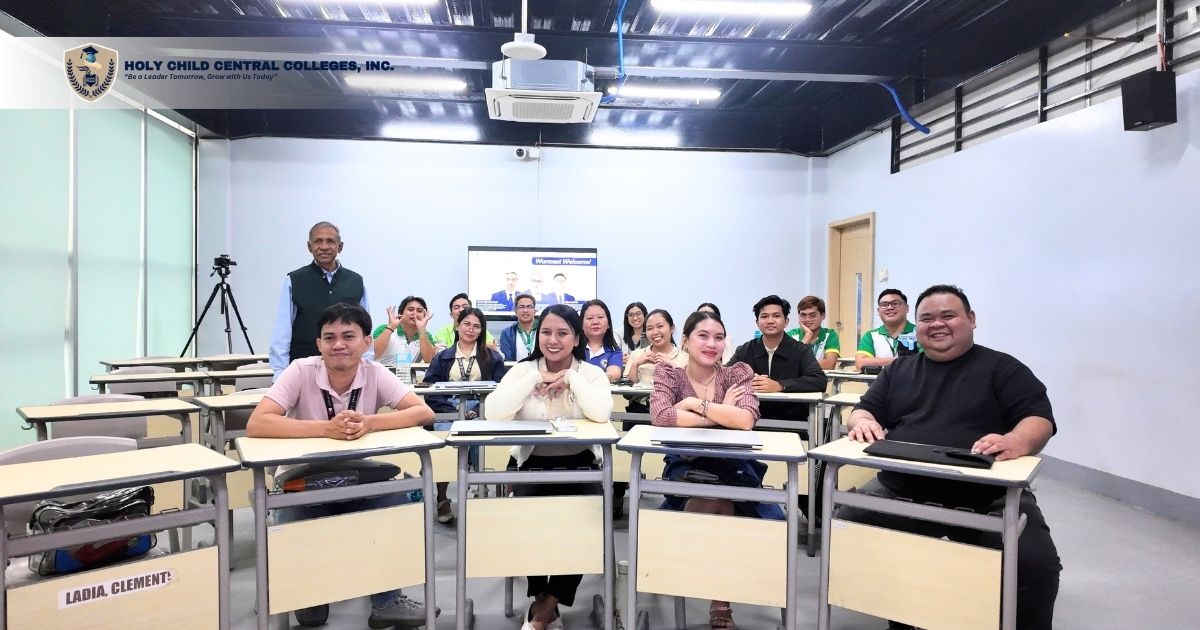
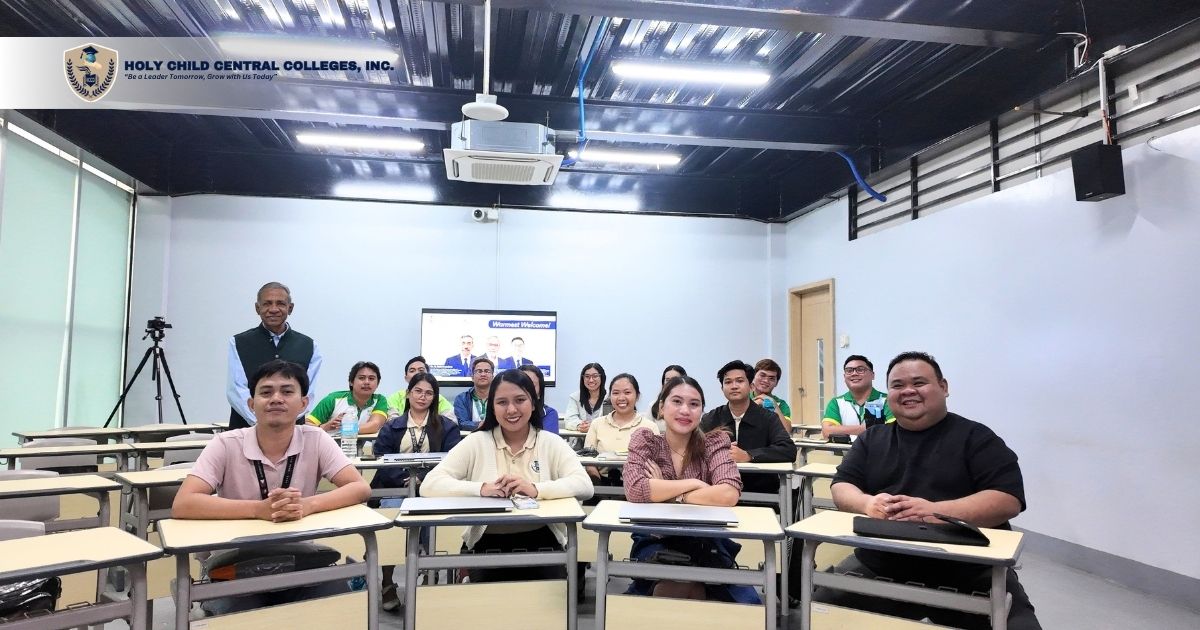
Holy Child Central Colleges, Inc. (HCCCI) continued its academic engagement with the Singapore Education Consulting Group (SECG) through a specialized learning session led by Dr. Ramanathan Subramaniam, educator, academic, and researcher from the National Institute of Education, Nanyang Technological University, Singapore. The session brought research, classroom practice, and curriculum development into a focused discussion on science education.
The engagement featured two research-oriented presentations, “Identifying Alternative Conceptions in Science” and “Research-based Analysis of Science Curricula,” providing HCCCI educators and academic stakeholders with perspectives on how learners develop scientific understanding and how science curricula can be examined through systematic research and evidence.
The first presentation focused on alternative conceptions in science, recognizing that students enter classrooms with ideas about scientific phenomena shaped by prior experiences, observations, language, media, previous instruction, and everyday explanations. These existing ideas may differ from scientifically accepted concepts and can influence how learners interpret new information.
Identifying such conceptions gives educators a more informed starting point for instruction. Rather than treating an incorrect response simply as an error, examining the reasoning behind it can provide insight into how a learner understands a particular scientific concept. This approach allows teachers to identify conceptual gaps and design learning experiences that help students develop more accurate and deeper scientific understanding.
The discussion emphasized that science learning often requires students to reorganize existing ideas, rather than simply memorize new information. For educators, understanding students’ alternative conceptions can therefore inform questioning, classroom activities, demonstrations, explanations, and other instructional strategies intended to strengthen conceptual understanding.
The second presentation, “Research-based Analysis of Science Curricula,” broadened the discussion from classroom-level learning to the curriculum itself. Dr. Subramaniam examined the value of using research and evidence when reviewing science curricula, particularly in determining what knowledge and competencies students are expected to develop and how these expectations are translated into content and learning experiences.
A research-based approach to curriculum analysis provides a systematic basis for examining the relationship among learning outcomes, content, pedagogy, assessment, and student competencies. It can also help institutions identify areas of alignment, gaps, redundancies, and emerging needs within academic programs. For HCCCI, this perspective is relevant to continuing academic discussions on curriculum quality and responsiveness. Curriculum development requires regular examination of whether programs remain aligned with learner needs, disciplinary developments, technological changes, and the competencies expected of students beyond the classroom.
The two presentations established a clear connection between learner understanding and curriculum design. Identifying alternative conceptions provides insight into what happens at the classroom level, while research-based curriculum analysis provides a broader lens for examining the academic structures through which learning takes place. Together, they reinforce the importance of evidence in making informed decisions about science education.
The exchange also provided an opportunity for HCCCI educators to reflect on the role of research in strengthening both classroom practice and academic decision-making. Classroom inquiry can help educators better understand how students interpret scientific ideas, while curriculum research can support broader examination of academic programs, learning outcomes, content, and instructional approaches. The session forms part of the continuing HCCCI–SECG engagement, following the delegation’s earlier institutional visitation, facility tour, professional development discussions, and dialogue on educational technology, digital learning, academic resources, and curriculum development. The succeeding science education session added a more specialized scholarly dimension to the ongoing exchange.
For HCCCI, the value of the engagement lies not only in exposure to an international academic perspective, but also in the opportunity to connect that perspective with existing institutional discussions. The approaches shared by Dr. Subramaniam may serve as reference points for faculty dialogue, research initiatives, curriculum review, and the continuing examination of science teaching practices, subject to the context and needs of HCCCI’s academic programs.
The discussion further highlighted the importance of connecting research, teaching, and academic decision-making. Research becomes particularly valuable when it enables educators to understand learners more closely, examine educational practices critically, and make decisions based on evidence. In this regard, the session encouraged a view of science education as an area requiring continuing inquiry, reflection, and development.
The engagement aligns with Sustainable Development Goal 4 (Quality Education) through its focus on research-informed teaching and curriculum development. It also supports SDG 9 (Industry, Innovation and Infrastructure) by encouraging scientific inquiry, innovation, and stronger foundations for science and technology education, while SDG 17 (Partnerships for the Goals) is reflected in the continuing exchange of expertise between HCCCI and SECG.
Dr. Subramaniam’s presentations added a distinct scholarly dimension to the continuing HCCCI–SECG engagement by moving the discussion beyond the delivery of science content toward a deeper examination of how students understand scientific ideas and how institutions design curricula to support that learning. Through the exchange, HCCCI educators gained perspectives connecting classroom observation, educational research, curriculum analysis, and instructional practice. These perspectives provide additional reference points for continued professional dialogue and for examining how research can contribute to the quality, relevance, and effectiveness of science education.
The continuing engagement demonstrates the value of international academic exchange when it creates opportunities not only to share practices, but also to examine deeper questions about learning, teaching, and curriculum. The insights shared by Dr. Subramaniam contribute to the broader HCCCI–SECG dialogue on strengthening education through research, evidence, and contextual academic development.