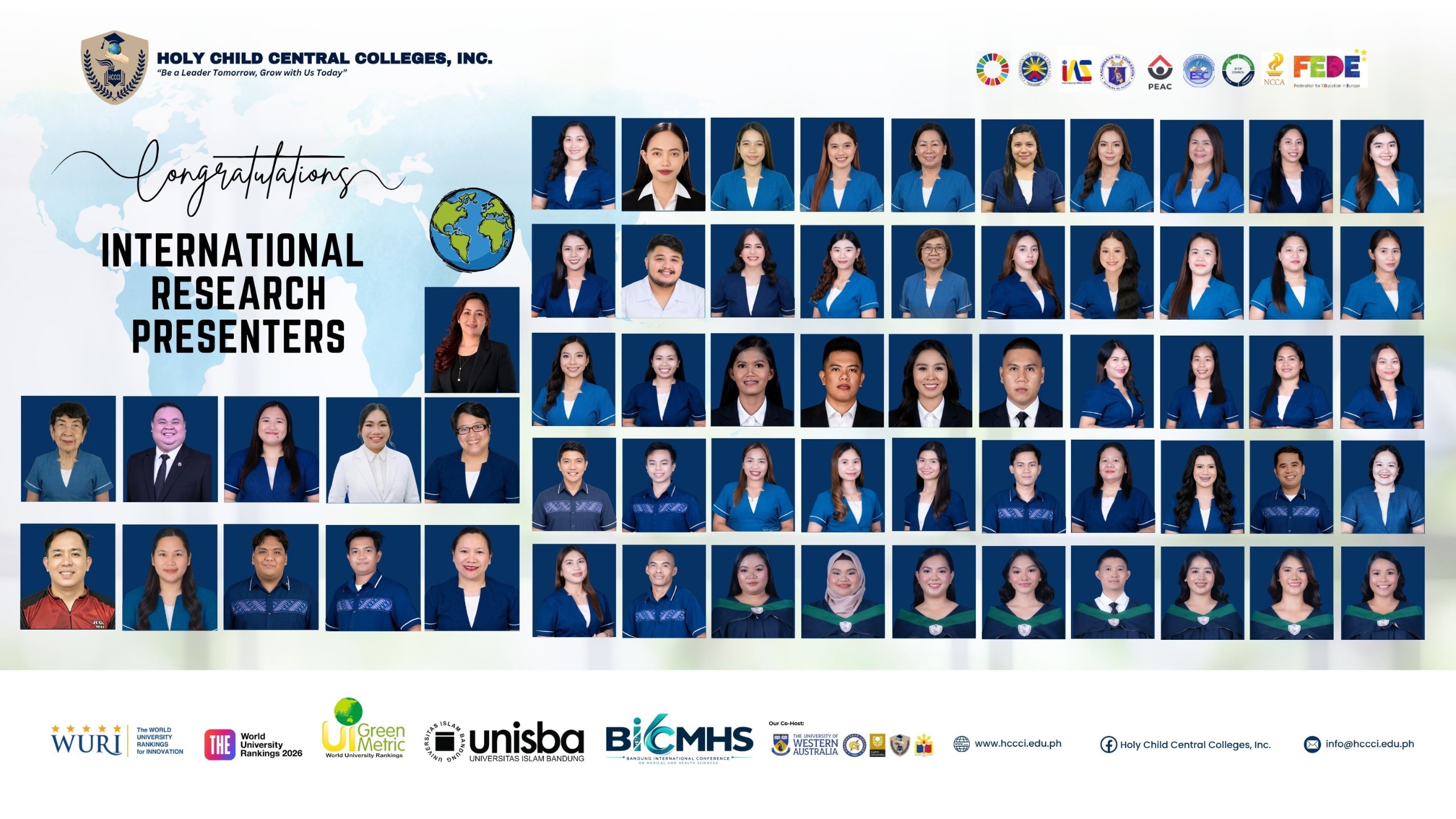
𝐇𝐂𝐂𝐂𝐈 𝐑𝐞𝐬𝐞𝐚𝐫𝐜𝐡𝐞𝐫𝐬 𝐏𝐫𝐞𝐬𝐞𝐧𝐭 𝐍𝐢𝐧𝐞 𝐒𝐭𝐮𝐝𝐢𝐞𝐬 𝐚𝐭 𝐔𝐍𝐈𝐒𝐁𝐀’𝐬 𝐈𝐧𝐭𝐞𝐫𝐧𝐚𝐭𝐢𝐨𝐧𝐚𝐥 𝐌𝐞𝐝𝐢𝐜𝐚𝐥 𝐚𝐧𝐝 𝐇𝐞𝐚𝐥𝐭𝐡 𝐒𝐜𝐢𝐞𝐧𝐜𝐞𝐬 𝐂𝐨𝐧𝐟𝐞𝐫𝐞𝐧𝐜𝐞
Holy Child Central Colleges, Inc. (HCCCI) presented nine research studies at the 6th Bandung International Conference on Medical and Health Sciences (BICMHS 2026), organized by the Faculty of Medicine of Universitas Islam Bandung (UNISBA) on October 3, 2026, in Bandung, Indonesia. The presentations explored maternal and community health, indigenous healing practices, school-based health support, learner development, digital health literacy, and healthcare delivery, bringing research grounded in local communities and institutional settings into an international academic forum.
The participation was facilitated by HCCCI’s International Relations Office (IRO) through Jack Robin Lacerna, MMEM, Internationalization Director, and Rio Chrizl M. Nerecina, LPT, COIL Coordinator, with support from the institution’s academic leadership. The nine studies involved faculty members, students, and researchers from different academic fields, reflecting HCCCI’s efforts to encourage inquiry into health and education concerns and share research findings with the wider academic community.
Among the studies presented, “𝐎𝐯𝐞𝐫𝐜𝐨𝐦𝐢𝐧𝐠 𝐁𝐚𝐫𝐫𝐢𝐞𝐫𝐬 𝐭𝐨 𝐎𝐩𝐭𝐢𝐦𝐚𝐥 𝐁𝐫𝐞𝐚𝐬𝐭𝐟𝐞𝐞𝐝𝐢𝐧𝐠 𝐀𝐦𝐨𝐧𝐠 𝐌𝐨𝐭𝐡𝐞𝐫𝐬 𝐢𝐧 𝐒𝐮𝐫𝐚𝐥𝐥𝐚𝐡, 𝐒𝐨𝐮𝐭𝐡 𝐂𝐨𝐭𝐚𝐛𝐚𝐭𝐨,” by Ninfa L. Galendez, RN, MAN; Anne Marsha Mission, RN; Mayflor B. Silva, RN, MAN; Christine V. Parcon, PhD; and Felicitas Sudario, MAST, examined breastfeeding knowledge and perceived barriers among 90 mothers in Surallah. Using a descriptive cross-sectional quantitative design, the researchers found that respondents had high levels of breastfeeding knowledge but continued to experience challenges involving physical discomfort, exhaustion, and concerns about insufficient milk supply. The findings point to the importance of pairing maternal education with practical lactation support and community-based interventions.
The relationship between education and health was further explored in “𝐁𝐫𝐢𝐝𝐠𝐢𝐧𝐠 𝐄𝐝𝐮𝐜𝐚𝐭𝐢𝐨𝐧 𝐚𝐧𝐝 𝐇𝐞𝐚𝐥𝐭𝐡: 𝐄𝐱𝐚𝐦𝐢𝐧𝐢𝐧𝐠 𝐓𝐞𝐚𝐜𝐡𝐞𝐫𝐬’ 𝐑𝐨𝐥𝐞 𝐢𝐧 𝐈𝐝𝐞𝐧𝐭𝐢𝐟𝐲𝐢𝐧𝐠 𝐋𝐞𝐚𝐫𝐧𝐞𝐫 𝐇𝐞𝐚𝐥𝐭𝐡 𝐍𝐞𝐞𝐝𝐬 𝐚𝐧𝐝 𝐒𝐭𝐫𝐞𝐧𝐠𝐭𝐡𝐞𝐧𝐢𝐧𝐠 𝐒𝐜𝐡𝐨𝐨𝐥-𝐁𝐚𝐬𝐞𝐝 𝐒𝐮𝐩𝐩𝐨𝐫𝐭,” conducted by Vanessa Marie Antiquin, Mayflor Silva, Norma Tagle, Anne Marsha Mission, and Charlene Joy Saligumba. The study examined the involvement of 45 Basic Education teachers in identifying learner health concerns and supporting appropriate referrals. Findings indicated high teacher involvement in recognizing behavioral changes and physical health concerns, alongside the need for stronger coordination among teachers, school health personnel, and parents. The study highlights the role of educators in supporting learner welfare alongside academic development.
Community health practices were the focus of “𝐄𝐱𝐩𝐥𝐨𝐫𝐢𝐧𝐠 𝐏𝐮𝐛𝐥𝐢𝐜 𝐏𝐞𝐫𝐜𝐞𝐩𝐭𝐢𝐨𝐧 𝐚𝐧𝐝 𝐀𝐭𝐭𝐢𝐭𝐮𝐝𝐞 𝐓𝐨𝐰𝐚𝐫𝐝 𝐂𝐨𝐦𝐩𝐥𝐞𝐦𝐞𝐧𝐭𝐚𝐫𝐲 𝐚𝐧𝐝 𝐀𝐥𝐭𝐞𝐫𝐧𝐚𝐭𝐢𝐯𝐞 𝐌𝐞𝐝𝐢𝐜𝐢𝐧𝐞 𝐀𝐦𝐨𝐧𝐠 𝐑𝐞𝐬𝐢𝐝𝐞𝐧𝐭𝐬 𝐨𝐟 𝐁𝐫𝐠𝐲. 𝐋𝐢𝐛𝐞𝐫𝐭𝐚𝐝, 𝐒𝐮𝐫𝐚𝐥𝐥𝐚𝐡, 𝐒𝐨𝐮𝐭𝐡 𝐂𝐨𝐭𝐚𝐛𝐚𝐭𝐨.” Bachelor of Science in Pharmacy researchers Jashiel Deocades, Khrizia Mae Estrecho, Alleha Samad, Aisa Famaranco, and Gervel John Garcia examined the views and use of complementary and alternative medicine among 375 residents. The results indicated generally positive perceptions and attitudes, although concerns about scientific evidence and legal considerations remained. The findings underscore the importance of healthcare professionals in promoting informed decisions, responsible use, and awareness of evidence-based healthcare.
Complementing this community health research, “𝐄𝐱𝐩𝐥𝐨𝐫𝐢𝐧𝐠 𝐭𝐡𝐞 𝐓𝐫𝐚𝐝𝐢𝐭𝐢𝐨𝐧𝐚𝐥 𝐇𝐞𝐚𝐥𝐢𝐧𝐠 𝐌𝐞𝐭𝐡𝐨𝐝 𝐨𝐟 𝐭𝐡𝐞 𝐓’𝐛𝐨𝐥𝐢 𝐓𝐫𝐢𝐛𝐞 𝐢𝐧 𝐋𝐚𝐤𝐞 𝐒𝐞𝐛𝐮, 𝐒𝐨𝐮𝐭𝐡 𝐂𝐨𝐭𝐚𝐛𝐚𝐭𝐨: 𝐀𝐧 𝐄𝐭𝐡𝐧𝐨𝐠𝐫𝐚𝐩𝐡𝐢𝐜 𝐒𝐭𝐮𝐝𝐲,” by Hannah Faith Bansawan, Iris Calvo, John Dexter Campanero, Kimberly Salomeo, and Kimberly Jean B. Surmion, RPh., MSPh., documented the healing practices and experiences of four recognized T’boli traditional healers. Through participant observation and in-depth interviews, the researchers found that medicinal plants and holistic approaches to physical, mental, and spiritual well-being were central to traditional healing. They also identified environmental degradation and declining medicinal plant availability as threats to the continuity of these practices, highlighting the importance of preserving indigenous knowledge alongside the biodiversity on which it depends.
Several presentations examined how school environments and educational systems can better support learner health and development. “𝐂𝐨𝐧𝐧𝐞𝐜𝐭𝐞𝐝 𝐭𝐨 𝐋𝐞𝐚𝐫𝐧: 𝐄𝐱𝐚𝐦𝐢𝐧𝐢𝐧𝐠 𝐒𝐜𝐡𝐨𝐨𝐥 𝐁𝐞𝐥𝐨𝐧𝐠𝐢𝐧𝐠, 𝐒𝐨𝐜𝐢𝐚𝐥 𝐂𝐨𝐧𝐧𝐞𝐜𝐭𝐢𝐨𝐧, 𝐚𝐧𝐝 𝐒𝐜𝐡𝐨𝐨𝐥 𝐄𝐧𝐠𝐚𝐠𝐞𝐦𝐞𝐧𝐭 𝐀𝐦𝐨𝐧𝐠 𝐄𝐥𝐞𝐦𝐞𝐧𝐭𝐚𝐫𝐲 𝐋𝐞𝐚𝐫𝐧𝐞𝐫𝐬 𝐚𝐬 𝐁𝐚𝐬𝐢𝐬 𝐟𝐨𝐫 𝐚𝐧 𝐄𝐝𝐮𝐜𝐚𝐭𝐢𝐨𝐧-𝐈𝐧𝐭𝐞𝐠𝐫𝐚𝐭𝐞𝐝 𝐀𝐜𝐚𝐝𝐞𝐦𝐢𝐜 𝐇𝐞𝐚𝐥𝐭𝐡 𝐒𝐲𝐬𝐭𝐞𝐦,” authored by Charlene Joy Saligumba, Rio Chrizl Nerecina, Mary Jae Deval, Samantha Saligumba, Rhea Hallado, Nerlyn De Asis, Harlene Tuarez, Kate Aira Frondoza, Rosecil Bayot, Catherine Alacayan, Jade Mariel Morales, and Merlinita Segovia, assessed the school experiences of 50 elementary learners. The findings showed high levels of school belonging, social connection, and classroom engagement, with most respondents reporting acceptance within their school community and support from teachers and classmates. The study emphasizes the importance of inclusive learning environments and positive relationships in supporting learner well-being and participation.
The health knowledge and healthcare-seeking practices of older learners were examined in “𝐄𝐱𝐩𝐥𝐨𝐫𝐢𝐧𝐠 𝐇𝐞𝐚𝐥𝐭𝐡 𝐋𝐢𝐭𝐞𝐫𝐚𝐜𝐲 𝐚𝐧𝐝 𝐇𝐞𝐚𝐥𝐭𝐡-𝐒𝐞𝐞𝐤𝐢𝐧𝐠 𝐁𝐞𝐡𝐚𝐯𝐢𝐨𝐫𝐬 𝐀𝐦𝐨𝐧𝐠 𝐒𝐞𝐧𝐢𝐨𝐫 𝐇𝐢𝐠𝐡 𝐒𝐜𝐡𝐨𝐨𝐥 𝐋𝐞𝐚𝐫𝐧𝐞𝐫𝐬 𝐚𝐬 𝐁𝐚𝐬𝐢𝐬 𝐟𝐨𝐫 𝐚𝐧 𝐄𝐝𝐮𝐜𝐚𝐭𝐢𝐨𝐧-𝐈𝐧𝐭𝐞𝐠𝐫𝐚𝐭𝐞𝐝 𝐀𝐜𝐚𝐝𝐞𝐦𝐢𝐜 𝐇𝐞𝐚𝐥𝐭𝐡 𝐒𝐲𝐬𝐭𝐞𝐦.” Conducted by Charlene Joy T. Saligumba, Vanessa Jean B. Colcol, John Rey Tresbe, Allana Amor Gonzaga, Eurica Nova A. Blancada, Kristel Joi Calanza, Genson Teves, Melanie Frondozo, and Lowel Pasinag, the study involved 50 Senior High School learners. Although respondents demonstrated generally high health literacy, the research identified self-medication and delayed consultation as practices requiring attention. Mental health and stress management, nutrition, and first aid emerged as priority areas for health education, supporting efforts to integrate relevant health topics more effectively into the curriculum.
Early childhood development was the focus of “𝐑𝐞𝐚𝐝𝐲 𝐭𝐨 𝐆𝐫𝐨𝐰: 𝐄𝐱𝐚𝐦𝐢𝐧𝐢𝐧𝐠 𝐃𝐚𝐢𝐥𝐲 𝐑𝐨𝐮𝐭𝐢𝐧𝐞 𝐒𝐞𝐥𝐟-𝐂𝐚𝐫𝐞, 𝐚𝐧𝐝 𝐂𝐥𝐚𝐬𝐬𝐫𝐨𝐨𝐦 𝐏𝐚𝐫𝐭𝐢𝐜𝐢𝐩𝐚𝐭𝐢𝐨𝐧 𝐀𝐦𝐨𝐧𝐠 𝐊𝐢𝐧𝐝𝐞𝐫𝐠𝐚𝐫𝐭𝐞𝐧 𝐋𝐞𝐚𝐫𝐧𝐞𝐫𝐬 𝐚𝐬 𝐁𝐚𝐬𝐢𝐬 𝐟𝐨𝐫 𝐚𝐧 𝐄𝐝𝐮𝐜𝐚𝐭𝐢𝐨𝐧-𝐈𝐧𝐭𝐞𝐠𝐫𝐚𝐭𝐞𝐝 𝐀𝐜𝐚𝐝𝐞𝐦𝐢𝐜 𝐇𝐞𝐚𝐥𝐭𝐡 𝐒𝐲𝐬𝐭𝐞𝐦.” The study, authored by Charlene Joy Saligumba, Joy Jordan, Mariel Dalipe, John Lucas Frac, Vince Karl Otic, Ludy Baldonado, Gwyneth Diane Calili, Jessa Marie Napilay, and Kristile Micah Pollen Carmona, explored daily routines, self-care, and classroom participation among 30 Kindergarten learners. Results indicated generally high performance in following classroom routines, practicing personal hygiene, organizing learning materials, and participating in activities. The findings highlight the importance of developing age-appropriate habits and independence through coordinated school support and family engagement.
The digital environment’s influence on adolescent health was explored in “𝐔𝐧𝐝𝐞𝐫𝐬𝐭𝐚𝐧𝐝𝐢𝐧𝐠 𝐀𝐝𝐨𝐥𝐞𝐬𝐜𝐞𝐧𝐭 𝐇𝐞𝐚𝐥𝐭𝐡 𝐢𝐧 𝐭𝐡𝐞 𝐃𝐢𝐠𝐢𝐭𝐚𝐥 𝐀𝐠𝐞: 𝐓𝐡𝐞 𝐈𝐧𝐭𝐞𝐫𝐩𝐥𝐚𝐲 𝐨𝐟 𝐇𝐞𝐚𝐥𝐭𝐡 𝐋𝐢𝐭𝐞𝐫𝐚𝐜𝐲, 𝐃𝐢𝐠𝐢𝐭𝐚𝐥 𝐓𝐞𝐜𝐡𝐧𝐨𝐥𝐨𝐠𝐲 𝐔𝐬𝐞, 𝐚𝐧𝐝 𝐇𝐞𝐚𝐥𝐭𝐡-𝐏𝐫𝐨𝐦𝐨𝐭𝐢𝐧𝐠 𝐁𝐞𝐡𝐚𝐯𝐢𝐨𝐫𝐬.” Conducted by Charlene Joy T. Saligumba, Anzyl Jade Camique, Cherry Mae Olano, Angel Lee Dedal, Ara Lee Garcia, Jevelyn Octaviano, Jeffrey Dalondong, Jan Kenneth Mendoza, Thania Rose Farochilin, Queenne Marie Aninang, and Shaira Erl Dati, the study examined health literacy and health-promoting behaviors among 150 Junior High School students. Social media emerged as a major source of health information, while more than half of the respondents had encountered online health content that was confusing or difficult to verify. The findings point to the need to strengthen digital health literacy and help adolescents assess online information before using it to make health-related decisions.
Extending the research beyond community and school settings, “𝐇𝐞𝐚𝐥𝐭𝐡 𝐒𝐞𝐫𝐯𝐢𝐜𝐞 𝐈𝐦𝐩𝐥𝐞𝐦𝐞𝐧𝐭𝐚𝐭𝐢𝐨𝐧 𝐂𝐡𝐚𝐥𝐥𝐞𝐧𝐠𝐞𝐬 𝐚𝐧𝐝 𝐍𝐞𝐞𝐝𝐬 𝐨𝐟 𝐭𝐡𝐞 𝐁𝐮𝐫𝐞𝐚𝐮 𝐨𝐟 𝐉𝐚𝐢𝐥 𝐌𝐚𝐧𝐚𝐠𝐞𝐦𝐞𝐧𝐭 𝐚𝐧𝐝 𝐏𝐞𝐧𝐨𝐥𝐨𝐠𝐲,” by Rey Patric O. Jugos, R.Crim., CCS., MSCJ; Kaye Escober, R.CRIM; Clarence Karl D. Redoble, R.CRIM; Jessa Marie H. Dela Cruz; Midze K. Mucalna; and Gabriel Nasis, investigated healthcare delivery challenges at Koronadal District City Jail in South Cotabato. Using a qualitative approach involving interviews with five jail nurses and thematic analysis, the study identified limited access to psychiatric services, shortages of essential medicines, and delays associated with court orders for external medical examinations. The researchers recommended expanding mental health services, improving medicine inventory and supply management, strengthening partnerships with healthcare institutions, and streamlining procedures for urgent medical care. The study draws attention to the healthcare needs of persons deprived of liberty and the importance of responsive institutional health services.
Collectively, the nine studies address a broad range of concerns, from maternal and community health to indigenous knowledge, learner well-being, digital health literacy, and correctional healthcare. Their findings offer perspectives that may inform future research, educational practices, community interventions, and institutional support systems. By examining issues within local communities and specific institutional contexts, HCCCI researchers contribute evidence and perspectives that can be shared, discussed, and further explored through international academic engagement.
HCCCI’s participation in BICMHS 2026 reflects its continuing efforts to support research presentation, interdisciplinary inquiry, and international knowledge exchange. Through the facilitation of the International Relations Office and the involvement of faculty members and students, the institution continues to encourage a research-driven academic culture that connects local concerns with broader scholarly conversations and seeks to translate research insights into meaningful contributions to education, health, and community well-being.