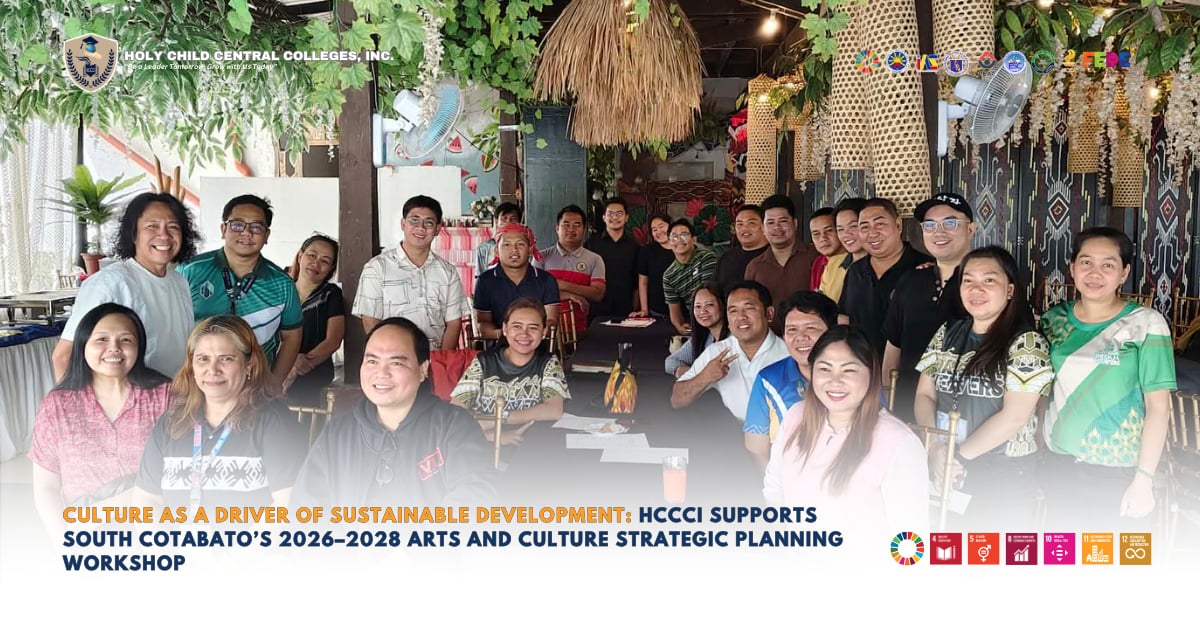
𝐂𝐮𝐥𝐭𝐮𝐫𝐞 𝐚𝐬 𝐚 𝐃𝐫𝐢𝐯𝐞𝐫 𝐨𝐟 𝐒𝐮𝐬𝐭𝐚𝐢𝐧𝐚𝐛𝐥𝐞 𝐃𝐞𝐯𝐞𝐥𝐨𝐩𝐦𝐞𝐧𝐭: 𝐇𝐂𝐂𝐂𝐈 𝐒𝐮𝐩𝐩𝐨𝐫𝐭𝐬 𝐒𝐨𝐮𝐭𝐡 𝐂𝐨𝐭𝐚𝐛𝐚𝐭𝐨’𝐬 𝟐𝟎𝟐𝟔–𝟐𝟎𝟐𝟖 𝐀𝐫𝐭𝐬 𝐚𝐧𝐝 𝐂𝐮𝐥𝐭𝐮𝐫𝐞 𝐒𝐭𝐫𝐚𝐭𝐞𝐠𝐢𝐜 𝐏𝐥𝐚𝐧𝐧𝐢𝐧𝐠 𝐖𝐨𝐫𝐤𝐬𝐡𝐨𝐩
The Provincial Government of South Cotabato is set to convene the province’s cultural and creative stakeholders for the Provincial Arts, Culture, and Community Development Strategic Planning and Capacity-Building Workshop on December 10–11, 2025, at Sa Balai Lake View Resort, with Holy Child Central Colleges, Inc. (HCCCI) playing an active and strategic role in the initiative.
Organized by the Arts, Culture, Tourism and Museum Unit (ACTMU) in partnership with the South Cotabato Culture and Arts Council, the two-day workshop seeks to unify the province’s diverse cultural sectors—including performing arts, visual arts, literary arts, cultural education, heritage conservation, museums and archives, film and media arts, crafts and design, and cultural communities—to collaboratively formulate the 2026–2028 Provincial Culture and Arts Strategic Plan.
Beyond strategic planning, the workshop is also positioned as a concrete contribution to the continuity and localization of the United Nations Sustainable Development Goals (SDGs). Culture and the arts are recognized not merely as expressions of identity, but as powerful enablers of inclusive, equitable, and sustainable development—aligning local cultural governance with global development frameworks.
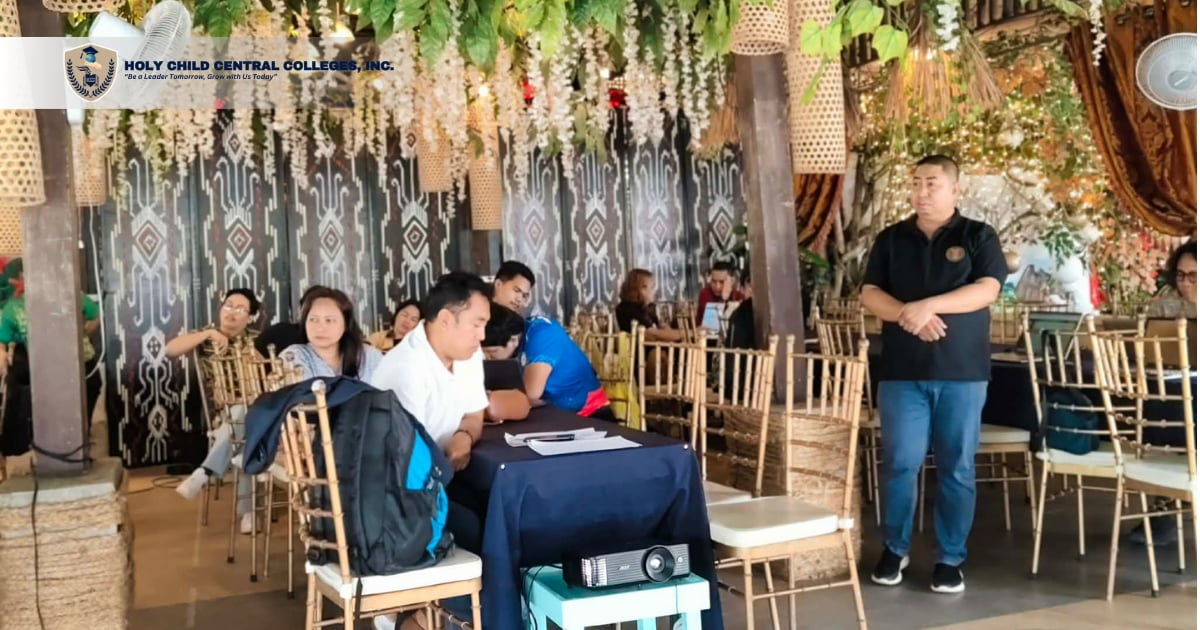
HCCCI has been invited as a key institutional partner, with Mr. Marlon Viejo, MPOPS, formally requested to serve as one of the distinguished resource speakers. He will deliver a session on “Project Implementation Review: Reviewing the Milestones, Challenges, and Developing Calibration Measures.” His participation underscores HCCCI’s sustained commitment to cultural education, community empowerment, evidence-based planning, and developmental governance within South Cotabato.
Throughout the workshop, participants will assess progress and challenges in existing cultural initiatives, identify policy gaps and priority needs, and co-create inclusive Programs, Projects, and Activities (PPAs) for 2026–2028. Emphasis will be placed on strengthening inter-sectoral collaboration, ensuring community participation, and embedding sustainability principles in cultural programming.
This initiative also serves as a concrete contribution to the continuity and localization of the United Nations Sustainable Development Goals (SDGs), recognizing culture and the arts as cross-cutting drivers of sustainable development. The workshop advances SDG 4 (Quality Education) by strengthening cultural education, lifelong learning, creativity, and cultural awareness; supports SDG 5 (Gender Equality) through the promotion of inclusive cultural participation and equitable representation; and contributes to SDG 8 (Decent Work and Economic Growth) by reinforcing the creative and cultural industries as sources of employment, entrepreneurship, and inclusive local economic growth. It likewise addresses SDG 10 (Reduced Inequalities) by empowering indigenous peoples, minorities, and marginalized sectors through inclusive cultural policies and programs, while advancing SDG 11 (Sustainable Cities and Communities) through the safeguarding of cultural heritage and the promotion of inclusive, resilient, and culturally vibrant communities. Furthermore, the initiative aligns with SDG 12 (Responsible Consumption and Tourism) by encouraging sustainable cultural tourism, responsible heritage management, and community-based local economies, ensuring that cultural development remains both people-centered and environmentally sustainable.
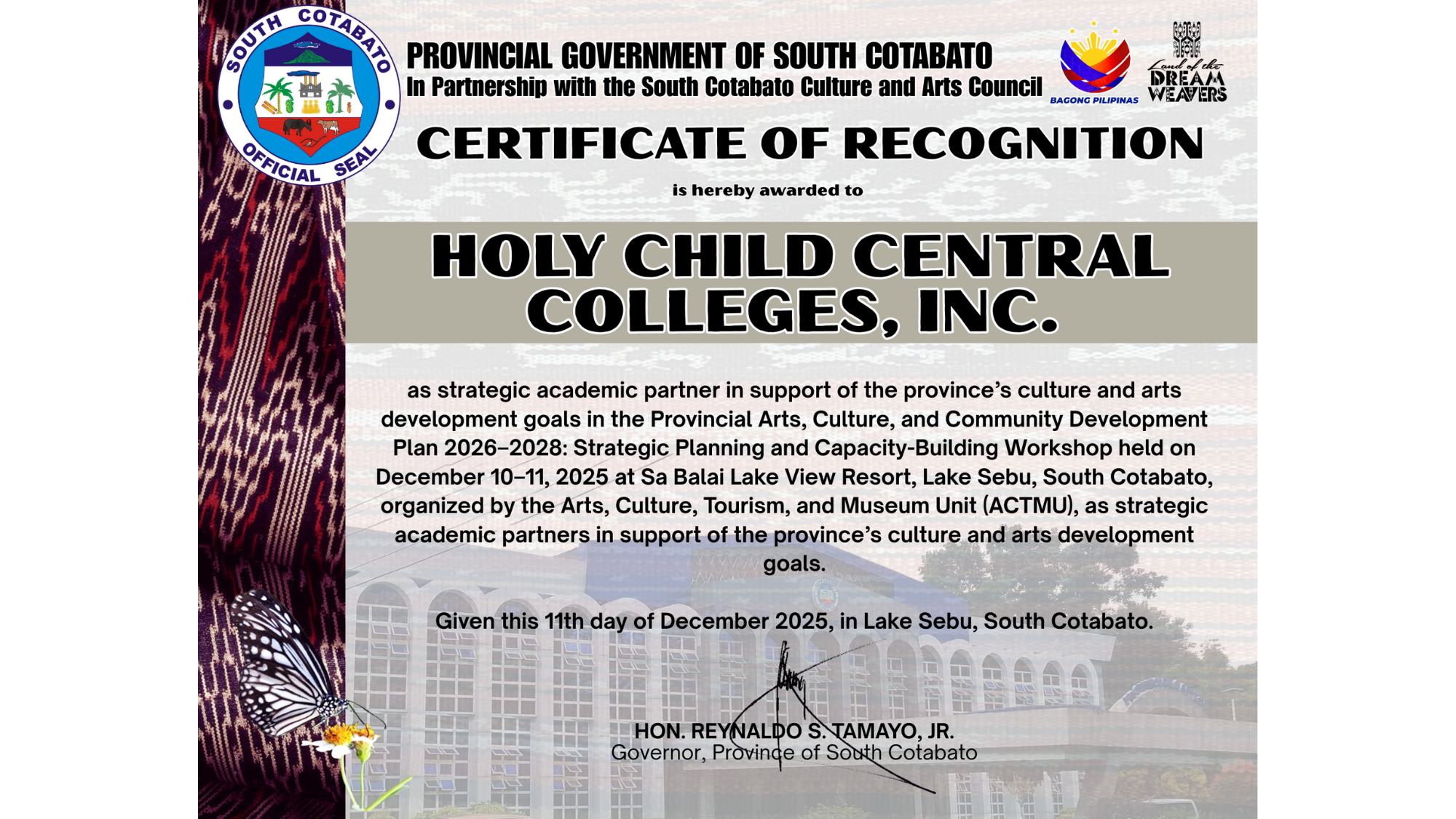
The Provincial Government expressed its appreciation for the continued partnership of institutions such as Holy Child Central Colleges, Inc., emphasizing that the engagement of academic leaders and practitioners is vital in ensuring that South Cotabato’s cultural roadmap remains community-rooted, evidence-informed, and aligned with sustainable development goals—bridging local cultural identity with global development commitments.